


How the built environment shapes the realities of human rights
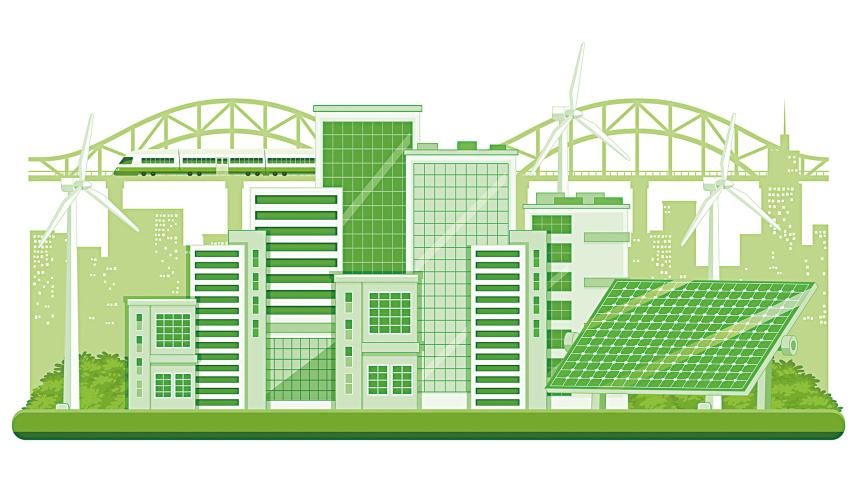
The built environment, comprising residential, commercial, and industrial structures, is a typical feature of urban development, shaping the realities of human rights. The development discourse not only focuses on the vertical growth of built space but also includes comprehensive aspects of integrated development. The integrated development approach considers building design and construction as an effective means of safeguarding human rights. This is why human rights reform agencies advocate both top-down and bottom-up approaches to enhance their effectiveness. In fact, access to built spaces is a fundamental pillar of securing the rights of people with diverse needs at the bottom level. But the question remains whether our built area and design approach are sufficiently compassionate to uphold the principles of accessibility.
Accessibility requires considerations at both the external and internal design of building structures. The more pluralistic the population, the more diverse humanitarian implications are required of the built spaces. To promote consistent economic development, Article 19 of the Constitution promotes equality of opportunities for all citizens. Disparity persists when structural opportunities are not accessible to all citizens irrespective of religion, gender, culture, and disabilities. The legal framework for construction in Bangladesh has not yet been comprehensively reformed to incorporate the modern norms of indivisibility, equality, and inclusion. Contrarily, the legal principles of construction are mostly based on the realities of the colonial era.

To prevent haphazard development, the Building Construction Act was enacted in 1952. However, the corresponding rules focused mostly on building safety provisions. The gradual prioritisation of integrated development can be traced in the relevant building provisions of 90s. Later, the Bangladesh National Building Code, 2020 enumerated several principles of sustainability and universal accessibility.
Similarly, the interpretation of ‘integrated development’ was evident in several judgments of the higher judiciary. In the case of Giasuddin v Dhaka Municipal Corporation (1997), the court upheld public health and hygiene over the indispensable accommodation needs of residents and illustrated the significance of a park or open space in an area full of residential structures. A similar pattern can be observed in RAJUK v Mohsinul Islam (2001), where the court reiterated the environmental integrity of development. In this case, the Appellate Division construed the word ‘improvement’ of the Town Improvement Act, 1953 by adopting an integrated development approach, holding that the conversion of open spaces and parks into residential plots does not fall within the purview of ‘improvement’.
Moreover, in BELA v Bangladesh (2004), the High Court Division declared Modhumoti Model Town, a satellite township project of Metro Makers Limited, illegal for deviating from the master plan and altering the nature of the land through residential and industrial construction. Furthermore, in BLAST v Bangladesh (2008), the court mandated compliance with safety and security during building collapse and demolition in the backdrop of the tragic death of several construction workers during the demolition of the RANGS building.
All these indicate an integrated development approach in interpreting several phases of the building cycle, including construction and demolition. However, it can be perceived that the judiciary demonstrated activism where the environment is the key development issue. I believe the range of judicial activism is not that evident when other interconnected human rights issues and development are in dispute.
On the other hand, there is a cultural context to the discourse of integrated development. Bangladesh has an incredible blend of architectural legacy from the Pala, Sena, Mughal, and Indo-Saracenic periods. This wide range of structural diversity creates avenues for cultural contextualism in the discourse of integrated development. The lens of cultural contextualism reflects structured responses to tradition and culture in a local community. Cultural contextualism is being integrated into urban planning worldwide. The cultural preservation principle is also enshrined in Article 24 of the Constitution, which enumerates measures against the disfigurement, damage, and removal of any monuments, objects, or places of historical importance. A similar spirit is echoed in section 12 of the Antiquities Act 1968. It restricts an individual owner from altering the site of an antiquity through construction.
The existing construction rules are also gradually installing cultural contextualism. For example, a special project clearance certificate is required before building any structures within a 250-metre radius of places of historical importance under rule 8 of the Dhaka Metropolitan Building Development Rules, 2008. In Human Rights and Peace for Bangladesh (HRPB) v Bangladesh (2010), the court found that the stumbling construction in the vicinity of Mahasthangarh is axiomatically without lawful authority and violative of section 12 of the Antiquities Act, 1968. However, the question remains whether these developed legal responses of cultural contextualism are being effectively implemented.
Finally, automated integration of technology in prior building design is posing new challenges for integrated development. A thorough, cross-sectional human rights impact assessment can be introduced at the very initial design stage of building. Though it is not feasible to alter all existing buildings, the mandate can be imposed on new structures. Undoubtedly, a holistic human rights assessment model is required to create equitable beneficiaries of the built environment.
The writer is an Assistant Professor at the Department of Law and Human Rights, University of Asia Pacific.
 For all latest news, follow The Daily Star's Google News channel.
Comments