


Monsoon on overdrive
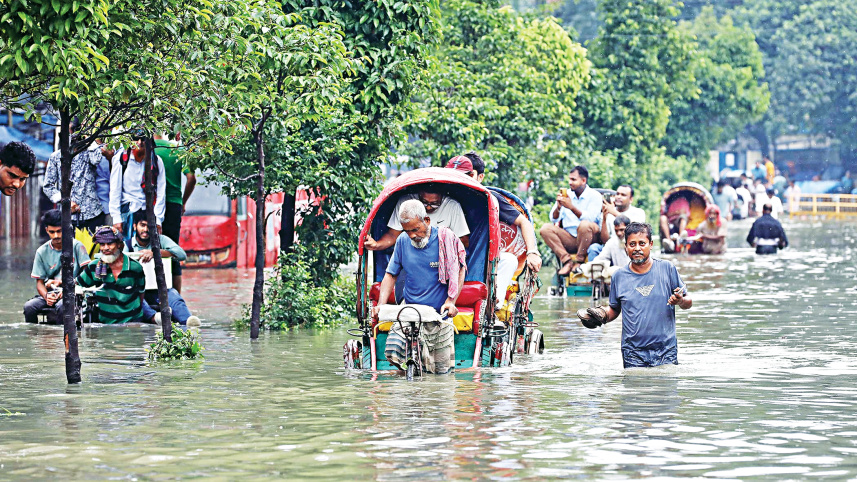
Cloudbursts sound poetic; the monsoon is dreamy. Getting drenched in the rain, pouring steaming dudh cha into a saucer by the roadside and blowing across its surface, watching the city turn emerald under the downpour -- these are the images that make the monsoon feel romantic. Nature is at its greenest, farmers rejoice, fishermen haul in their catch, and vegetables sprout in abundance.
But rains like the ongoing cloudburst force Dhaka to confront its fragile drainage system and flawed infrastructure. The same showers that inspire poetry also paralyse the city, turning roads into rivers and homes into islands. The monsoon may be the best season for farming and fishing, but floods and cloudbursts puncture that romantic bubble, reminding us that beauty and chaos arrive together.

This July, the skies did not simply open -- they tore apart. What should have been the familiar rhythm of monsoon showers turned into a deluge, with waist-deep water swallowing Dhaka’s boulevards and choking its flyovers.
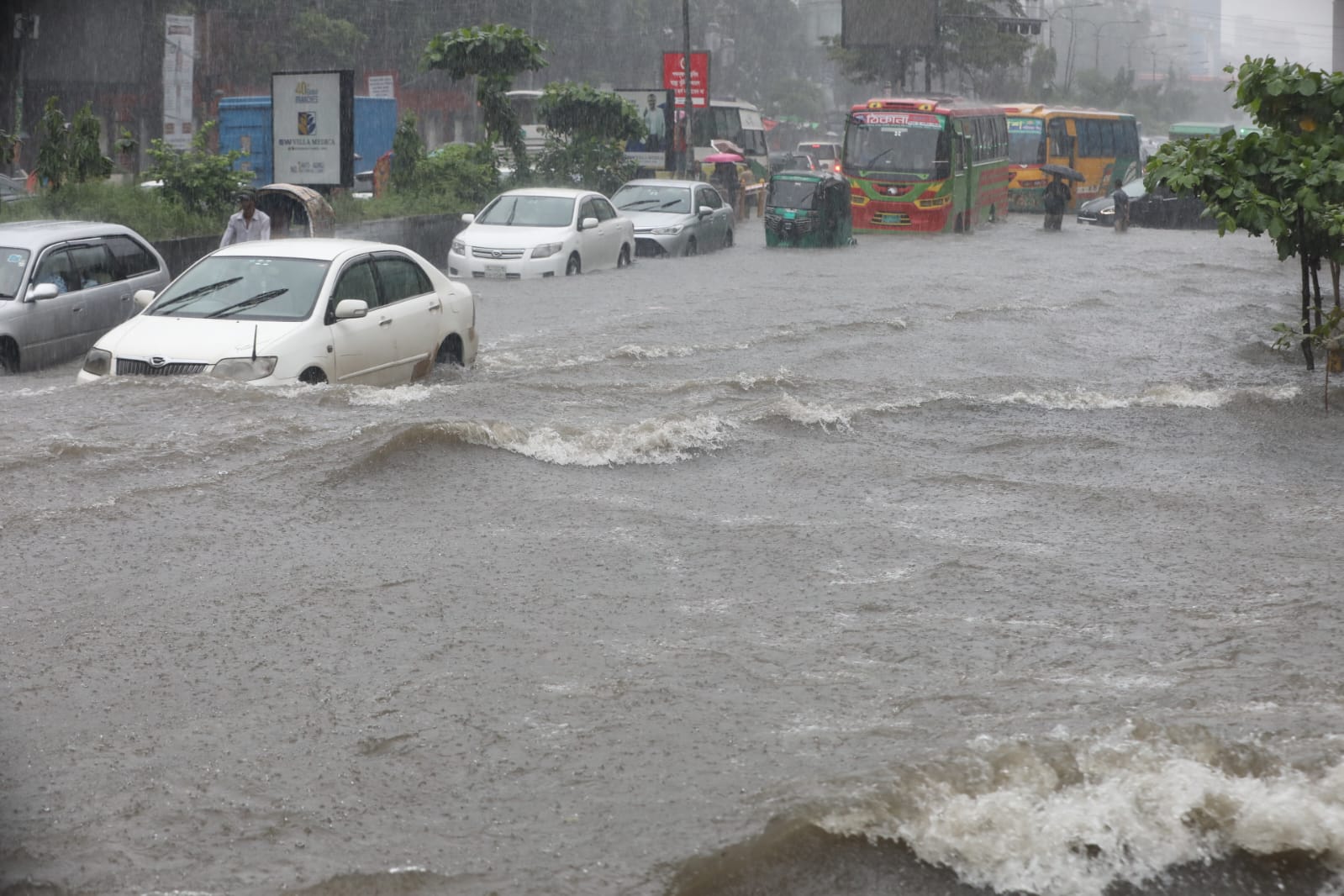
Meteorologists point to a perfect storm: an active monsoon colliding with a low-pressure system over the Bay of Bengal, intensified by climate change and warmer seas. Humid winds from the east met low-pressure currents from the west, forming dense, moisture-laden clouds that refused to disperse.
When they finally broke, the rainfall was violent -- 192mm in Dhaka within 33 hours, 350mm in Chattogram in a single day, and 450mm over two days, amounts that rival the annual rainfall of many countries. Added to this is the El Niño effect, which disrupts rainfall patterns across South Asia, making the monsoon increasingly erratic and prone to short, punishing bursts.
Dhaka’s suffering is not just meteorological -- it is man-made. Wetlands and retention ponds have been filled, canals encroached upon, and flood zones erased. The city has lost thousands of acres of natural drainage areas in the past decade. Concrete sprawls where water once seeped away, leaving the metropolis defenceless against sudden downpours.
The result is clear: flyovers turned into waterfalls, lakes spilling onto roads, and children catching fish in what were once busy intersections. In Mohammadpur, roads collapsed under the weight of the water, swallowing shops and homes.
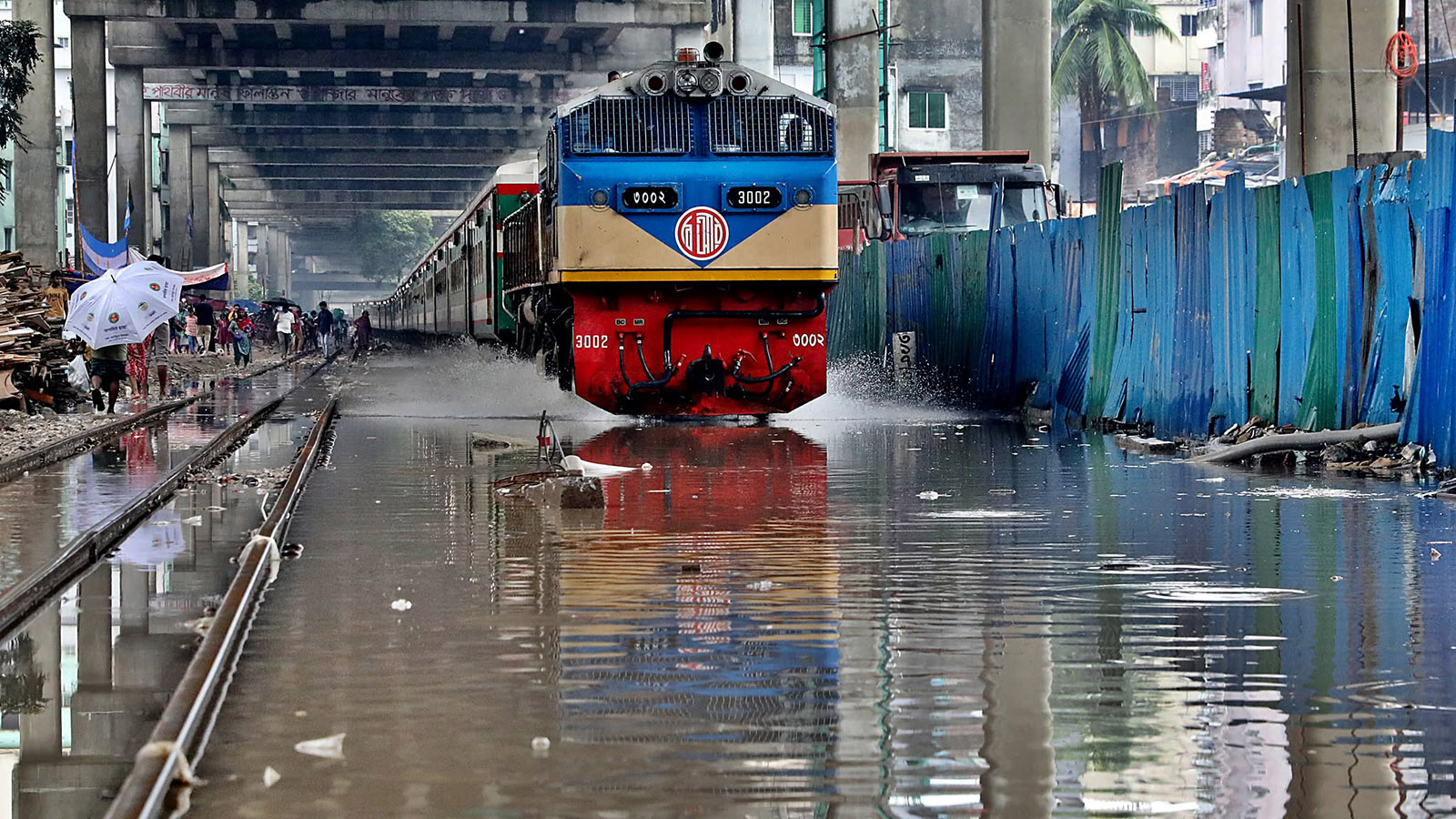
“It’s not related to the monsoon anymore. Heavy rain causes severe waterlogging at Shantinagar Mor, and I have seen this all my life,” says Shubhro Haque, 45. “The fact that this happens year-round means there is a serious drainage issue. However, there was a time when Shantinagar could be singled out as a waterlogging-prone locality. Now the same is true throughout the city.”
He adds, “I am not sure if we have officially lodged a complaint with the city corporation, but that should not be necessary. The problem draws media attention whenever there is incessant rain. The concerned officials simply cannot turn a blind eye anymore.”
Haque also points to public responsibility: “I think the public shares part of the blame because of irresponsible disposal of plastic and other materials. Bangladesh was the first country to ban polythene bags, yet now ranks among the highest users of plastic. So, basically, people simply do not pay due importance to the ban, and the laws are not implemented either.”
Shahana Huda reflects on the reality at ground zero: traffic came to a standstill and the transport system collapsed, leaving officegoers, students, and HSC candidates stranded. Water flowed into cars and autos, stalling vehicles across the city, while even battery-powered three-wheelers refused to take passengers, forcing people to rely on van carts or carpool with strangers.
“Bus services dwindled, and since morning, residents have been draining water from ground-floor shops and offices, trying to salvage what they could,” she says.
The devastation was plain to see: Gulshan Lake’s walkway gave way under the force of the water, Uttara Lake brimmed over, sending torrents onto the main road, and Dhanmondi Lake surged beyond its banks, flooding the streets. In Bosila, the Bangshi River spilled over, submerging lanes and pushing water dangerously close to homes. People suffered, no doubt. The flooding paralysed urban life, created surreal waterlogging scenes, and exposed the fragility of Dhaka’s infrastructure.
As Huda observes, “In Chittagong, in 24 hours, 350 millimetres of rain fell and on day two it was 450 millimetres. In some countries, this amount doesn’t even fall in a whole year. These are huge figures, and I don’t think any system has been created to adapt to such rainfall.”
Her words are borne out by official records: the sheer volume of water was beyond the capacity of any drainage system, and the city’s infrastructure simply could not cope. Dhaka’s drainage network was built decades ago for lighter rains and has not been upgraded.
With wetlands gone, pumping stations too few, and drains clogged, even a few hours of downpour overwhelm the city. Until Dhaka restores its natural buffers and builds a modern, integrated drainage system, cloudbursts will continue to drown the capital.
And so, while the monsoon still carries the romance of steaming dudh cha on a rain-washed roadside and of the city turning emerald under its spell, Dhaka’s drowned streets remind us that poetry and peril now arrive hand in hand.
 For all latest news, follow The Daily Star's Google News channel.
Comments