


“She was affectionate, kind and intimate” – Jaya Ahsan recalls memories with Prime Minister Sheikh Hasina
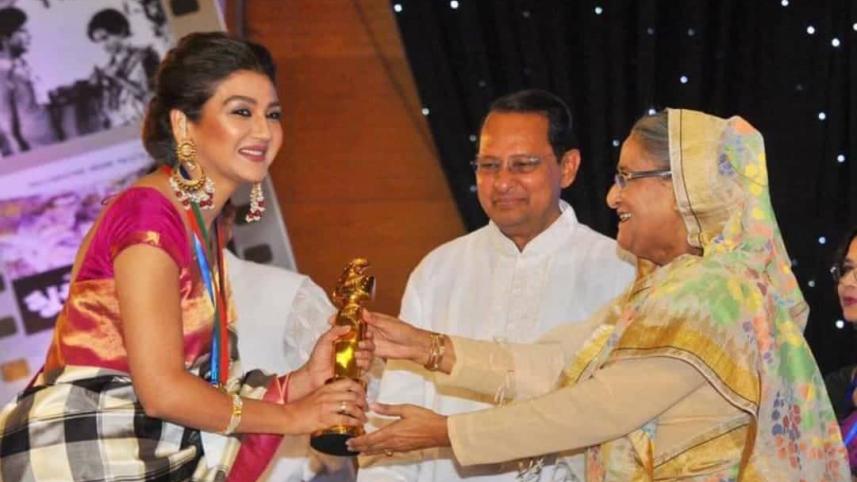
Reminiscing her first meeting with Prime Minister Sheikh Hasina, National Award winning film star Jaya Ahsan posted a heartwarming account on her social media. The post, which provides a fantastic narration by the actress, is translated and posted here with due permission from Jaya Ahsan.
Much time has passed since that day, but I can still clearly remember those moments of first meeting our Prime Minister Sheikh Hasina – maybe because it is a treasured memory from my adolescence. General H M Ershad has just fallen through a tumultuous movement. After the brutal assassination of Bangabandhu Sheikh Mujibur Rahman and his family, the whole country was plunged into the darkness of military rule. However, people have come out of that darkness today.

After 50 years, the people of Bangladesh breathe in a free country today. Bangladesh is now witness to a political revolution, an experience this country's citizens had never had the privilege to experience after the Liberation War.
I was not old enough to understand the complex geometry of politics. Fragments from the world of adults somehow managed to make way into my ears and I used to draw my own story from these vague whispers. However, my father's happiness, his restlessness, and his increased consumption of tobacco always helped me believe that we are now in a good state. It had been a while since I had seen him so excited. My father had always been a hard nut to crack, but as soon as one gets to open it, they end up meeting a completely different person – kind, humble and very emotional.
Being a Freedom Fighter, my father loved his country. Responding to Bangabandhu's calling, he gathered whatever we had and joined Khaled Musharraf in Sector 2. In those tumultuous days before the war of liberation, many such young fathers joined protests for the establishment of Bangladesh's rights in various institutions controlled by the Pakistani authorities. He join the agitated crowd in front of the radio office, waving the red-green-yellow flag of the liberation war with his own hands. I recently found that footage of my father in front of the radio office – one of my invaluable collections.
My father's courage and confidence, like many of his peers, had almost left his mind on the night of August 15, when Bangabandhu was assassinated. After the martial rule ended, rays of hope started revisiting his doorsteps. "Come with me, let me take you somewhere special," he has said to us. I had no idea where he was taking us, but my younger sister Kanta and I held his hand and started walking towards an unknown destination.
That day, he took us to Paltan near the secretariat building what people used to refer to as the second capital back in those days. The streets reminded me of being in a carnival – crowd and chaos, smiling lips, and chitchatting young faces at different snack corners. A huge stage was set up at Paltan, where my father and his comrades screamed on top of their voices, mocking Ershad with their witty remarks and caricatures. Flyers and brochures rustled like dry leaves as the deafening overjoyed patriotic voice of Bangla dwellers grew louder and louder.
Fighting the crowd, my father rushed towards Bangadandhu's residence in Dhanmondi 32. It seemed as if he was visiting a close relative as I could see no anxiety or shyness as he entered the room. "May we come in Bubu?" he had asked to a woman sitting inside the room. At that time, I had no idea about Sheikh Hasina, but seeing her in that house let my mind think of her as Bangabandhu's daughter.
She was leaning onto the bed, almost lying down on her back, drained and exhausted. Leading the long struggle against the martial rule had left her tired and weary. Forsaking her fatigue, she looked at us with beautiful smile and asked my father, "Who have you brought along, Babla? Are they your daughters?"
This was the first time I had met our Prime Minister Sheikh Hasina – a Bangladeshi girl draped in a simple purple cotton saree, with a veil on her head. Nevertheless, you can never fail to notice her eyes but my eyes were lost looking at the long ebony lashes of her hair, peeping from the edges of her lavender veil.
With time, the tides changed their course and she finally made it to the chair of Bangladesh's Prime Minister. Her appearance has changed with time, but I can never forget the long locks of her hair from that day.
A Prime Minister has to bear some of the most important responsibilities in the country, and it is understandable if they seem to forget little incidents as such. To my surprise, she still vividly remembers some of such memories that we had shared. To me, she feels like a loved one who you do not meet or talk to everyday, but you still keep them in your heart. It's incidents as such that forces me to believe that she will always remain our confidante, wearing her humble smile and kind heart in pride for her people.
Let me share an incident. I was supposed to receive the National Film Award for Best Actress in lead for my film "Zero Degree", and the awards were to be given in a ceremony. Coincidentally, । was also selected for Kolkata's prestigious Mahanayak Uttam Kumer Award. This was the first time a female artiste was to be honoured with this title. I was excited as being the first female awardee was a rather admired achievement and I was to receive the award from Momota Banerjee.
Adding to my dilemma, both the awards were taking place on the same day around the same time. I tried, multiple times, to reschedule the events but nothing worked out. After much a predicament, I thought to myself, I am Bangladeshi and nothing is more important than receiving a National Award form our Prime Minister.
On the day of the award, when I name was called on stage, the gracious PM asked, "Jaya, weren't you supposed to be in Kolkata?" I was very shocked to actually see her remember such a minor detail. She expressed her happiness in her speech—saying that I had chosen my country despite being honoured with National Awards multiple times before, and this is what made me a daughter of his land.
I love nature and have been an animal rights activist for a while now. I also work with multiple organisations that look to restore animal rights. One such organisations once got a call, informing that a dog had been rescued from an area near Gano Bhaban. SDN Kabir, Chief Security of Gano Bhaban, later informed me that it is home to over 50 dogs and some cats. The location's greenery has managed to attract many birds to build their nests in the area too.
The more I got to know from SDN Kabir, the more respect the Prime Minister earned in my heart. He informed me that she always arranges food for these stray animals by herself, and feeds them regularly. The cats are fed about 20 litres of milk every day and the fruits from the trees are never taken down for personal consumption by humans. The Prime Minister has sanctioned for a budget as food expenses of the animals residing at Ganobhaban. Despite being the busiest person in the state, she manages to take time to notice such things that we often ignore—this is what makes her unique in my eyes.
The state and politics work with millions of people. Debating opinions, despiteful comments and numerous accusations make way towards my ears every day. However, glancing upon Sheikh Hasina, I travel back in time to the day I had first met her – affectionate, kind and intimate.
Translated by Ashley Shoptorshi Samadder
 For all latest news, follow The Daily Star's Google News channel.
Comments