


Change Maker: A torchbearer for helpless women
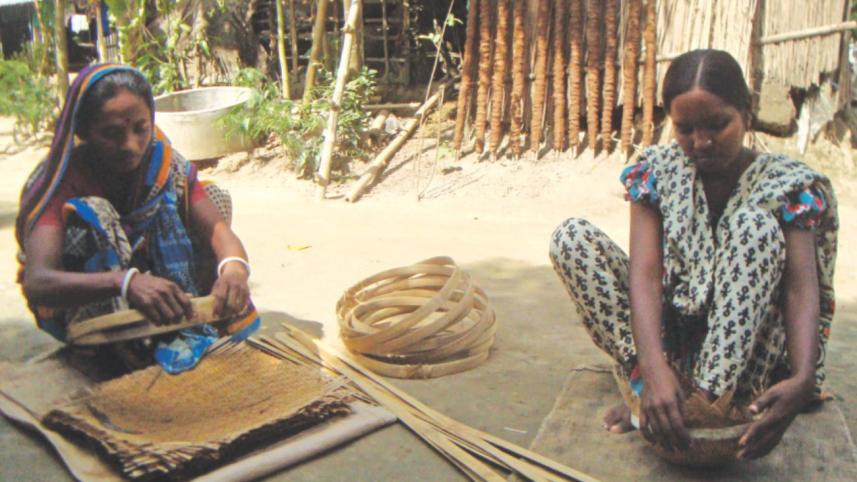
Divorced from her husband after two years, at her instigation, and living again at her father's home, Sabita Rani Das, 22, of Magura sadar upazila's remote Laxmipur village has not had the easiest of lives. Yet where many a person would understandably focus upon their own plight and how to survive financially when her family also struggles, Sabita thinks of others. In whatever spare time she finds, she's teaching the most disadvantaged women to read, and helping them achieve economic self-reliance.
“I will never marry again,” she says. “I'm determined in my own life to be self-reliant and I want to stand by other distressed women. My mission is to make them literate and solvent.”

Sabita's childhood home is a meagre plot, congested and unhygienic. She studied to class nine, after which due to poverty she couldn't continue. Her father, now elderly, once maintained the family by collecting the hides of dead cattle; nowadays such hides are less available. More recently the family has taken to handicraft manufacture as a means to an income but it's barely profitable.
Despite Sabita's personal hardship, local women from Laxmipur, especially from the disadvantaged Harijan community, arrive at her home every day in batches of up to 25 at a time, ready for study. Sabita takes no tuition fee.
“I will alleviate illiteracy from lower caste families,” Sabita says. “I hope within five months all may have basic literacy and knowledge of sanitation.”
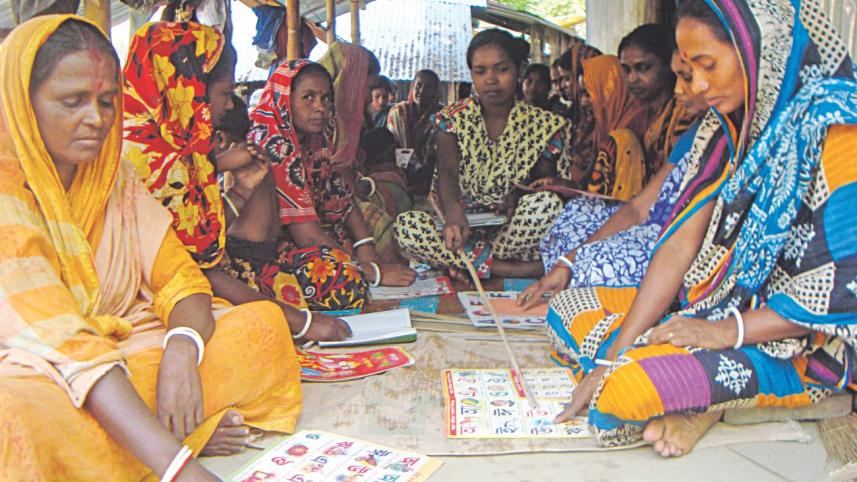
Her ambitions don't end there. Along with reading, Sabita is introducing the women to handicraft and vermicompost making, two activities that can generate an income. At present 35 of the around 80 village households have started producing vermicompost, with many more set to join them.
“My husband died ten months ago,” says neighbour Ila Rani Das, 65. “I am maintaining my family by selling vermicompost fertiliser, which Sabita showed me how to do. I can now write my name and address thanks to her. In our community, she is a torchbearer.”
“We have learnt how to lead neat and clean lives,” says Poly Rani Das, 40, of the same village. “We didn't know about sanitation before or vermicompost fertiliser. Sabita has truly opened our eyes and we are so happy about that because finally we can read and write, and we have an income.” Other local women including Joshna Rani Das and Anjali Rani Das echoed such sentiments.
“Sabita advises the other village women how to live healthy lives,” says local doctor Nurul Islam. “She cares about their health.”
Vermicompost expert Helal Uddin of Moheshwarchanda village in Jhenidah's Kaliganj upazila meanwhile has given vermiculture training and inspiration at Sabita's request. “It can bring prosperity to their lives,” he says.
“I heard that Helal Uddin trains people to be self-employed with vermiculture,” Sabita says. “So I invited him to our village. The acute misery of many women in Laxmipur is at an end. We are starting a new way of life.”
The chairman of Raghabdari union in which Laxmipur is located, Babul Fakir, says he has heard of Sabita's good work for underprivileged women. “If she asks I will do my best to help her,” he says.
Of course Sabita is always thinking to the future; how to help herself and fellow village women all the more. “What we need now,” she says, “is access to financial assistance so we can start cattle-raising. If we had the capital we could do that, and we would be able to earn well.”
 For all latest news, follow The Daily Star's Google News channel.
Comments