


Powering global food standards

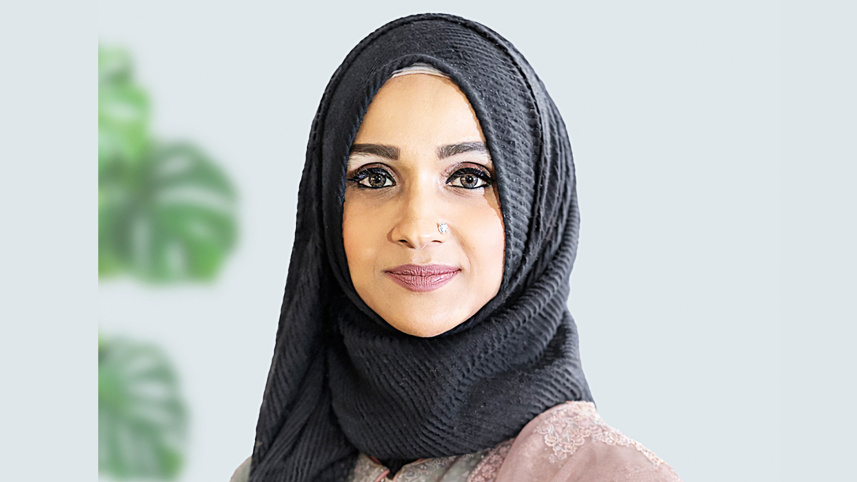
Tahmina Mostafa
Director
Meghna group of industries (MGI)

At MGI, we build manufacturing systems that deliver quality at scale while maintaining consumer confidence. By investing in advanced technology and sustainable practices, we aim to enhance manufacturing excellence and establish Bangladesh as a globally trusted, competitive source of high-quality FMCG products.
In the landscape of Bangladesh's industrial evolution, few names carry as much weight as Meghna Group of Industries (MGI). With brands like 'Fresh' reaching millions of kitchens, the group has grown from a local player into a regional powerhouse. The Daily Star interviewed Tahmina Mostafa, Director of Meghna Group of Industries (MGI) about the technological transformation of the food sector, the rigors of food safety, and what lies ahead for "Made in Bangladesh" products.
The Daily Star (TDS): What is the biggest shift in Bangladesh's food manufacturing over the last decade, and where does MGI sit in it?
Tahmina Mostafa (TM): The biggest shift is that the conversation has moved from capacity to capability. A decade ago, the industry's focus was producing more. Today it is producing consistently — with food safety, traceability, and efficiency built into the system rather than added on afterwards.
That change has come from both directions: consumer expectations have risen, and regulatory standards have strengthened. These are welcome pressures — they have made the whole industry better.
At MGI, we have tried to keep pace by investing continuously across our FMCG portfolio — edible oil, flour, sugar, salt, spices, tea, dairy, beverages, drinking water, biscuits, cookies, and noodles. Our aim is simple: to earn consumers' trust every day through consistent quality, delivered reliably and efficiently.
TDS: With brands like Fresh, No.1, Actifit, and Pure reaching millions of consumers, how does that scale shape your responsibility on food safety?
TM: Scale multiplies responsibility. When consumers choose our products every day, they are extending their trust to us — and that trust has to be earned continuously, never assumed.
Food safety begins long before the factory floor. It starts with supplier qualification and raw material verification, and continues through controlled processing, laboratory testing, and quality assurance across production and distribution. Every batch clears established quality protocols before it is released, and behind each of those protocols are teams who take that responsibility seriously.
Our facilities operate under internationally recognised systems — ISO 22000, ISO 9001, HACCP, GMP, and Halal certification — and comply with all applicable requirements of the Bangladesh Standards and Testing Institution (BSTI). Food safety is not a single checkpoint; it is embedded in the entire process.
TDS: If a customer buys a bottle of your oil today, can you trace it back to the raw material supplier?
TM: Yes. Raw materials from approved suppliers are recorded and assigned unique identification codes on receipt, and those codes remain linked to the finished product through batch coding and production documentation. If we ever need to review a product's history, we can — and we keep working to strengthen these systems, because traceability is never finished.
Alongside this, our laboratories carry out physical, chemical, and microbiological analyses throughout production to confirm that products meet defined quality and safety standards before they reach the consumer.
TDS: What automation or process upgrades have been introduced in the last two to three years?
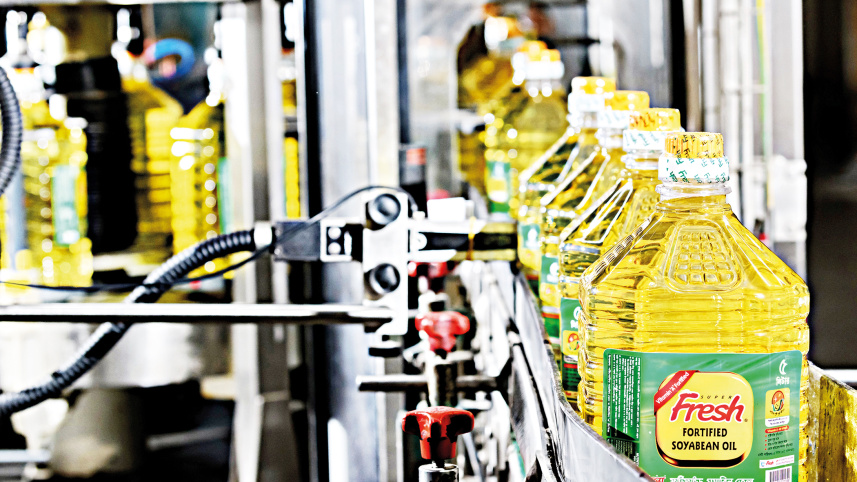
TM: Technology investment has remained a priority for us. In the past few years we have introduced online near-infrared (NIR) quality monitoring, ERGO BLOC filling technology in our beverage operations, automated condensed milk processing, colour-sorting systems for grains and spices, automated secondary packaging, and expanded digital production monitoring.
Each of these serves the same purpose: greater consistency, stronger hygiene control, and better use of resources. For us, automation has never been about output alone — it is about doing the fundamentals more reliably, batch after batch.
TDS: What steps has MGI taken to reduce energy consumption, water use, or waste output?
TM: Responsible growth has to account for environmental impact, and we would be the first to say there is more to do — for us and for the industry as a whole.
Across our operations we have invested in energy-efficient production equipment, Effluent Treatment Plants (ETPs), and renewable energy, including solar installations at selected facilities. Efficiency itself helps: automated manufacturing optimises raw material use, reduces process losses, improves yields, and cuts waste, while preventive maintenance and efficient warehouse management reduce energy consumption across the chain.
 For all latest news, follow The Daily Star's Google News channel.
 Our objective is steady, measurable improvement — and we intend to keep at it.
TDS: What would you say to a consumer who is skeptical about 'Made in Bangladesh' food products compared to imported ones?
TM: I understand the skepticism, and I would not dismiss it — trust has to be earned, not demanded.
What I would gently ask is that consumers judge products by the standards under which they are made, rather than by where they are made. Bangladesh's leading food manufacturers today invest in modern production technology, internationally recognised food safety systems, accredited laboratory capability, and skilled technical expertise, with much of the plant equipment coming from globally recognised technology providers.
When those standards are maintained consistently, locally manufactured products can stand alongside imported alternatives. Bangladesh has come a long way, and we believe the country's food industry can compete both at home and abroad.
TDS: Where do you see MGI's food manufacturing operations five years from now?
TM: More digital, more data-driven, more automated, and more sustainable — though we do not see this as a finished story.
We will keep investing in advanced manufacturing technology, laboratory capability, digital quality management, and operational efficiency, with artificial intelligence and predictive analytics playing a growing role in quality assurance, process optimisation, and production planning.
We also see a meaningful export opportunity. Our ambition is not simply more capacity — it is manufacturing excellence, and contributing, alongside others in the industry, to establishing Bangladesh as a trusted source of high-quality FMCG products.
Interview conducted by Tagabun Taharim Titun
Comments