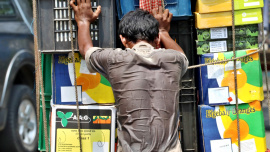
Between Gabura and India: Work, loss and unequal choices

Cyclone Aila did not initiate migration from Gabura to India. Rather, it added new pressures to an older pattern of movement, while changing livelihoods and unequal access to resources continue to shape who leaves, who returns and who stays.
Qualitative research conducted in Gabura shows that India serves both as a seasonal workplace and as a destination where some families have built new lives. Some agricultural workers cross the border for part of the year and then return to Bangladesh. Others follow relatives who migrated years earlier. Some families move after losing their homes, land or regular sources of work. Others remain in Gabura because they have property, family support or no practical means of starting again elsewhere.
Having a destination in mind is different from having the means to reach it, find work and establish a life there. The same environmental crisis can therefore lead to different decisions. Aila created additional pressure, but migration outcomes depended on livelihood opportunities, social networks, family responsibilities, financial resources, age, health and people’s ability to move.
An older route under new pressure
Migration to India predates Aila. Interviews in Gabura indicate that some families had connections across the border decades before the cyclone, when agricultural work was still available locally. Their movement was linked mainly to the search for work and better livelihood opportunities rather than to any particular disaster.
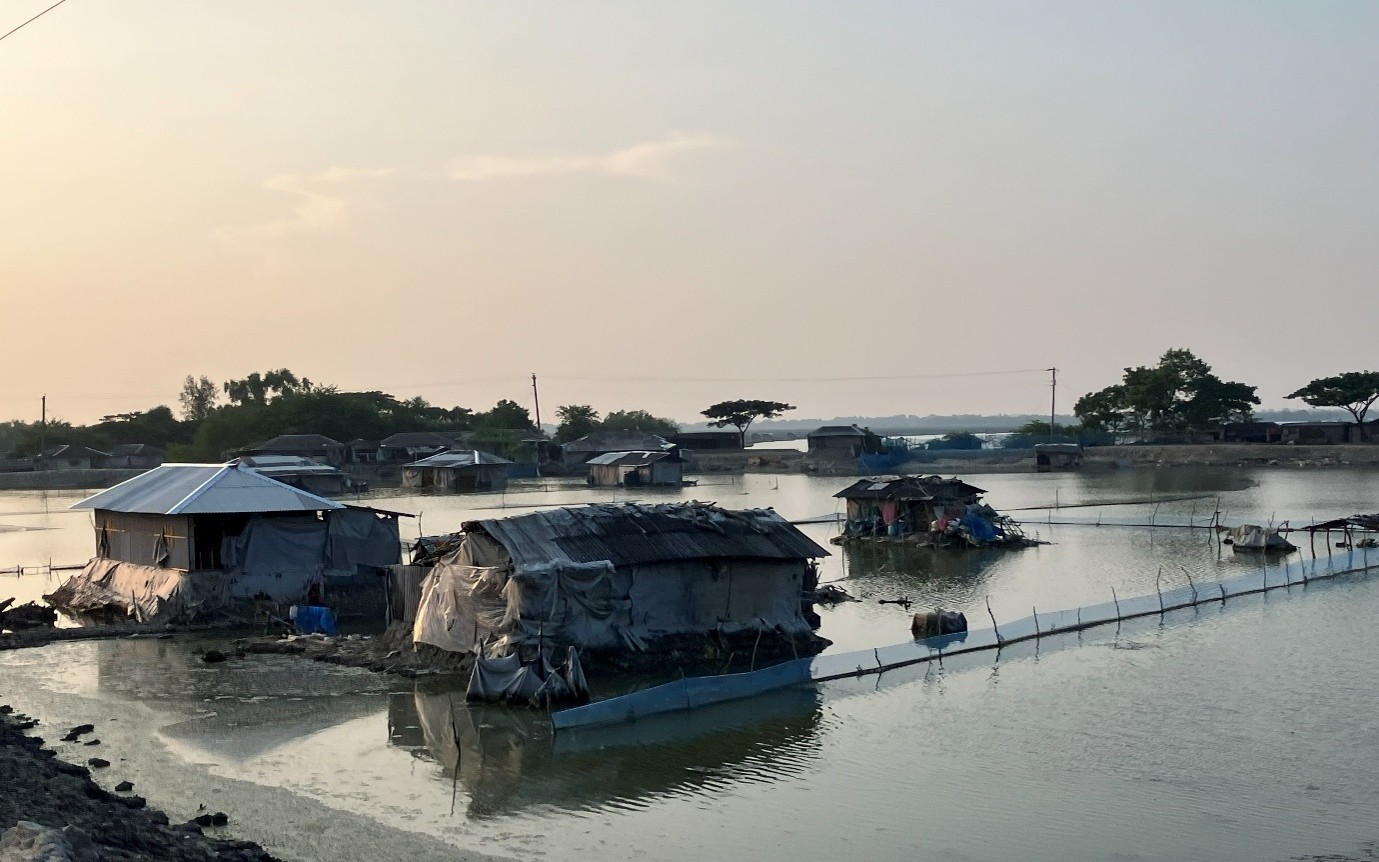
Aila changed the circumstances in which later decisions were made. When the cyclone struck on 25 May 2009, Gabura was among the worst-affected areas. A review by Sandie Walton-Ellery for the IFRC-led Emergency Shelter Coordination Group recorded 6,007 families and 30,034 people among those most severely affected in the union. Damage to embankments left large areas inundated, prolonging displacement and making recovery more difficult.
Field accounts suggest that the destruction of homes and decisions to migrate did not always occur at the same time. Some households first looked for work elsewhere in Bangladesh and considered moving to India years later. Others already had relatives or acquaintances there and could rely on those connections when local conditions deteriorated. Aila intensified pressure on livelihoods without creating a single, common pattern of departure.
There is an important distinction between surviving a disaster and rebuilding a livelihood. A household may return after floodwaters recede but still face damaged land, fewer employment opportunities and an uncertain income. Migration can therefore become more important over time without being an immediate consequence of the cyclone.
In Gabura, fishing, crab-related activities, agricultural labour and aquaculture remain important sources of employment. But opportunities depend heavily on the season and environmental conditions.
In Gabura, fishing, crab-related activities, agricultural labour and aquaculture remain important sources of employment. But opportunities depend heavily on the season and environmental conditions. Research by van Schie and colleagues in Gabura and neighbouring Burigoalini documented changes in land use and noted that shrimp farming requires fewer workers than rice cultivation.
This change affects households differently. A family earning an income from its own enclosure may experience the expansion of aquaculture as an opportunity. A landless household that once depended on agricultural or fishing work may experience the same transition as a reduction in regular employment opportunities. For daily-wage workers, the problem is not always the complete absence of work. Rather, it is uncertainty over when work will be available and whether the earnings will be sufficient to support the household.
One border, different possibilities
India offers more than one migration route. Relatives and acquaintances who migrated earlier may help others arrange accommodation or find employment. In some cases, one family member moves first and others follow after employment or housing has been secured. In other cases, seasonal agricultural work is arranged through labour intermediaries, connecting workers from Gabura with destinations beyond West Bengal, including Andhra Pradesh.
These represent different forms of migration. A worker travelling for a few months does not face the same decisions as a family attempting to establish a permanent home. Nor does having relatives in India guarantee employment, housing or the financial resources needed to relocate.
India is also not the only alternative. Seasonal work elsewhere in Bangladesh remains part of local livelihood strategies. Domestic migration may precede a cross-border journey. Some people continue to travel within Bangladesh for work, while others decide that India offers more viable opportunities.
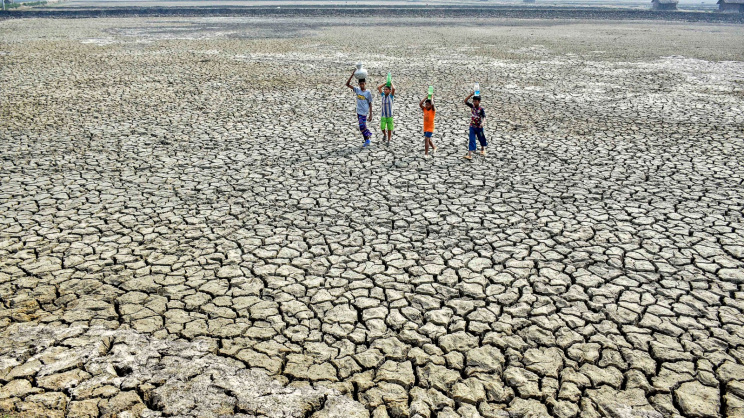
For those who travel to India, the attraction is partly economic. Participants reported that agricultural work there could provide more regular employment than the irregular work available in Gabura. Some accounts also described higher daily earnings and lower living costs. But higher wages do not automatically translate into greater savings. Travel, food, accommodation, periods without work and recruitment expenses all affect how much a worker ultimately brings home. Social connections therefore matter because they can reduce the uncertainty involved in moving.
Migration also changes a family’s relationship with Gabura. Some seasonal workers continue fishing or managing aquaculture enclosures when they return. Some families leave their property under the supervision of relatives. Others sell land before leaving.
Return is also part of the migration story. Not every attempt to establish a life in India succeeds. Some people return because work is uncertain, family circumstances change or the cost of staying becomes too high. Others maintain ties with Gabura even after living in India for years.
Staying is also not one story
The same distinction applies to people who remain in Gabura. Some stay because they value their homes, property and community. Others would consider leaving but lack sufficient money, good health or the capacity to work elsewhere. Local relationships may provide food, small loans, care or emergency support that may not be immediately available at a new destination.
Remaining in Gabura cannot automatically be described as either successful adaptation or an inability to move. For some households, staying is a choice connected to family, land and a sense of belonging. For others, it reflects a lack of viable alternatives.
Some people interviewed during the research also raised concerns about the security of religious minorities, particularly following the political upheaval of 2024. Others placed greater emphasis on employment, livelihood insecurity or supportive relationships within the local community.
What happens after people leave?
Understanding why people leave is only part of the story. What happens to them after they reach India is equally important.
Temporary workers may be able to describe their own employment conditions and earnings. Information about people who have settled permanently, however, often comes from relatives or neighbours who still live in Gabura. These accounts may indicate continued family connections or reported improvements in migrants’ circumstances, but they cannot establish the long-term wellbeing of migrants as a group.
Higher earnings do not necessarily mean secure employment. Acquiring a home does not demonstrate reliable access to healthcare, financial security or safe working conditions. Direct, voluntary and confidential research at destination locations would be needed to understand migrants’ actual earnings after expenses, their working conditions and housing, their legal status, and their access to healthcare and other essential services.
There are also important questions at the place of origin. Embankment protection and water management must be considered alongside the need for more dependable employment. Livelihood planning needs to account for seasonal gaps in fishing and agricultural work, changes in aquaculture, and households whose members cannot readily migrate because of age, illness or caregiving responsibilities.
For prospective migrants, reliable information about legal employment opportunities, recruitment costs, accommodation and available assistance could help them better understand the risks involved in moving. Any formal seasonal employment arrangement between Bangladesh and India would require clear agreements and meaningful protections for workers.
Gabura’s experience makes any simple division between migrants and non-migrants inadequate. Some households depend on migration to maintain a life at home. Others seek permanent settlement, return after unsuccessful attempts to settle elsewhere or remain because they lack a workable alternative.
Gabura’s experience makes any simple division between migrants and non-migrants inadequate. Some households depend on migration to maintain a life at home. Others seek permanent settlement, return after unsuccessful attempts to settle elsewhere or remain because they lack a workable alternative. Still others choose to stay because their homes, relationships and local support networks remain important to them.
The central questions are whether people can earn a reliable living in Gabura, whether those seeking work across the border have access to safe and viable opportunities, and what happens to them after they leave. Counting departures alone cannot answer those questions. What matters is the range of choices available to people, the conditions under which they make those choices and the security that those choices ultimately provide.
Md. Shahidul Alam is a Senior Research Associate at Creative Pathways Bangladesh. He can be reached at shahidul.anthro@gmail.com.
Send your articles for Slow Reads to slowreads@thedailystar.net. Check out our submission guidelines for details.
Fewer fish, higher costs: The struggle of Bangladesh’s Hilsa fishermen

Duli to Baaji: Whose gaze shapes indigenous representation?
The everyday resistance of Rohingya women the world rarely sees
The banyan tree that became a restaurant for birds

What did we ask about Mariam while she was still alive?
Why Dhaka cannot simply ban the rickshaw
The elephants had to be rescued again. Where is the accountability?
‘Situation under control’, but at whose expense?
The untold side of Bangladesh's climate migration