


Adulterated, toxic food puts Jashore children at growing health risk
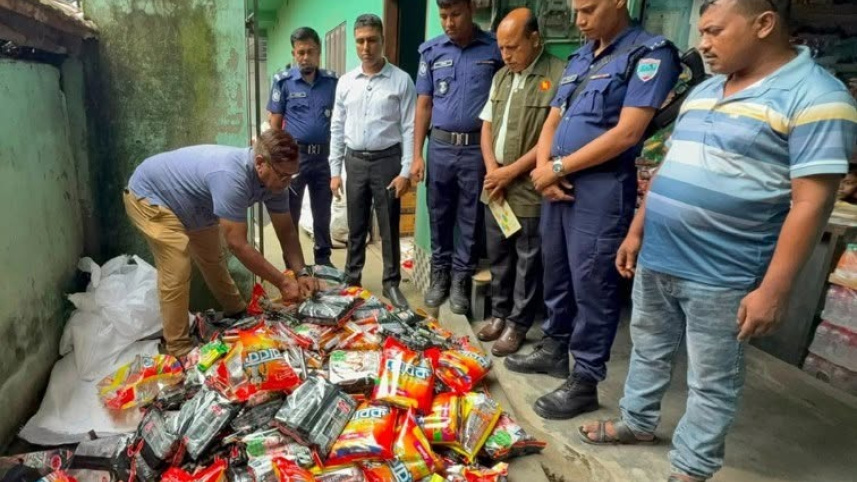
Over the past week, 15 children -- 10 boys and five girls -- were treated at Jashore General Hospital’s diarrhoea ward.
According to Dr Ahsan Habib Bappy, resident medical officer of the hospital, the paediatric admissions were linked to food poisoning.

He said the rise in such cases has been noticeable over the past several months, compared with the usual three or four cases of food poisoning every week.
The increase highlights a wider problem across Jashore, where children are increasingly exposed to unauthorised and potentially toxic packaged foods, including juices, chocolates, chips and processed milk, sold openly in colourful packaging at low prices.
Authorities say some are being produced in clandestine laboratories and unhygienic factories without approval from the Bangladesh Standards and Testing Institution (BSTI).
This year, the district administration, Directorate of National Consumers’ Right Protection, Bangladesh Food Safety Authority and Rab-6 have conducted more than a dozen drives across Jashore, including in Sharsha, Keshabpur and Monirampur.
Officials have found unapproved juices, jelly, chocolates, ice cream, biscuits and chips, as well as adulterated milk and honey. Investigators have allegedly found textile-grade dyes, harmful preservatives and artificial essence in some products, while soda, detergent, jelly and palm oil were allegedly used in milk.
Md Selimuzzaman, assistant director of the consumer rights directorate’s Jashore office, said a recent raid on Riva Foods uncovered lollipops, “Rob” products and “Al Foods” biscuits bearing fake BSTI seals. The seized products were worth around Tk 5 lakh.
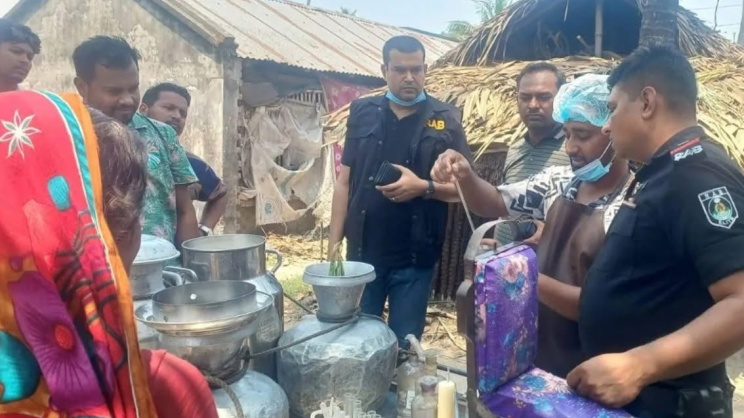
On April 5, a joint raid in Keshabpur’s Verchi village seized thousands of litres of adulterated liquid milk allegedly made using soda, detergent and jelly. The operator was fined Tk 2 lakh.
At Bismillah Madhu Trading in Sheikhhati, officials seized materials allegedly used to produce substandard honey and other food products. The owner was sentenced to six months in jail and fined Tk 50,000.
Another drive in Jashore town on February 28 seized around 400kg of expired and adulterated chips, which were later destroyed.
Dr Nazmus Sadiq, deputy civil surgeon of Jashore, said children are particularly vulnerable because their organs and immune and digestive systems are still developing.
“Unauthorised textile dyes and chemicals used in food can enter children’s bloodstream and impair the functions of the liver and kidneys. They can also increase the risk of cancer,” he said.
He said doctors regularly see children with severe abdominal pain, vomiting, diarrhoea and chronic jaundice, while prolonged exposure to harmful substances may also disrupt hormonal balance and development.
Sadiq said fines and occasional mobile court drives were not enough.
“The masterminds behind this racket must be identified and given exemplary punishment. At the same time, BSTI officials and sanitary inspectors need to strengthen market monitoring,” he said.
 For all latest news, follow The Daily Star's Google News channel.
Comments