


‘We expect visible changes in health sector within one to one-and-a-half years’

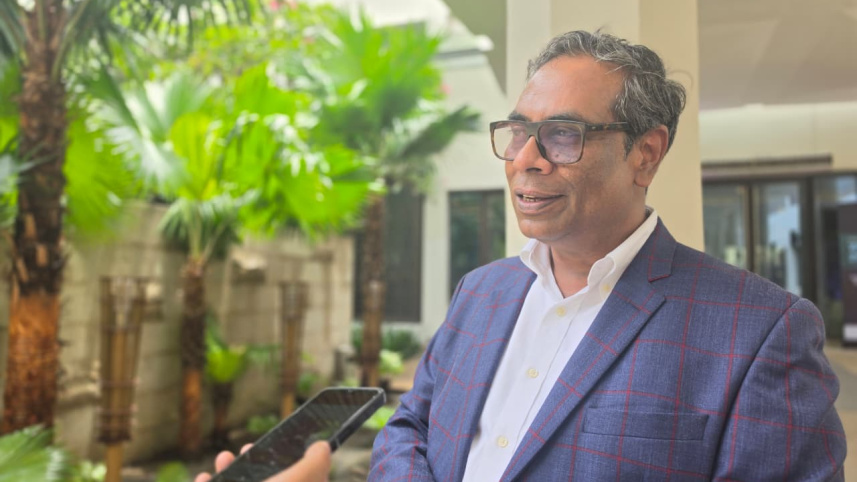
The BNP government has completed its first six months in office, with the health sector receiving the highest priority, including the largest-ever budgetary allocation. But how has the Health Ministry performed during this period? The Daily Star (TDS), spoke to State Minister for Health MA Muhit about the ministry’s performance, achievements and challenges.
TDS: How would you assess the health ministry’s performance in its first six months?

MA Muhit: The Ministry of Health is a huge ministry, affecting the lives of every one of the country's 20 crore people. We took office with a five-year plan to overhaul the health sector. Our first task was to assess the system and identify its problems. We found poor conditions at upazila health complexes, shortages of doctors and nurses, difficulties in accessing public hospitals, and people being forced to seek costly private treatment.
We wanted to bring healthcare closer to people, particularly by strengthening the upazila-level system. In the long term, we will focus more on prevention and primary healthcare than on treatment.
Over the past six months, we have mapped the sector and identified its major problems. Our efforts and frequent visits to health facilities have also helped restore some public confidence in the health system. If you visit hospitals now, you will see that the situation is somewhat better than it was six months ago, particularly in terms of doctors' attendance and overall service delivery.
We have announced plans to upgrade the country's roughly 500 upazila health complexes into 151-bed hospitals, with separate medicine, surgery and gynaecology departments. We are also strengthening specialised services at district hospitals, including plans for dialysis units at every district hospital. We are strengthening cancer services and plan to inaugurate five children's hospitals in October. There is much more work ahead, but we expect visible changes within one to one-and-a-half years.
TDS: The measles outbreak hit the country within a month of your government taking office, posing a major challenge. You launched a vaccination campaign quickly, but the ministry has since admitted that the target was wrongly set. The outbreak is still continuing, with people dying every day. Experts have also pointed to shortcomings in hospital management. What is your response?
MA Muhit: The measles outbreak was a huge shock for the government and the people. We responded very quickly. The immunisation programme had not been properly implemented since 2020, and a special campaign that should have been conducted in 2024 was not held. The vaccine supply chain was also disrupted, resulting in shortages.
The interim government and the government before it allowed the situation to reach this stage. We inherited the consequences.
Measles is extremely infectious, and vaccination is the most effective way to control it. We contacted domestic and international partners and ensured vaccine supplies within a month. We vaccinated more than 1.8 crore children nationwide, making it one of the world's largest vaccination campaigns.
So, there was no lack of effort on our part. But, as you rightly said, measles infections are still occurring. We remain very concerned. Yesterday [August 17, 2026], we held a one-hour meeting on the issue with the prime minister, examining the data. We also spoke to experts. I am a specialist in this field myself.
What happened was that, because this was an emergency response and measles cases and deaths were rising every day, we had to plan very quickly. We did not have the time for the kind of block-by-block mapping that is normally done for a routine measles campaign.
We used an estimated figure provided by Unicef. That estimate was somewhat outdated and therefore underestimated the actual number of children. After we vaccinated the targeted number, we found that there were still some children who had been missed.
We examined the data on children who died and found that 90 percent were unvaccinated.
Why were these unvaccinated children missed? This reflects the broader crisis in our health system. There has been corruption, and work has not been properly carried out.
I checked and found that around 40,000 health workers were supposed to be involved in the vaccination campaign. This is a country with a huge population, and the campaign had to be completed within a month. But 15,000 positions were vacant. So, we were short of 40 percent of the required manpower.
Under normal circumstances, that workforce would have achieved around 60 percent coverage. Despite the shortage, our health workers worked extremely hard and took the coverage to 90 percent. This is a systemic problem.
Science also tells us that, at the current rate of infection, we need to vaccinate all the children who were missed, that remaining 10 percent, so that the entire community can develop immunity.
If it takes another month to vaccinate them, it will take one or two months more for immunity to develop fully. So, we have to continue the measures to bring the outbreak under control for the next three months. We may then see the outbreak ending.
 For all latest news, follow The Daily Star's Google News channel.
 TDS: Your party's election manifesto included major commitments such as recruiting one lakh health workers, introducing an e-health card and expanding treatment through public-private partnerships. But most of these initiatives still appear to be at the initial stage. Why? Has the measles outbreak affected your plans?
MA Muhit: Yes and no. Managing such a major outbreak inevitably consumed many working hours, but we worked extra hours to advance our other plans.
These are huge initiatives. Digitising the entire health system, for example, involves around 15,000 health facilities. We need an overall digital architecture and must ensure the security of the enormous amount of personal and health data that will be generated.
We have been working with experts over the past six months and are developing demonstrations of the digital architecture. The e-health card pilot will begin this year. We already have an agreement and proposal with the Asian Development Bank.
We do not want to rush these initiatives and make mistakes. It is better to move slowly in the right direction than quickly in the wrong one.
We will recruit one lakh health workers in phases. We cannot recruit and train one lakh people at once. We have already conducted a workforce analysis and will initially start with at least 20,000 recruits. The process is underway.
Our existing field workers are divided among health, family planning and community clinics. We want to integrate them with new recruits and provide training for door-to-door primary healthcare.
Each primary healthcare worker will receive a kit containing advanced, digitally connected devices. They will be trained to measure blood pressure and conduct basic tests during household visits.
TDS: The Health Ministry has received the highest-ever allocation this fiscal year. But the health sector has a long-standing problem of failing to fully utilise development allocations. How will you spend the increased allocation, including around Tk 23,500 crore provided as a block allocation?
MA Muhit: It is both a challenge and an opportunity. Securing the increased allocation is a success, and the government is committed to providing the funds. But implementation remains a challenge because of bureaucracy and governance problems. These contribute to low utilisation of development allocations.
We had spent around one-and-a-half years before the election developing detailed health-sector plans. During the budget process, we reviewed existing projects because many were not interconnected. Some were aligned with our plans and others were not.
We have realigned existing projects, dropped those that did not fit our plans and added new ones.
For example, we have announced plans to upgrade around 500 upazila health complexes into 150-bed hospitals. The e-health card will require computers and tablets at around 1,500 health facilities. The one lakh health workers will need digital primary healthcare kits. We also plan to establish pathology laboratories, X-ray and ultrasound facilities at every upazila hospital. We have to spend huge amounts of money here.
TDS: Can you implement these initiatives within this year?
MA Muhit: We are not looking at this as a one-year programme. We have a five-year mandate, and we consider this year the first year of that journey.
The priority this year is to establish the foundation, prepare major projects that will continue for the next three or four years, align them with our policies and manifesto, and strengthen the team so it can overcome bureaucratic delays.
TDS: Like the previous government, your government has given political appointments across major health agencies. You have also approved additional hospital beds without yet ensuring the necessary manpower. There are concerns about the influence of pro-government doctors' associations. What is your response?
MA Muhit: We will not follow the practices of the previous regime. We have taken the issues of corruption and mismanagement very seriously.
We are also conscious of the danger of expanding the number of beds without ensuring manpower. We will not build another hospital without planning for the required workforce.
Manpower recruitment in the government system can take one or two years. Therefore, planning for infrastructure and manpower must begin simultaneously so that both are ready at the same time.
The previous government bought expensive machines without ensuring the manpower to operate them. Some machines were never even unpacked and eventually became unusable.
We will not repeat that. Before buying any machine, we will determine the manpower required to operate it.
TDS: What about political appointments?
MA Muhit: Political appointments are a national-level issue. There have been some appointments, but not many in the health sector. Health is different because qualifications and clinical expertise are important.
We believe we are appointing the right people. The media should assess their work. If anyone becomes involved in corruption or mismanagement, you should report it and the government will take action.
So far, their profiles show experience in working with communities and managing organisations, while many also have administrative backgrounds. We believe they can contribute to running these institutions effectively and advancing the government’s plans.
Comments