



Daisy Edgar-Jones to lead new adaptation of ‘Sense and Sensibility’
26 June 2026
•
TV & Film
‘Like a morning after a nuclear attack’
24 March 2023
•
Weekend Read
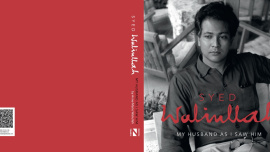
Book review: Nonfiction / Syed Waliullah: husband, artist, thinker, writer
17 August 2022
•
Books & Literature

Fear of sexual harassment triggering child marriage: survey
20 February 2022
•
Bangladesh

For the Love of Tea
7 January 2022
•
Star Literature
Court Corner / SC forms committee against sexual harassment
4 November 2021
•
SEXUAL HARASSMENT

UK-listed cybersecurity firm Avast in merger talks with NortonLifeLock
15 July 2021
•
Organisation News

Selfies of old school media
28 November 2019
•
Star Weekend

How to survive the end
28 November 2019
•
Star Weekend

THE LAST HUSTLE
28 November 2019
•
Star Weekend
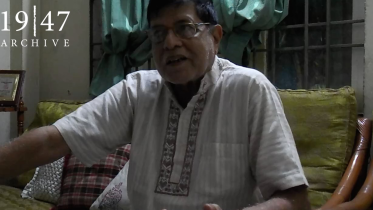
Mahammad Appu
A special train was arranged for Mr Appu's family and all of the workers in his father's factory to migrate from Lucknow.
24 August 2017
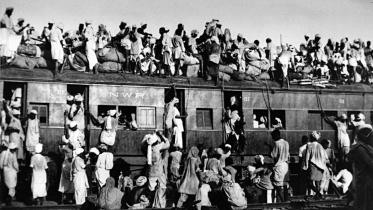
Partition 1947: Uprooted and divided
"It took me a long time to realise that my family and I, like every other citizen of the current state of Bangladesh, were directly and indirectly a by-product of the Partition to the extent that even our daily struggles sometimes evolved around it," writes Meghna Guhathakurta.
24 August 2017
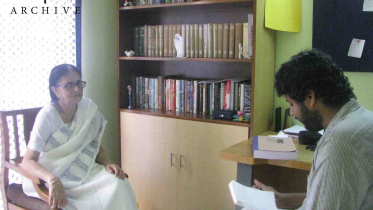
Manju Chakraborty
She says that when she visited Noakhali recently, she felt that both East and West Bengal are part of same culture. She would like to do away with the complex wires and visa system between two Bengals, she says.
24 August 2017
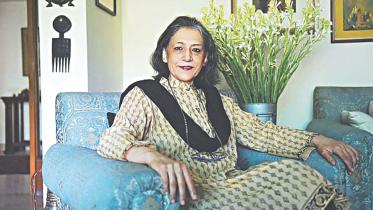
Separating a once historically indivisible people
"The partition of India was effectively the partition of the two main Muslim-majority provinces, Punjab and Bengal. There was nothing inevitable or pre-determined about this."
24 August 2017
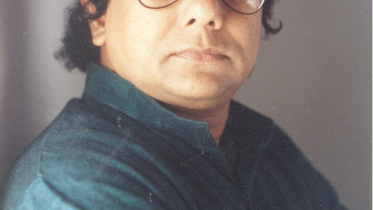
Rendering the great sense of loss of 1947 through film
In an interview with Star Weekend, Tanvir Mokammel talks about the significance of 1947 in his films, the role of artists in documenting history and the amnesia surrounding Partition among Bangladeshi filmmakers.
24 August 2017

University of Dhaka and the partitioning of Bengal
A recent and a very good historian of Bengal, Nitish Sengupta has observed that [in the mid-19th century] 'Nowhere else in the subcontinent were Muslims as worse off in Bengal, just as, paradoxically, few other communities derived as much benefit from British rule as the Bengali Hindus'.
24 August 2017
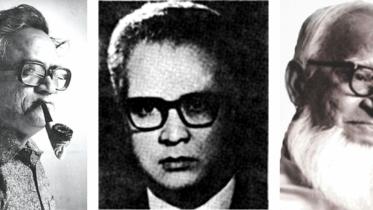
Partition and Bangladeshi literature
The Partition of the Indian subcontinent in 1947 has become indissolubly linked to horrific, haunting images of armed gangs or mobs attacking helpless groups of men, women and children trying to cross a border that had just been scratched on the map. Literature registers the shock in works that make harrowing reading.
24 August 2017
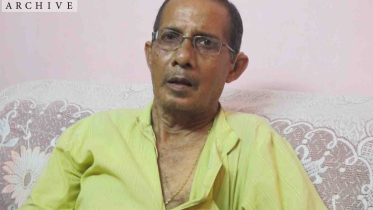
Akhilananda Dutta
Akhilananda Dutta comes from a family of doctors. Born in Dhaka in 1942 to a doctor and a housewife, he recalls that most of their family members were doctors at that time.
24 August 2017
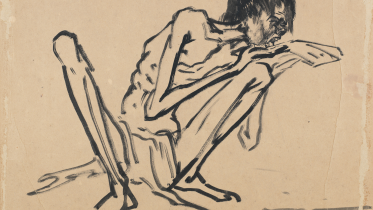
How communal politics ruined agrarian society
First, when it came to the ecological question, the two-nation theory, on which the partition was claimed to be based, was muted as seen in Punjab and Bengal where the question of partitioning the water bodies took the centre stage. Second, the immediate aftermath of the partition left thousands of people dead and millions homeless and filled with gruesome trauma.
24 August 2017

Partition 1947: How a nationalist movement turned communal
Who is to blame for the 1947 Partition of India and the large-scale violence that it triggered? There are accusations and recriminations.
24 August 2017
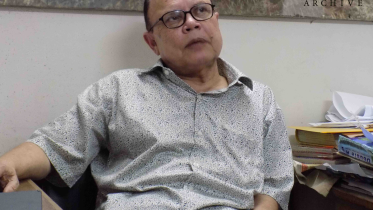
Ali lmam Majumder
Ali Imam Majumder was born in the village of Kalabari, Tripura in 1950. His maternal home was in Sylhet. His family had a great deal of land in the village and its surroundings.
24 August 2017
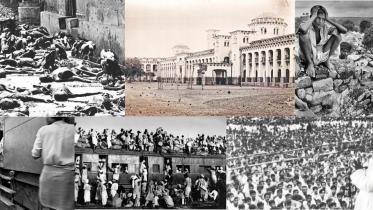
Why this special issue on Partition?
Is history too much with us? In some sense, yes, but in its broader and deeper sense, no.
24 August 2017
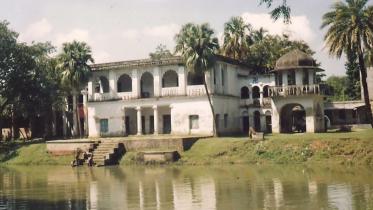
From postmemory to post-amnesia
For both Pakistan and Bangladesh, the time between 1947 and 1971 was best forgotten.
24 August 2017
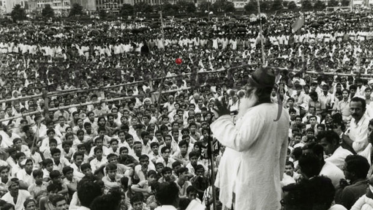
Ghosts of 1947
Bangladesh stands out in postcolonial South Asia for its strikingly anomalous relationship to what neighbours consider to be the foundational event in the region's modern history—the 1947 partition of British India.
24 August 2017

About Town
Women of Inspiration Awards
17 August 2017

3 ways to beat anxiety (well, one that actually works)
Spiderman has a great way of dealing with anxiety. He tingles in the head. Then he shoots a web and engages in a fight full of snappy comebacks.
17 August 2017
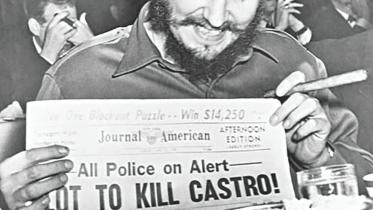
The nature of Cuban socialism
An interview with Fidel Castro
17 August 2017
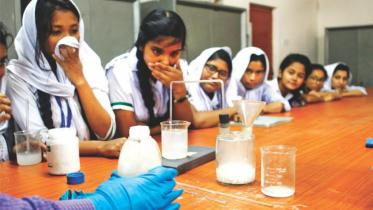
Science is out
The number of students pursuing science is decreasing at an alarming rate
17 August 2017
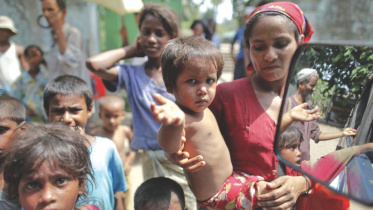
If Rohingyas were Hindu
A story by Reuters citing an Indian government spokesperson says that India is in talks with Bangladesh and Myanmar to deport 40,000 Rohingya Muslims, arguably one of the world's most persecuted ethnic groups.
17 August 2017
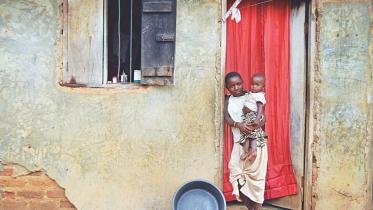
Separating morality from service
Learning about sexual rights from Uganda
17 August 2017