


Tangail taant: A classic saree for every weekday
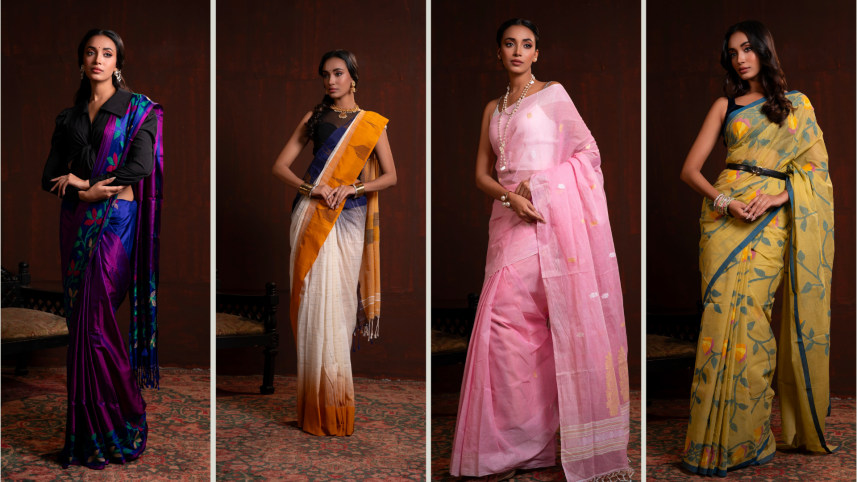
On a weekday morning, Tasfia Mumtarin is not thinking about making a fashion statement. She is thinking about Dhaka traffic. The dancer and sales executive at an automobile company has meetings ahead, several hours at her desk, perhaps a client visit, and dance practice later in the evening. Her question is simple: could a saree realistically survive all of that?
“I would wear sarees more often if I stopped thinking that wearing one meant I had to dress up,” explains Mumtarin. “If I can wear a cotton saree with a comfortable blouse, flats, a big work bag and almost no jewellery, then it becomes clothing rather than an occasion.”

That distinction may be precisely what the Tangail saree needs.
For a textile so deeply connected to Bengal’s clothing history, the Tangail saree increasingly finds itself in a curious position. We bring it out for Pahela Baishakh, Puja, weddings, office celebrations, and cultural programmes. Yet, the saree that could be one of the most practical pieces in a Bangladeshi wardrobe often waits patiently for an “occasion.”
Perhaps, the more interesting question is not how to preserve the Tangail saree, but how to wear it again.
A saree made for real life
There is little about traditional Tangail that inherently demands ceremony.
Tangail sarees are known for their fine texture, local motifs and detailed weaving, and can be made using cotton, silk or jute.
In 2025, UNESCO inscribed the traditional saree weaving art of Tangail on the Representative List of the Intangible Cultural Heritage of Humanity, recognising a weaving tradition sustained across generations of Basak and Jhola communities.
However, cultural importance does not mean a garment needs to become precious to the point of impracticality.
In fact, some of the qualities associated with taant make it especially appropriate for Bangladesh. Lightweight cotton, breathability and relatively uncomplicated care have long made handloom sarees suitable for humid weather and regular use
Fashion director and stylist Sonia Yeasmin Isha points first to accessibility.
“First of all, Tangail sarees are reasonably priced. They are affordable for almost everyone,” she remarks. There is, of course, enormous variation within the category. Everyday cotton Tangails coexist with elaborate, highly valuable pieces. A weaver from Tangail Saree Kutir Ltd. explains that Tangail should not be automatically equated with inexpensive casual wear.
“There are many expensive Tangail sarees. Some cost more than Tk 1,00,000,” he says. “These sarees can easily be worn at weddings or any kind of party.”
That range may actually be one of Tangail’s greatest strengths. It does not have to choose between the everyday and the extraordinary. The same weaving tradition can occupy both spaces.
The problem may not be the saree
Ask many young women why they do not wear sarees regularly and the answers are predictable: too difficult to drape, too formal, too much fabric, difficult for commuting, uncomfortable for a full working day.
Some of these concerns are genuine. Others have as much to do with how we have learned to style a saree as with the garment itself.
We often construct a complete ritual around it. A matching blouse must be made. Jewellery needs to be chosen. The anchal needs to behave. The pleats must be exact. Hair and makeup suddenly require attention.
By the time the look is complete, what began as six yards of cotton has turned into an event.
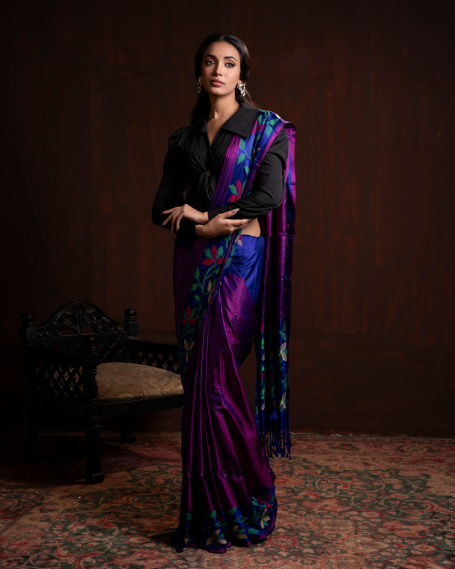
Isha proposes treating Tangail much more freely. “It can be paired with almost anything and styled in many different ways,” she says.
 For all latest news, follow The Daily Star's Google News channel.
 For office wear, she suggests a blazer over the saree. A shirt can be knotted and worn as a blouse. In winter, a high-neck or black turtleneck can replace the conventional blouse, with a belt or jacket added if desired.
Even a familiar Tangail can therefore behave differently depending on what surrounds it. That may be particularly relevant for younger wearers who do not necessarily want to look “traditional” simply because they are wearing a traditional textile.
Stop saving your good sarees
There is another habit worth questioning: the Bangladeshi tendency to save clothes.
The beautiful saree remains folded because it is “too good” for work. Another is reserved for an invitation that never quite matches it. Years later, a wardrobe can contain perfectly wearable handloom sarees that have appeared in public only twice.
For Nafisa Raidah, a communications professional, repeat wear would make sarees much more appealing.
“If I buy a Tangail saree, I want to know I can wear it to work on Monday, to lunch with friends a month later, and then to a family dinner with different accessories,” she shares. “I don't want every saree to have one fixed identity.”
It is a useful way of thinking about sustainability too. Sustainable fashion is not only about what something is made from. It is also about whether we actually wear what we own.
An everyday Tangail does not require five separate sarees for five looks. One muted saree might be paired with a white shirt for work, a sleeveless blouse and silver jewellery for dinner, a contrasting cotton blouse for daytime, and a jacket during winter.
The repeat is not a styling failure. The repeat is the point.
What about the stiffness?
One practical complaint about new cotton Tangail sarees is that they can initially feel crisp or slightly voluminous.
Isha acknowledges this. “Many people avoid Tangail sarees because the fabric can feel slightly stiff or puffy,” she clarifies. “However, after a few washes, it usually becomes much softer.”
That is an important everyday detail because we often judge handloom clothing straight from the shop rather than considering how natural fabrics change with use.
A saree that softens over time develops familiarity. It becomes easier to pleat, easier to move in and less intimidating. In that sense, an often-worn Tangail may actually become more useful than one permanently preserved in pristine condition.
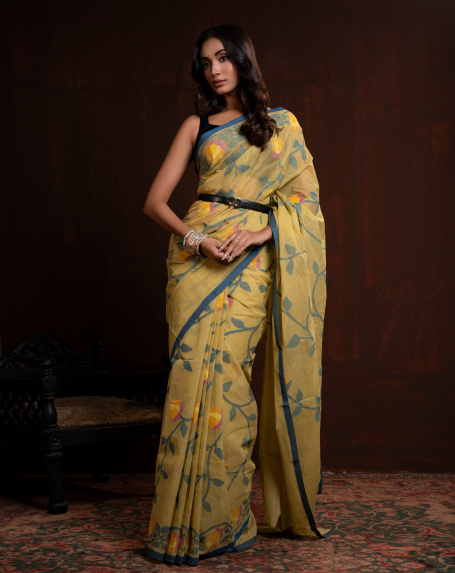
For a workday, practical choices matter too: secure the pleats with pins, keep the pallu manageable, choose shoes that allow walking, avoid unnecessarily heavy jewellery and select a blouse that lets the arms move freely.
A saree does not have to be worn as though one is perpetually arriving at a reception.
Let the border do the talking
Tangail also lends itself naturally to restrained dressing.
Isha notes the variety within its visual language. Some sarees have broad, striking borders; others have narrow ones, while some place greater emphasis on motifs across the body. “In most Tangail sarees, however, the border is one of the main attractions,” she elaborates.
For someone beginning an everyday saree wardrobe, that means the textile can supply its own decoration.
A strong border hardly needs a statement necklace. A saree with small motifs can work with a plain blouse. Black, white, beige, indigo and other versatile blouse colours can remove the pressure to tailor something new for every saree.
The goal is not to make Tangail resemble Western clothing to call it contemporary. It is to remove unnecessary rules around how it must be worn.
The saree does not need rescuing. It needs wearing
The Tangail saree has already demonstrated an extraordinary ability to adapt. Weavers have long responded to changing tastes through new colours, designs and motifs. Historical reporting from Tangail likewise shows artisans producing both casual handloom sarees and more expensive versions while adapting designs to contemporary demand.
Its relevance therefore does not have to depend on nostalgia. Nor does honouring craftsmanship require keeping it behind glass.
UNESCO recognition understandably places renewed attention on Tangail’s weaving knowledge, communities and cultural importance. Bangladesh also lists Tangail saree as a registered geographical indication product. Perhaps, one of the most meaningful forms of this appreciation happens far away from exhibitions and ceremonies. It is when someone reaches into the wardrobe before work and chooses a Tangail.
Isha believes younger wearers are already drawn towards cotton and softer, more comfortable fabrics. What remains is to show them the possibilities. “We now need to introduce Tangail sarees to a wider audience,” she says. “People should be shown that these sarees can be worn in many different ways and styled in a variety of contemporary looks.”
For generations, Tangail's looms have produced extraordinary clothing. Perhaps the next chapter is wonderfully ordinary.
Model: Proma
Fashion Direction & Styling: Sonia Yeasmin Isha
Wardrobe: Tangail Saree Kutir Ltd.
Makeup: Sumon Rahat
Hair: Probina
Location: Studio Crane, Dhaka
Lighter Gaffer: Selim Ahamed & Shakil
Comments