


Exams in a flood: Who are we really testing?
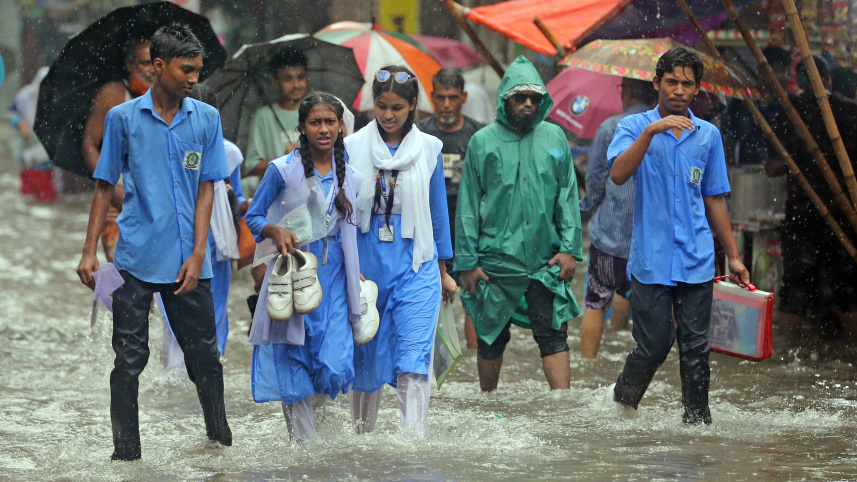
Every year, we remind our students that the HSC examination is one of the defining moments of their academic lives. This year, however, I found myself asking a very different question. How do you ask a student to focus on a test paper when they do not even know if they will be able to reach the venue?
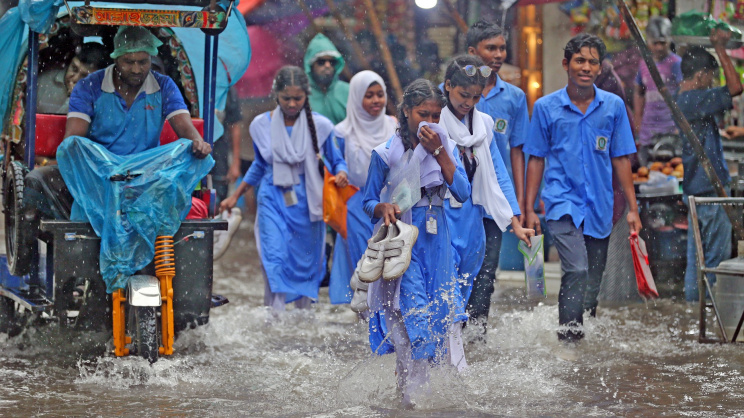
Imagine walking through waist-deep, filthy floodwater just to reach an examination hall. Slipping, falling, getting hurt. Imagine arriving soaked, exhausted and terrified, and then being asked to give it your best. What exactly are we expecting from these children? A golden GPA-5?

Yes, there are students who say they performed well because they prepared thoroughly. Good for them! Their hard work deserves recognition. But they represent only one part of the picture. The reality is that a significant number of candidates suffered regardless of how prepared they were.
Some will inevitably dismiss this by saying students always protest when exams do not go well. Honestly, under any other circumstances, that argument would stand. But there is nothing normal about asking thousands of young candidates to sit for one of the most consequential exams of their lives while navigating a natural disaster.
As a teacher, I prepare students for exams each year. I encourage them to revise, practice and believe in themselves. But I also know that learning cannot be separated from basic human realities. Merit cannot exist in isolation from circumstance.
What does merit really mean when some students are battling challenges others never have to face? Can an examination truly measure ability when access to it is unequal? At what point do we stop glorifying “resilience” and start questioning why children are repeatedly expected to prove it under circumstances that adults themselves would struggle to endure?
As someone who studied under the British curriculum, I understand educational disruption all too well. My generation sat for exams at 12:45 AM because international schedules could not be altered despite political unrest. We sat for exams on the day of Eid, or the night before.
But let us not pretend these situations are the same.
Among us, there are some who seem to think HSC candidates are finally “understanding what we went through.” I find that absurdly ironic. It ignores the most basic truth: the reality of this situation is vastly different. This is not some poetic revenge plot by nature. This is not a dramatic lesson in karma. This is a very real, very frightening crisis for HSC candidates who were forced to confront floodwater, panic and uncertainty on the very day they were expected to perform.
In our case, where the examination board follows international time, local authorities simply do not have the flexibility to move a schedule. This situation did not carry the same constraints.
The contrast becomes even more troubling when we consider the consequences. If an A-level candidate misses a paper because of exceptional circumstances, there are future sessions where that subject can generally be retaken. For HSC candidates, missing a paper means waiting an entire year to repeat the whole board examination.
In short, a single morning can cost them a year.
What troubles me most is not simply the disruption. It is the message we educators send now. We teach empathy, fairness and responsibility. But children learn from examples that we set, right? When our system fails to respond to extraordinary circumstances, what example are we setting? Why would they go ahead in life and feel responsible in any way for this nation when they watched those same institutions hesitate in moments of their crisis?
Perhaps the examination will eventually be rescheduled. Maybe the paper will even be cancelled. But what happens then to the students who, against all odds, somehow managed to perform well? They, too, deserve fairness.
That is exactly the point.
This was never supposed to become a question of whose interests outweigh whose. Education should never be reduced to a majority vote where one group of students inevitably loses so another can be accommodated. The question we should be asking is far simpler: why were they forced into this impossible situation in the first place?
A timely decision, guided by sound judgment and basic humanity, could have prevented this entire dilemma. Instead, as we have seen in far too many sectors of this country, decisive action often arrives only after public outrage, protests or mounting pressure. We wait until a crisis becomes impossible to ignore instead of preventing it when the warning signs are already there.
And while institutions deliberate, defend and delay, only one group continues to pay the price: the students.
This cycle has become so familiar that we almost accept it as inevitable. We should not. Education should never teach our children that they must first suffer before someone decides they deserve compassion.
 For all latest news, follow The Daily Star's Google News channel.
Comments