


Living in Dhaka means loving the beautiful chaos
Novelist Italo Calvino once wrote, “You take delight not in a city’s seven or seventy wonders, but in the answer it gives to a question of yours.” If we are being honest, Dhaka does not always answer our questions politely. Sometimes, it answers with a horn at 8:30 AM, a road blocked for no visible reason, and a bus conductor shouting destinations as if announcing the end of civilisation. Yet somehow, this impossible city keeps answering one question for millions of people: Where do I belong?
Some metropolitan cities charm you at first sight. Dhaka is certainly not one of them. It does not behave like a European postcard or a carefully edited travel reel. And you will not be offered quiet boulevards, disciplined traffic, or strangers who understand the concept of personal space.

Dhaka arrives like an overexcited relative at a family wedding: loud, chaotic, sweaty, emotionally overwhelming, and impossible to ignore.
To love Dhaka is to love contradiction. We complain about the traffic, and then miss the very noise when we are away. We curse the crowds, then feel strangely lonely in places where roads are empty, and nobody is shouting “Mama, jaben?” We dream of peace, then after three days of too much peace, begin to wonder why the silence feels suspicious.
Try living in a rural area for a week, or a month if you are brave. At first, it will feel like therapy. The air is cleaner, the sky appears larger, and the stars do not need permission from neon signs to exist. You may wake up to birds instead of construction drills.
You may even feel morally superior, as if leaving Dhaka has automatically made you a better person. But then, slowly, something odd happens. You miss the roadside fuchka that was probably not approved by any nutritionist but approved by your soul. You miss being able to find a pharmacy, tailor, photocopy shop, biryani place, mobile recharge point, and emotional crisis within the same 200 metres.
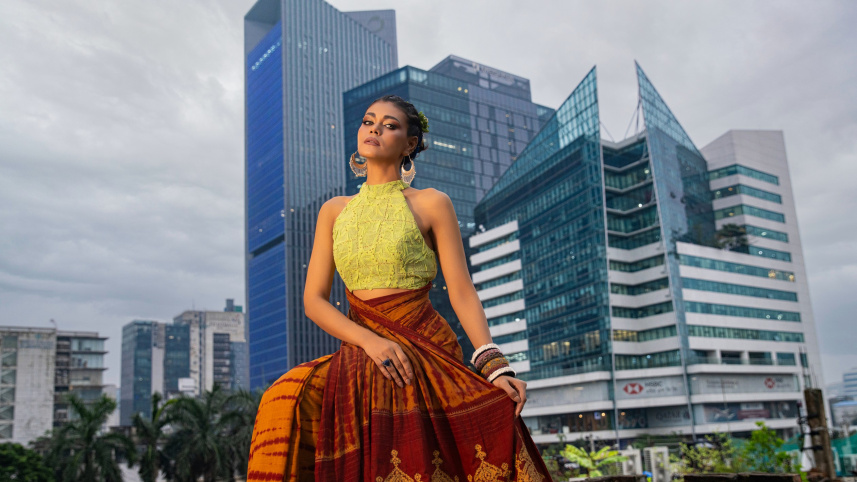
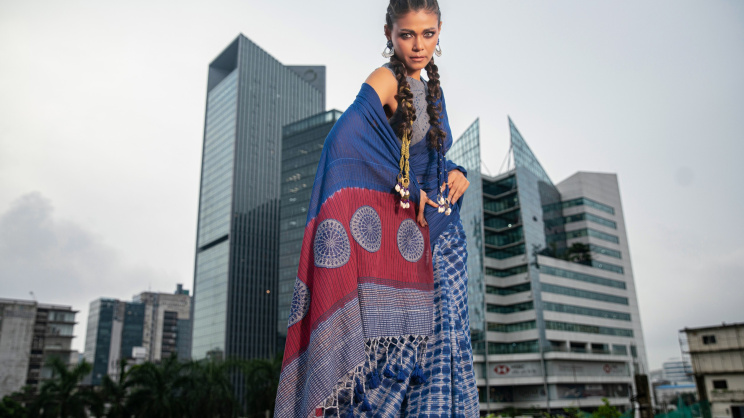
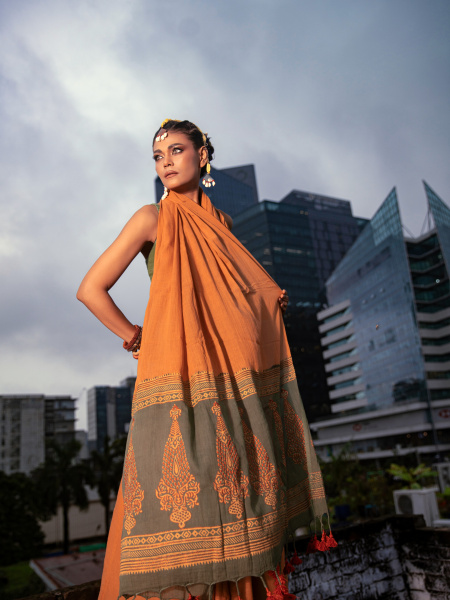
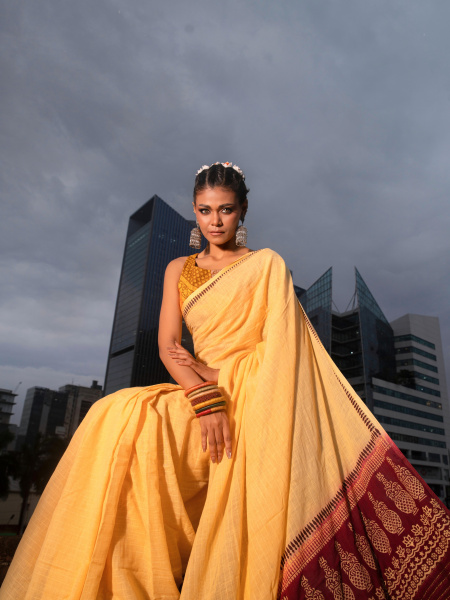
And then there is Dhaka’s fashion, which may be one of the most honest ways the city expresses itself. The metropolis dresses like its personality: layered, restless, dramatic, practical when necessary, and completely uninterested in being understood by outsiders.
On one side, there are glass towers, corporate lobbies, cafés with expensive lighting, and people in linen shirts discussing deadlines over iced coffee. On the other, there are cotton sarees drying on balconies, block-printed kurtas in office elevators, kameez sleeves rolled up before a bargaining session, and rickshaw art colours accidentally competing with designer collections.
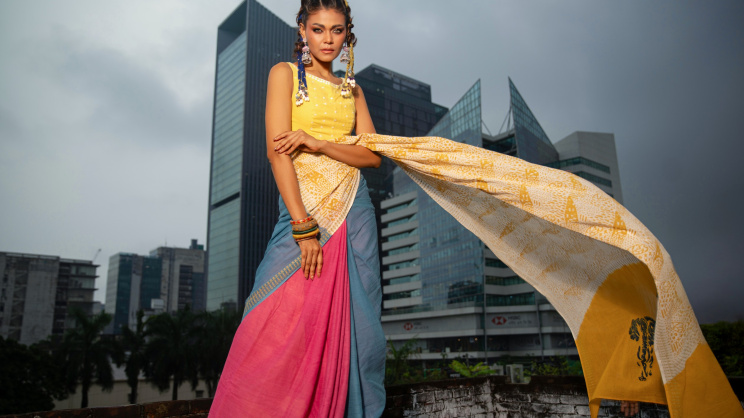
Dhaka’s fashion does not belong only to boutiques or runways. It lives in New Market tailors, Eid crowds, university campuses, Gulshan rooftops, Mirpur workshops, Banani studios, and roadside stalls where a woman can find the exact shade of lipstick she did not know she needed.
That is when you realise Dhaka is not just a city. It is a habit.
Years ago, Sigmund Freud explored the relationship between the outer world and the inner life. Dhaka seems to have mastered the art of entering both.
Why? For starters, it does not allow emotional privacy. You may be heartbroken in a CNG, anxious in a traffic jam, furious at a bus driver, or quietly proud after getting through a difficult day at work. The city witnesses everything.
It knows our shortcuts, our unpaid bills, our favourite cha, our gym plans that lasted three days, and our secret belief that one day the commute from Uttara to Dhanmondi will take only twenty minutes. Hope, after all, is the official fuel of Dhaka.
Of course, loving Dhaka does not mean pretending it is easy. The city can be deeply unfair. Some experience Dhaka through air-conditioned cars, apartment balconies, cafés, and weekend brunches.
Others experience it through crowded buses, rising rent, waterlogging, long shifts, and the daily mathematics of survival. A city cannot be romanticised honestly without acknowledging who pays the highest price for its growth.
And yet, tenderness survives here with almost ridiculous determination.
 For all latest news, follow The Daily Star's Google News channel.
 A tea stall becomes a parliament of local opinions. A balcony holds money plants, drying clothes, and one plastic chair that has seen more emotional breakdowns than most therapists. This is Dhaka’s genius. It exhausts us, then feeds us. It steals our time, then gives us stories. It tests our patience, then reminds us that patience can be a shared national sport.
People keep coming to Dhaka because, despite everything, the city still promises possibility. A young graduate arrives with a suitcase and ten versions of a future. A journalist chases a story through traffic.
A small business begins from a Facebook page while a student prepares for IELTS in a café. A designer, driver, teacher, cook, banker, artist, nurse, entrepreneur, and activist all try to carve space out of the same overcrowded map.
That is the real metropolis: not just buildings, but human momentum.
We love Dhaka not because it is beautiful in the usual way. We love it because it is alive, demanding, ridiculous, oftentimes generous… and ours.
Model: Manwara Joly
Styling & Fashion Direction: Sonia Yeasmin Isha
Wardrobe: Label Imam Hassan
Makeover: Sazzad Hossain Piash
Location: Studio Crane Dhaka
Light Gaffer: Selim Ahmed and Rakib
Comments