


At the foot of the world's most sacred mountain
Some journeys are mapped by GPS. Others are drawn by destiny.
My journey to Mount Kailash and Lake Manasarovar in June 2025 was not just a trip; it was the fulfilment of a long-standing dream, born from faith and driven by perseverance.

A dream that refused to die
For years, I had tried to find a way to Kailash. I contacted numerous agencies in Kathmandu and Lhasa, only to be told repeatedly: “It’s not possible.” The permits were too complex, the political climate too uncertain. However, the dream would not let me go. The acclaimed film “Seven Years in Tibet,” starring Brad Pitt, fuelled my aspiration to visit Tibet before I die.
My dream was no longer just a dream. It finally came to life through sheer determination and with the support of Salahuddin Sumon, Bangladesh’s most-followed travel YouTuber. Together, we began our journey to Tibet through Xining, choosing the highest railway line in the world to reach Lhasa: the Qinghai–Tibet Railway.
The world’s toughest railway and the journey through the sky
The Qinghai–Tibet Railway is an engineering marvel, cutting across permafrost, climbing above 5,000 metres, and stretching through some of the world’s harshest terrain. More than 960 kilometres of this railway lie above 4,000 metres, and it took us 22 hours to travel the 1,900 kilometres from Xining to Lhasa.
On our way, we crossed Tanggula Railway Station, which stands at 5,068 metres above sea level, making it the world's highest railway station. It was midnight when we passed this station. Interestingly, we could still see the plateau because China observes a single time zone across the entire country, which felt quite surreal.
As the train crossed the Kunlun Mountains, we were treated to a dreamlike journey: Tibetan nomads herding yaks, endless grasslands beneath open skies, and a silence that felt sacred. I have seen beauty in many corners of the world, but this journey to the roof of the world was unforgettable.
Lhasa: A city between Earth and the divine
In Lhasa, I immersed myself in Tibetan history and spirituality: The iconic Potala Palace, once the winter residence of the Dalai Lama; the sacred Jokhang Temple, the beating heart of Tibetan Buddhism; the vast Drepung and Sera Monasteries, where monks debate in courtyards lined with centuries of knowledge.
The highlight of it all was visiting the tomb of Atish Dipankar, the great Bengali scholar who helped shape Tibetan Buddhism. To find a revered Bengali sage honoured in the heart of Tibet was overwhelming — a moment of immense pride and emotional connection.
We also experienced the dazzling Princess Wencheng Show, a grand open-air performance under the stars depicting a royal journey that united China and Tibet more than a thousand years ago.
Sacred lakes, mountain majesty, and the Everest revelation
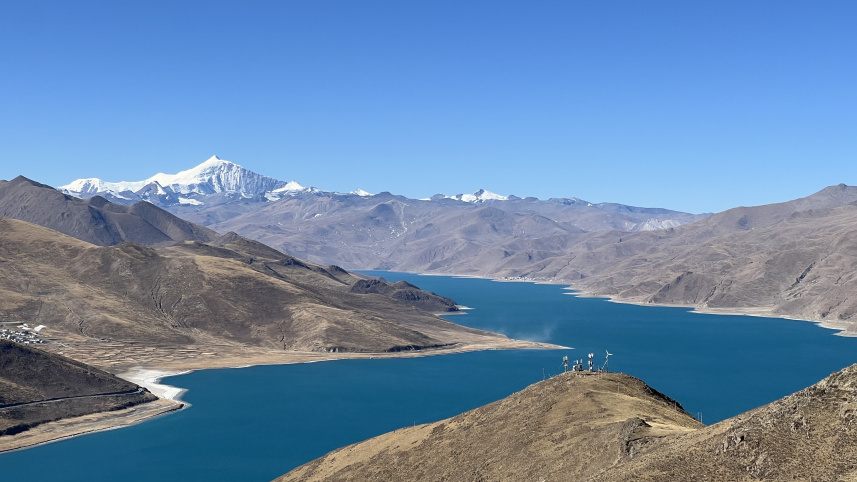
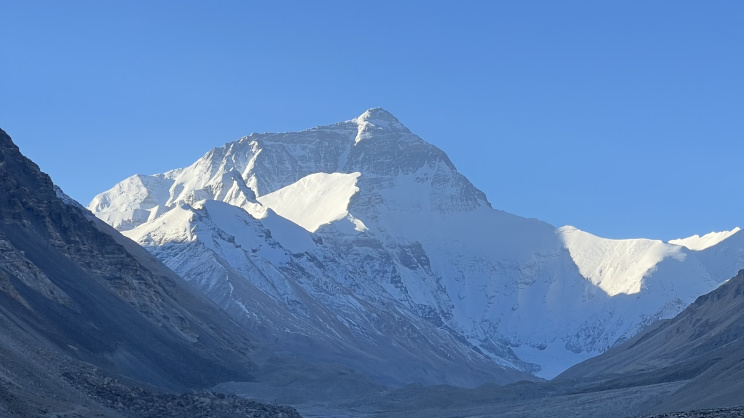
Travelling further west, we passed surreal turquoise lakes like Yamdrok, shimmering like a jewel at 4,443 metres. Then came one of the greatest moments of the journey: Everest Base Camp on the Tibet side, at an altitude of 5,200 metres.
Unlike Nepal, where days of trekking are required, here a bus can take you straight to the base.
The view was simply majestic: a full, unobstructed face of Mount Everest, the highest mountain on Earth, standing like a silent guardian. It was humbling beyond words. Yet, the night at base camp proved extremely difficult, as I could not sleep because of an intense headache and the effects of the thin air.
And yes, I thoroughly enjoyed Tibetan food along the way: steaming bowls of thenthuk, juicy yak meat momos, and buttery po cha (Tibetan tea) that kept us warm in the chilly mountain air.
Mount Kailash: Where earth touches the eternal
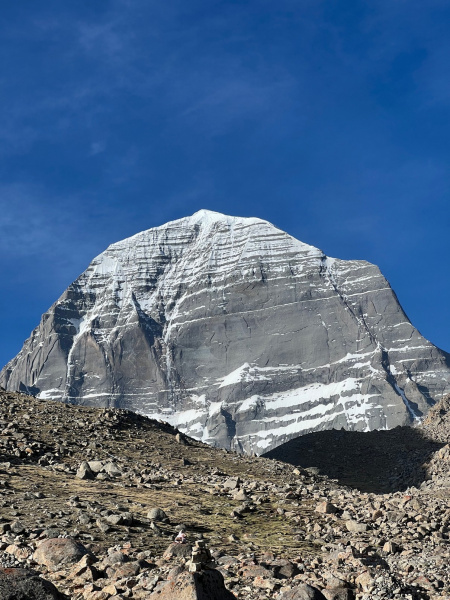
And finally, we reached Mount Kailash. There it was, rising to 6,638 metres, its pristine peak untouched by human feet. No one has ever climbed it, out of reverence. For Hindus, it is Lord Shiva’s eternal abode. For Buddhists, it is the sacred seat of Demchok. For Jains, it is where Rishabhadeva attained liberation. And for followers of Bon, it is the spiritual axis of the world.
At the source of rivers and revelation
The Indus, Brahmaputra, Sutlej, and Karnali rivers all rise from this region. These rivers nourish civilisations across South Asia. To see their sacred glacial beginnings reminded me how everything is connected: spiritually, geographically, and humanly.
Reflections from the edge of the world
Sitting on the shore of Lake Manasarovar, with the golden glow of Mount Kailash reflected in its still waters, I understood something clearly:
This journey was not about distance, but depth. Not about trekking, but transformation.
 For all latest news, follow The Daily Star's Google News channel.
 It was the kind of travel that changes who you are.
Photo: Courtesy
The writer is a Mass Communication and Journalism graduate from the University of Dhaka, a travel enthusiast, filmmaker, and tourism entrepreneur.
Comments