Hormuz 2.0? The Six Degree Channel and Bangladesh's maritime security

“For whosoever commands the sea commands trade; whosoever commands the trade of the world commands the riches of the world, and consequently the world itself.”
--Sir Walter Raleigh, A Discourse of the Invention of Ships, Anchors, Compass, &c.
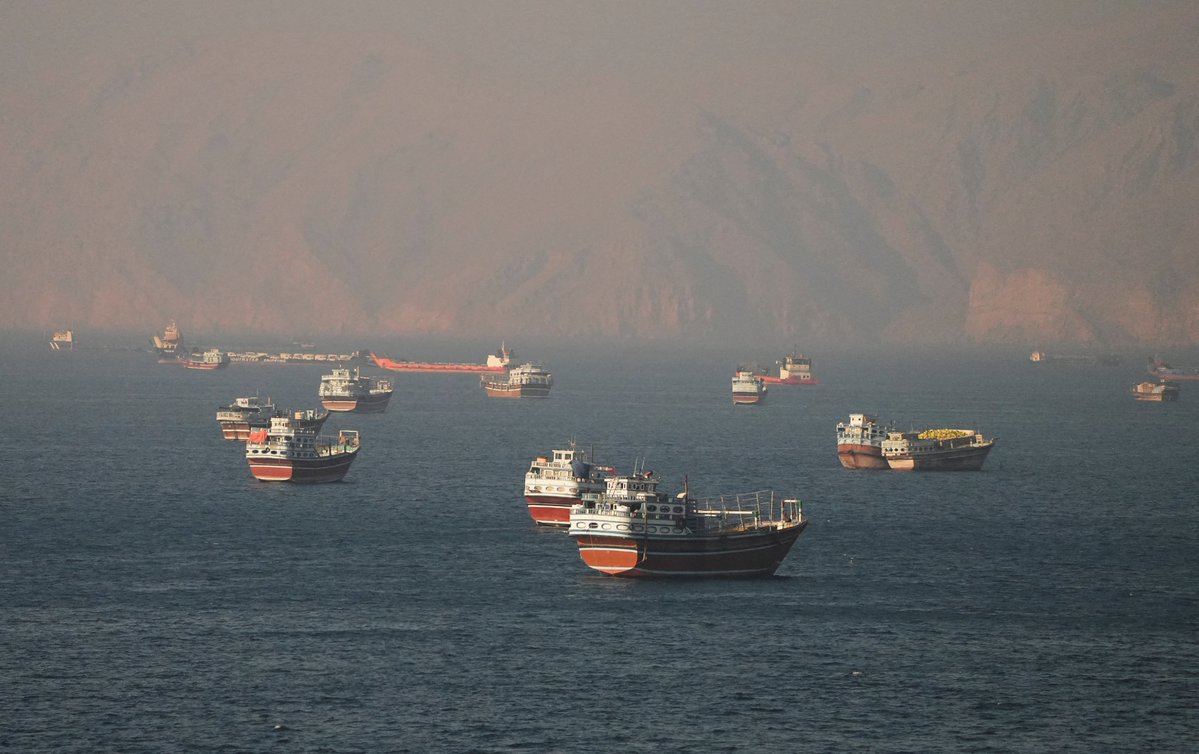
The control of strategic waterways has always served as a critical source of wealth and power for nations, and the ongoing crisis around the Strait of Hormuz acts as a constant reminder of this. After the outbreak of the US–Israeli war against Iran, the latter has effectively sought to use its proximity to the important maritime chokepoint to tip the balance in its favour. As Iran continues to block ‘unauthorised’ shipping through the narrow strait, and the US struggles to open it through a combination of coercion and diplomacy, the crisis has created the largest supply disruption in the history of the global oil market, causing severe disruptions to the global economy. As the Persian Gulf confronts a profound maritime security crisis, Bangladeshi naval strategists must keep a close watch on developments there.
The Six Degree Channel: A source of potential conflict
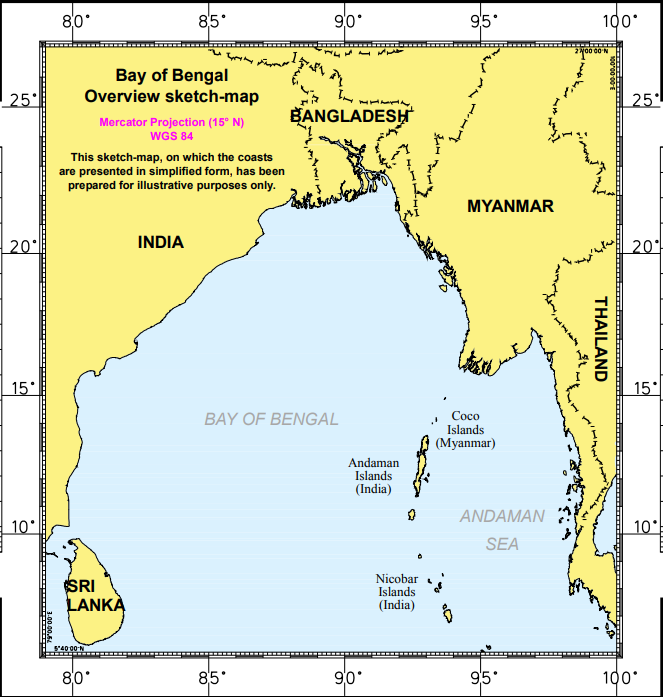
Bangladesh is a maritime nation with a 580 km-long coastline along the Bay of Bengal—the largest triangular bay in the world. Approximately 30% of global trade and 50% of the world's container traffic pass through the Bay of Bengal and its adjacent sea corridors. The Bay of Bengal is a broad and open basin with multiple approaches and therefore does not have a single narrow exit akin to the Strait of Hormuz. However, there are several nearby chokepoints that serve a similar strategic function for vessels, and the Six Degree Channel is one of them. The channel holds substantial geostrategic and geoeconomic significance, but its salience is rarely publicised, unlike the Strait of Hormuz, the Bab el-Mandeb Strait, or the Strait of Malacca.
The 163-km-wide Six Degree Channel, alternatively known as the Great Channel, derives its name from its location near 6° North latitude. The channel separates India's Great Nicobar Island from Indonesia's Sumatra Island while connecting the Bay of Bengal to the Andaman Sea. A substantial share of shipping travelling between East Asia and Southeast Asia on the one hand and South Asia, the Middle East, and Europe on the other traverses the channel. Since the channel is located near the Andaman and Nicobar Islands—a Union Territory of India—New Delhi has the capacity to monitor naval and merchant vessels, conduct maritime surveillance using aircraft, ships, and radar, and, in the event of armed conflict, deny access to its adversaries. Accordingly, India is currently implementing the highly ambitious Great Nicobar Project—formally, the Great Nicobar Island Development Project (GNIDP)—to strengthen its air and naval capabilities, keeping the nearby Strait of Malacca in mind.
After the outbreak of the crisis in the Strait of Hormuz, Indian media outlets began arguing that India has the capacity to create its own version of the Strait of Hormuz crisis through its control over the Andaman and Nicobar Islands. As the strategic competition between China and India continues to manifest itself in the Indian Ocean region and beyond, New Delhi continues to view China's "Malacca dilemma"—its dependence on the narrow Strait of Malacca for the supply of critical raw materials—as a strategic vulnerability to exploit. Indian strategists believe that, in the event of a war between China and India, the Andaman and Nicobar Command of the Indian Armed Forces could block the Six Degree Channel and, by doing so, severely restrict shipping to and from China through the nearby Strait of Malacca.
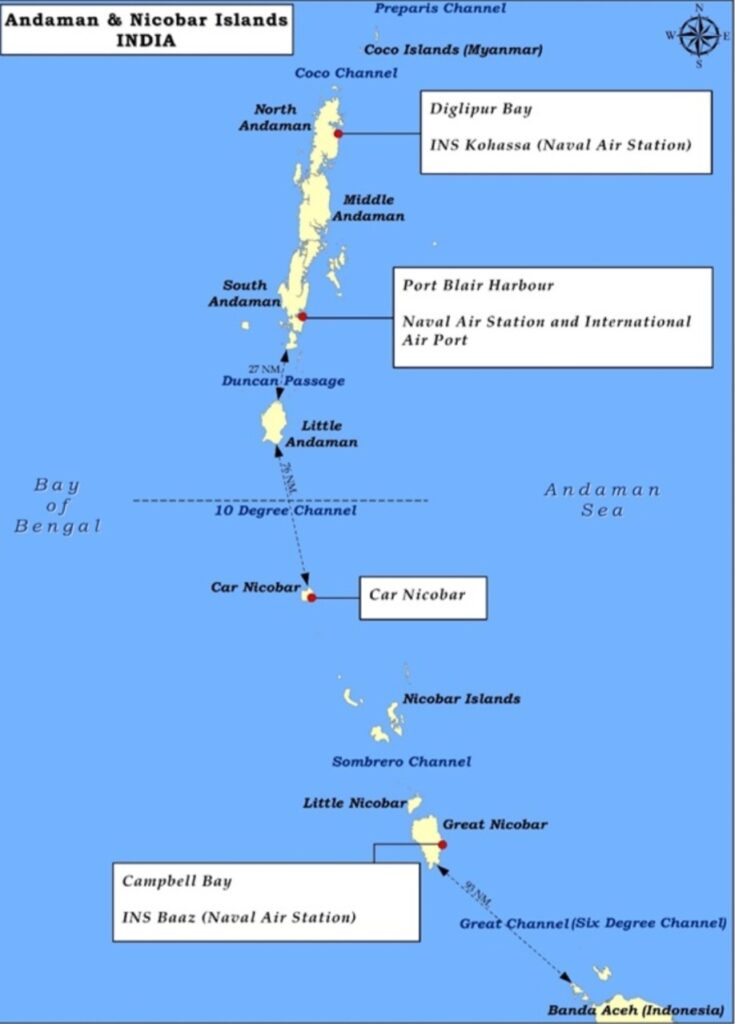
However, while there is no viable alternative to the Strait of Hormuz, there are several alternatives to the Six Degree Channel, including the Ten Degree Channel between the Andaman and Nicobar island groups, the channels east of the Nicobar Islands, and other routes such as the Sunda Strait and the Lombok Strait. Therefore, while India cannot easily replicate Iran's successes in the Strait of Hormuz, it could still severely disrupt maritime trade through the Bay of Bengal by blocking, or attempting to block, the Six Degree Channel in the event of a conflict.
A Hormuz scenario in the Bay of Bengal? Bangladesh's options
Any conflict in or near the Bay of Bengal would create a range of strategic challenges for Bangladesh. Ninety per cent of the country's international trade is seaborne, and a substantial part of it is conducted with East and Southeast Asian states. A large share of Bangladesh's maritime trade with countries such as China, Japan, the Republic of Korea, Singapore, Malaysia, and Vietnam passes through or near the Six Degree Channel. Hence, any restrictions on maritime passage through or near the channel would place Dhaka in a difficult strategic position.
First, a closure or attempted closure of the Six Degree Channel would expose Bangladesh's eastern trade routes to transit delays, vessel inspections, and/or alternative routing. This would adversely affect the country's economy and generate socio-political unrest.
Second, Bangladesh imports refined petroleum, liquefied natural gas (LNG), and coal from East and Southeast Asian states, and restricted passage through the Six Degree Channel would delay deliveries, raise shipping and insurance costs, and increase domestic energy prices. Hence, a closure or attempted closure of the channel would pose a major threat to the country's energy security.
For Bangladesh, whose economy is overwhelmingly reliant on uninterrupted seaborne trade, any disruption to this critical maritime corridor would threaten trade with East and Southeast Asia, undermine its energy security, and reduce its strategic autonomy.
Third, the Bangladesh Navy is considered a green-water navy and therefore lacks the capability to secure distant sea lines of communication (SLOCs) extending to the Six Degree Channel. Hence, in the event of a maritime crisis in or near the Bay of Bengal, Dhaka would have limited options for safeguarding its interests.
Finally, in the event of a crisis, Bangladesh would have only a limited ability to ensure unfettered access to the Six Degree Channel, resulting in dependence on regional or great powers for its economic security. This would diminish the country's strategic autonomy.
Under these circumstances, Bangladesh must adopt short-, medium-, and long-term strategies to avert a potential maritime crisis in the vicinity of the Bay of Bengal.
In the short term, the country should prioritise economic continuity and supply-chain resilience rather than military solutions. Through building up reserves of oil and other strategic commodities, strengthening maritime domain awareness, establishing a crisis coordination and response cell, and regularly monitoring shipping, insurance, and freight markets, Bangladesh can remain prepared for the sudden outbreak of a crisis in the vicinity of the Bay of Bengal.
In the medium term, Dhaka should expand its strategic reserves of oil and essential commodities, modernise and enhance the capacity of the seaports of Chattogram, Mongla, Payra, and Matarbari, expand the national merchant fleet to reduce dependence on foreign vessels, and take diplomatic measures, including enhancing naval and Coast Guard cooperation with regional partners and extending greater support for regional economic initiatives.
In the long term, Bangladesh should build a larger and more competitive national merchant fleet, expand the domestic shipbuilding industry, invest in blue-water naval capabilities and maritime surveillance systems, institute measures to enhance the security of its merchant fleet on the high seas, and institutionalise maritime cooperation with relevant actors, including India, while maintaining a well-balanced foreign policy.
By implementing these strategies, Bangladesh can realistically develop the capacity to withstand a potential Hormuz-style maritime crisis in the vicinity of the Bay of Bengal.
Conclusion
The Strait of Hormuz crisis demonstrates how control over a strategic maritime passage can generate disproportionate geopolitical and economic consequences. Although the Six Degree Channel differs from Hormuz in terms of geography and the availability of alternative routes, its strategic location near India's Andaman and Nicobar Islands makes it a potential source of leverage during a regional conflict. For Bangladesh, whose economy is overwhelmingly reliant on uninterrupted seaborne trade, any disruption to this critical maritime corridor would threaten trade with East and Southeast Asia, undermine its energy security, and reduce its strategic autonomy. Consequently, Bangladesh must prioritise maritime resilience as a national security issue. By strengthening supply-chain resilience, expanding strategic reserves of commodities and maritime infrastructure, enhancing naval and merchant shipping capabilities, and pursuing balanced regional maritime diplomacy, Dhaka can better safeguard its national interests against future disruptions in the Bay of Bengal arising from a Hormuz-style maritime crisis.
Md. Himel Rahman is currently serving as a Lecturer in the Department of International Relations at Gopalganj Science and Technology University.

How much higher can oil prices go?

Beyond the ‘end of history’ and the ‘clash of civilisations’ / What kind of world order is emerging?

The South Korea opportunity Bangladesh is overlooking

Geopolitical ghosts and the United Nations

BRICS is bigger, but can it deliver?

Can Tarique Rahman’s plan break the Rohingya repatriation deadlock?

Diplomacy in a turbulent world: How Bangladesh should navigate bilateral ties and regional platforms

What is the UN still good for?

Can the 81st UNGA restore hope in a world of crises?