


The rise of the passion economy: Turning hobbies into modern careers
The line between pastime and profession is blurring as more creative minds find ways to monetise their interests. Explore the shifting mindset toward alternative careers and entrepreneurship.
Hobbies are the things we do after work, between classes or whenever we get a little time for ourselves. But the moment someone suggests turning one into a career, the questions begin. Is there enough money in it? Is it stable? What happens if it does not work out?

In Bangladesh, where career choices are often tied to financial security and conventional professions, choosing a less familiar path can take some courage. Yet, some people decide to take that chance. Their hobbies become businesses, their interests become professions, and something they once did simply because they enjoyed it starts paying the bills.
Their journeys are rarely straightforward. For some, the transition takes years. For others, it begins with a small business opportunity. And for some, the first sign that a hobby could become a career is simply getting paid for doing it.
Knowing when to take the leap
For Ashraf Shiddike Rizve, founder of Aquarium Park Dhaka, it was a process that stretched across decades. What began as keeping fish gradually grew into an interest in aquatic life, aquascaping and nature.
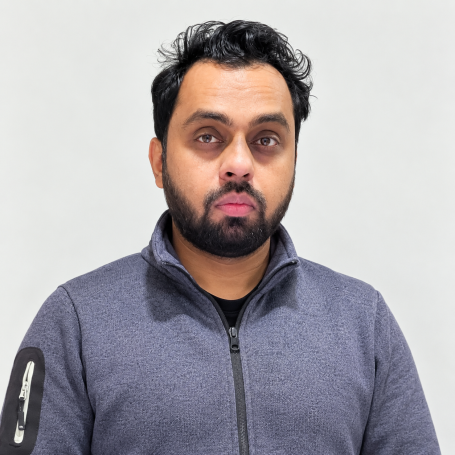
Around 2011, he and other hobbyists started Bangladesh Aquarists, a Facebook community for people interested in fishkeeping. As the community grew, so did the demand for products and services, eventually leading to Nature Aquatics and, years later, Aquarium Park Dhaka.
“Eventually, however, I realised that this was something I genuinely wanted to build my life around,” Rizve said.

His story shows that taking the leap does not always mean making one dramatic decision. Sometimes, it happens through a series of smaller ones.
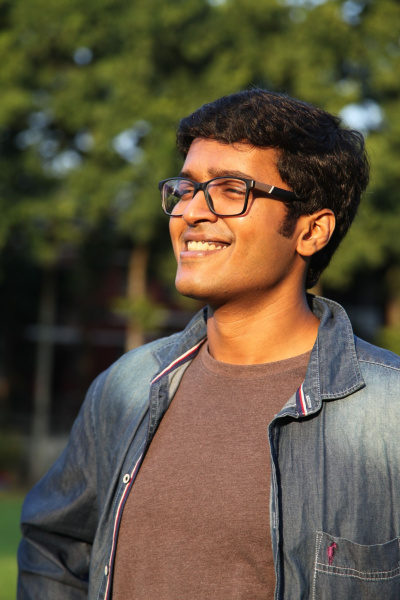
For comic book artist Fahim Anzoom Rumman, who has worked with Dhaka Comics and Prothom Alo, there was no fixed point either. His work with The Daily Star magazine Rising Stars helped push him towards digital art, but the real turning point came when his work started earning him money.
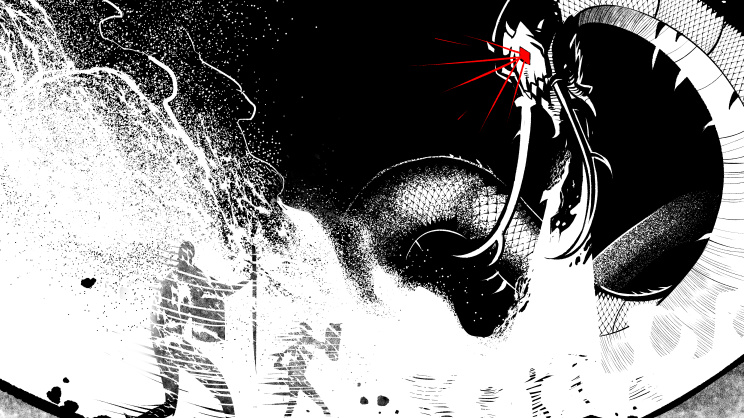
“The turning point, I think, would be when I first started earning. This was around 12 years ago,” Rumman said.
And for Raihan Ahmad, founder of BanglaNumis Auction, the transition came from an opportunity hidden inside his existing hobby. As a banknote collector, he would sometimes buy multiple copies of an item, keeping the best one and selling the extras at a small profit.

Over time, he realised that his knowledge and network could support something larger. That eventually became BanglaNumis Auction, a platform for collectable banknotes, coins and other numismatic items.
When the people around you don't quite get it
Taking an unconventional career path can be difficult even before the first business problem appears.
Rizve felt that pressure partly because of his education. After studying pharmacy, choosing to build a career around fish and nature naturally raised questions. His family eventually understood that this was not a sudden decision. His father, who kept birds, had actually encouraged his son's interest in fishkeeping.
Rumman's experience was similar. His parental support was limited at first, but changed after his work for Rising Stars began generating an income.
 For all latest news, follow The Daily Star's Google News channel.
 “When I started writing for Rising Stars and earning, they realised that it was something serious,” he said.
Ahmad, meanwhile, did not face the same family pressure. His family and friends supported his decision, although there was some uncertainty because numismatics remains a specialised field.
Sometimes, the challenge is not convincing people that you enjoy something. It is convincing them that something you enjoy can become a viable profession.
The hobby stops being just a hobby
Once money, customers, employees and deadlines enter the picture, the freedom of simply doing something for fun can disappear.
Rizve acknowledges that shift. There are days when his work feels more like a business than a passion, particularly when he has to think about investment, operations and customers.
For Rumman, the challenges changed as his career developed. He spent years building the skills required to work professionally and later joined another venture where he could not express his creativity in the way he wanted.
His experience has taught him that the obstacles do not necessarily become easier; they simply change.
“At every stage, my obstacles changed dynamically and if you want be successful you need to adapt to the unpredictable obstacles,” Rumman said.
For Ahmad, one of the greatest difficulties has been dealing with customs procedures when importing collectable items from international auctions and dealers. Delays, classification issues and shipping problems can make international trading difficult.
Rizve has faced a different set of problems. Building an aquarium business meant helping customers understand proper fishkeeping, filtration and water quality. As Aquarium Park Dhaka grew, the challenges expanded to large aquarium systems, landscaping, visitor management and maintenance.
So, do they regret it?
A hobby can look very different once it becomes the source of your income. That does not necessarily mean the decision was a mistake.
Neither Rizve nor Ahmad regrets making the change.
Rizve acknowledges that he would have approached some business and financial decisions differently. But the wider choice remains one he stands by.
For him, there is something satisfying about seeing a childhood interest become an experience shared by other people.
Ahmad has no regrets about turning collecting into his profession, particularly because he gets to work in a field he genuinely enjoys.
Rumman's regret is not about choosing art. Instead, he wishes his work could reach more people through translation.
“I'd like all my works to be translated into multiple languages,” he said, pointing out that something that works in English may not necessarily work in Bangla.
What you should know before you turn your hobby into your job
Their advice is similar in one important way: enjoying something is not enough to make it a business.
Rizve advises people to understand their market and customers before making a major investment. He also stresses learning first and building a community around the hobby.
“Don't confuse passion with a business model,” he said.
Ahmad also puts knowledge before business. He advises aspiring hobby-based entrepreneurs to develop expertise, understand their market, start small and build a reputation based on trust rather than chasing quick profits.
For Rumman, networking and collaboration matter. He advises artists to build trust within their community, reach out to other artists and understand their audience. In Bangladesh, he says, social media can be useful for making those connections.
All three point to the same uncomfortable truth: there is no guarantee that passion will pay.
Turning a hobby into a profession requires learning the business side, adapting when circumstances change and accepting that something once done purely for enjoyment may eventually come with pressure.
But perhaps that is the real leap of faith.
For Rizve, it took more than three decades. For Ahmad, a collection became a business. For Rumman, earning from his art showed him that it could be more than a hobby.
None of their journeys followed the same route. There is no fixed timeline for turning something you love into a living. Sometimes, you simply have to start and see where it takes you.
Photo: Courtesy
Comments