


Russia’s Rosatom suggests floating nuclear power unit for Bangladesh
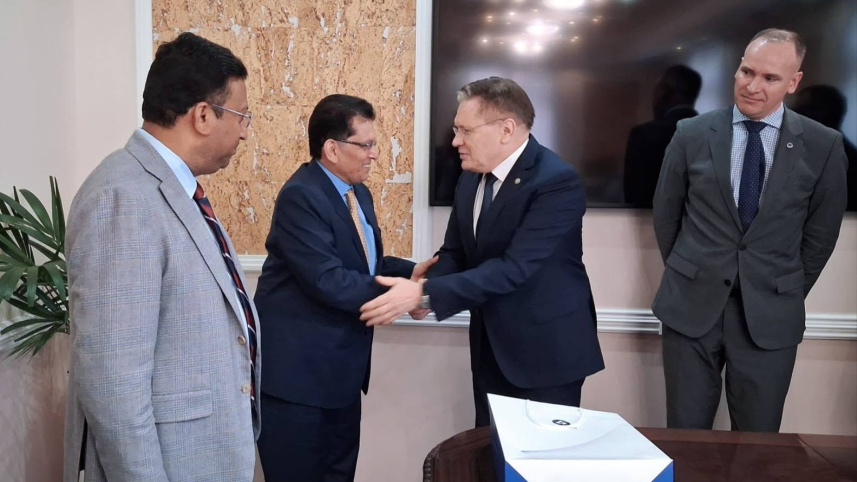
Russian State Atomic Energy Corporation Rosatom has raised the possibility of offering a floating nuclear power plant unit to Bangladesh.
Rosatom Director General Alexey Likhachev discussed the proposal with Bangladesh's Foreign Minister Khalilur Rahman during an official visit to Moscow on June 9, according to the foreign ministry.

The foreign minister enquired about small modular reactors as part of a diversified energy future, recalling earlier discussions between Likhachev and Prime Minister Tarique Rahman in Dhaka. In response, Likhachev suggested the possibility of offering a floating nuclear power plant unit to Bangladesh.
Such facilities, built in shipyards and deployed offshore, can provide electricity, heating, and desalinated water to coastal or remote regions without extensive on-site construction.
Highlighting the Rooppur Nuclear Power Plant as a cornerstone of bilateral relations, Khalilur emphasised its role in strengthening Bangladesh’s energy security and macroeconomic resilience. He noted the successful completion of fuel loading at Unit-1 in May 2026 and requested continued Russian technical coordination for synchronisation with the national grid and commercial operation.
Rosatom officials assured that the process would be completed shortly and indicated that Unit-2 would be operational by next summer.
Khalilur sought expanded cooperation in training a new generation of Bangladeshi nuclear professionals in reactor engineering, operations, and regulatory governance, stressing the importance of building local expertise for smooth implementation and future international projects. Likhachev responded positively, assuring that Rosatom would take steps in this direction.
During his Moscow visit, the foreign minister also met Konstantin Kosachev, deputy speaker of the Russian Federation Senate. Their discussions focused on enhancing legislative cooperation, digital transformation, capacity building, and parliamentary diplomacy.
 For all latest news, follow The Daily Star's Google News channel.
Comments