


Heed the dengue warning
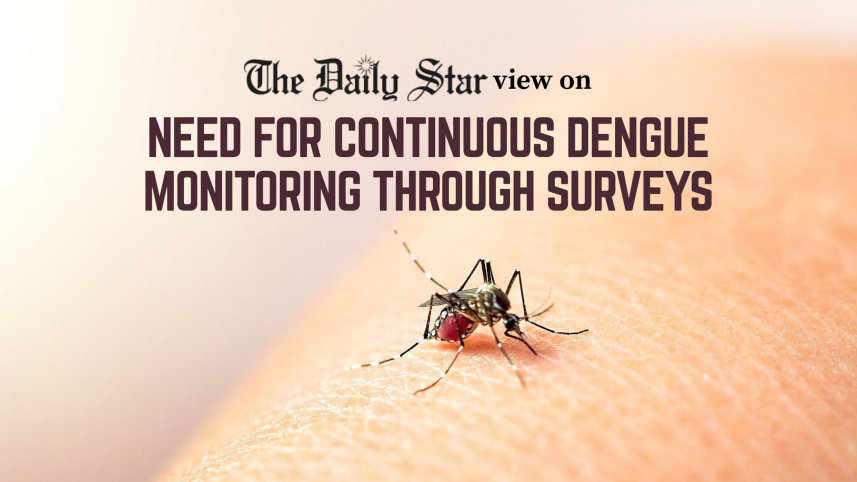
We find it deeply concerning that several areas in Chattogram city have been identified with an alarmingly high density of Aedes mosquito larvae, indicating a heightened risk of dengue and chikungunya outbreaks. Given that the country enters the peak dengue season between June and September, the survey conducted by the Directorate General of Health Services (DGHS) in Chattogram should prompt an immediate call to action.
The survey, carried out between June 8 and June 18, during the first phase of monsoon, covered 18 of the 41 wards under Chattogram City Corporation (CCC) and identified eight wards to be at exceptionally high risk of dengue outbreak. Mosquito surveillance is instrumental in preventing outbreaks; however, the suspension of such surveys in recent years due to funding and institutional uncertainties has deprived the authorities of the data needed to identify potential hotspots and deploy preventive and control measures in time. The latest measure by the DGHS, therefore, merits appreciation.

However, we must issue a word of caution that such surveys may not mean much if their findings don’t receive the urgent attention they deserve from all relevant authorities. This is especially important this year as half of the dengue deaths and around 78 percent of cases so far have been reported outside Dhaka. According to the DGHS, 10 people have died and at least 5,160 have been hospitalised between January 1 and June 23 this year. Given that this period falls under the leaner season for dengue, the figures are particularly alarming and only suggest a grim forecast for the peak dengue season.
Fortunately, the DGHS survey has already outlined a set of practical recommendations blending both individual and institutional accountability, which, if enforced properly, can considerably contain the spread of the disease. It is encouraging to see that the CCC authorities have already responded by launching a programme to identify mosquito hotspots, but they should ensure that such measures continue as part of a broader year-long monitoring system, backed by community awareness and engagement campaigns.
We find it commendable that the government now requires private hospitals to reserve at least 10 percent of their beds for dengue patients free of charge and to offer discounts of up to 80 percent on diagnostic tests. However, the government response must move beyond treatment strategies, and prevention must remain the priority. We urge the government to strengthen mosquito control efforts and eliminate breeding grounds to prevent further deaths from dengue.
 For all latest news, follow The Daily Star's Google News channel.
Comments