


Is no one safe from police excesses?
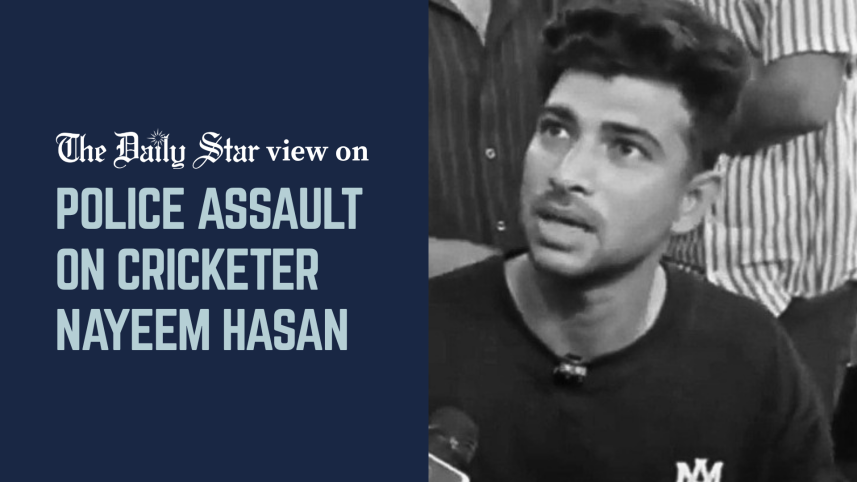
It is disturbing to learn of yet another incident of police misconduct, this time involving Bangladesh spinner Nayeem Hasan in Chattogram. According to reports, Nayeem was returning home on Friday night after playing a Dhaka Premier League match in Savar when he was stopped by a patrol team near Lalkhan Bazar. There, he was allegedly manhandled, taken to Khulshi Police Station, and subjected to further harassment. Once his identity was established, however, the situation quickly shifted to damage-control mode, leading to the “closing” of two police personnel, the formation of a probe committee, and the initiation of departmental proceedings.


But when a national cricketer needs saving in this way, it says a lot about policing in general even after so-called reforms targeting police accountability following the uprising. It’s not hard to understand the immediate trigger for the subsequent actions: public outrage. Besides ordinary fans, the Bangladesh Cricket Board (BCB), the Cricketers’ Welfare Association of Bangladesh (CWAB), and several national cricketers have condemned the incident and called for appropriate action against those responsible. The Chattogram Metropolitan Police has, meanwhile, expressed regret, stressing that any misconduct is the responsibility of individual officers, not the force. But such a statement, involving a high-profile figure, is defensive at best and does not address the deeper concerns that such incidents repeatedly expose.
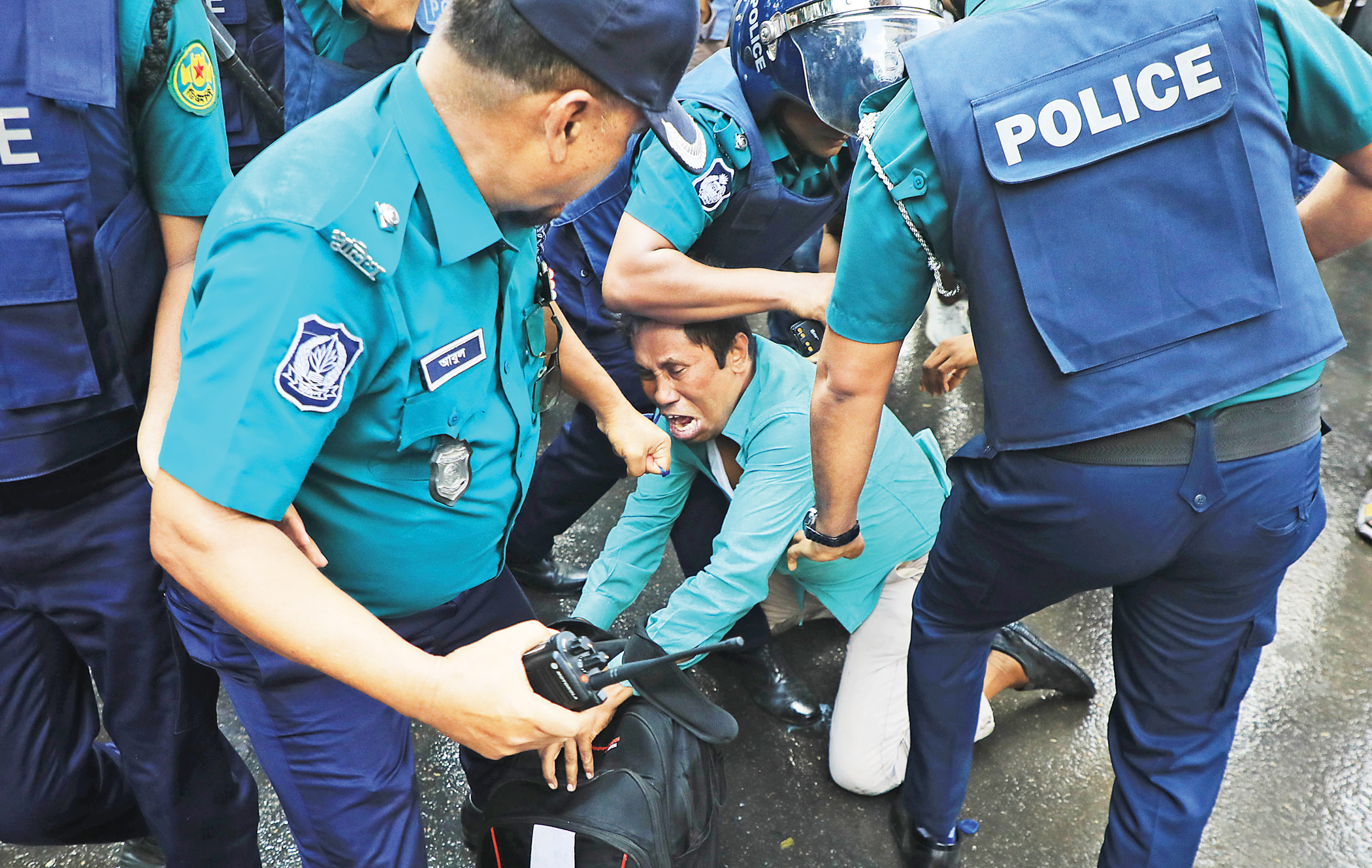
We are all too familiar with this pattern of abuse of power. Too often, and not in the distant past, citizens have had to encounter coercive authority whether on the roads or within the confines of their homes, and in dealings with the police on charges either genuine or fabricated. They have had to face the punishing consequences of a lack of police action when situations called for it. Many have had to endure custodial torture. The manner in which police authority is still exercised—with insufficient oversight, and existing accountability mechanisms remaining largely internalised, reactive, and unevenly enforced—has allowed a culture to persist where excess is often corrected only after it becomes publicly visible, and embarrassing for the higher ups, rather than at the point of excess.
This is why isolated disciplinary measures, however swift, do not convince us that the culture of impunity will be addressed. Citizens need to see not just punishment after the fact, but also an overhaul of how policing in general is supervised, monitored, and held to account at all times. There must be clear operational protocols (a necessity again highlighted by Nayeem's case), independent investigative mechanisms, enforceable standards of conduct, and regular disclosure of disciplinary outcomes. Without these, each new incident may only reproduce the same cycle of denial, outrage, and forced administrative response. The mass uprising, at its very core, demanded a clear break with this culture.
 For all latest news, follow The Daily Star's Google News channel.
Comments