


Can AI address the shortage of speech therapists in Bangladesh?

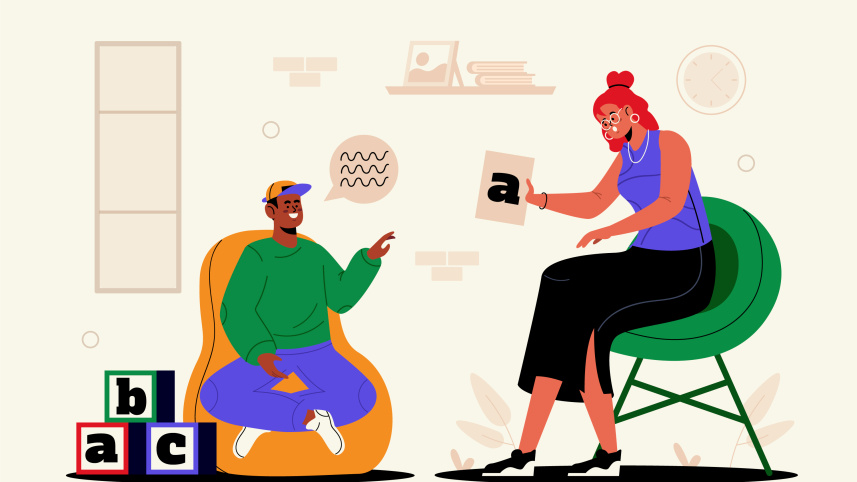
Every morning, outside specialised neurodevelopmental clinics in Dhaka's Mirpur and Mohakhali areas, a challenging reality unfolds. Rows of anxious parents, many having travelled overnight from remote upazilas, sit with medical files in hand. They wait for a brief 30-minute appointment with a certified Speech-Language Therapist (SLT). These specialists assess, diagnose, and treat communication, speech, language, and swallowing difficulties in people of all ages. For families dealing with autism spectrum disorder (ASD), cerebral palsy, or post-stroke aphasia, these sessions are essential. However, the situation regarding rehabilitative care in Bangladesh is alarming.
While global rates of communication disorders increase, Bangladesh faces a critical shortage, with only a few hundred qualified SLTs registered with the Bangladesh Rehabilitation Council (BRC). Into this gap comes artificial intelligence. Large language models and acoustic algorithms have progressed well beyond simple voice-to-text transcription. Today's clinical AI systems can analyse phonetic issues, identify dysarthric acoustic features, and give real-time feedback on articulation through smartphone apps. As these tools become increasingly common, they ignite a pressing debate among health administrators, developers, and clinicians: does AI provide a viable way to make speech therapy more accessible, or does it threaten the human clinicians who are essential for ethical rehabilitative care?

To understand why AI seems like an urgent necessity, we must look at Bangladesh's structural issues. Specialised education in communication disorders is highly centralised. Since the inception of formal training at Dhaka University, Proyash Institute of Special Education and Research (PISER), and the Bangladesh Health Professions Institute (BHPI), the number of certified professionals has not kept pace with diagnostic demand, resulting in a significant shortage of registered SLTs across the country. This institutional shortage is exacerbated by a severe concentration of services in major metropolitan areas such as Dhaka. For middle-class urban families, ongoing therapy can create a heavy financial burden. Rural families often face high travel costs, lost daily wages, and clinical fees that force them to abandon treatment early. These combined challenges—including limited academic opportunities, geographic concentration, and financial stress—often leave vulnerable patients in silence when they could be helped.
This is where AI has the potential to serve as a “digital clinical extender.” By using Automatic Speech Recognition (ASR), AI platforms can bring evidence-based practices directly into homes. An app, trained on specific phonological patterns, can act as a helpful tutor, enabling daily exercises instead of forcing families to wait weeks for an appointment in a city clinic.
Moreover, algorithms do not experience cognitive or emotional fatigue. An AI tool can listen to a child with a stutter repeat a sound thousands of times without impatience, recording objective acoustic details—like voice onset times and shifts in pitch—that a human ear might miss in a regular session. For resource-limited NGOs and state initiatives, like the National Foundation for Development of the Disabled Persons' disability services and help centres, incorporating AI into clinical processes can help expand care beyond urban regions.
Anxiety among clinicians regarding AI, however, does not stem from fear of technology but from the clear limits of software in understanding human nuances. Speech-language therapy is a dynamic field that involves neurology, anatomy, psychology, linguistics, and emotional understanding. When an SLT sits across from a non-verbal child or a stroke survivor, they can observe subtle micro-expressions, assess muscle tone, check for swallowing challenges, and adjust their approach based on the child’s emotional state. An app cannot provide hands-on guidance for tongue placement during speech, offer comfort during moments of distress, or modify treatment strategies when a neurodivergent child faces sensory overload. While technology can process language, it is human connection that restores communication.
In Bangladesh, this human connection is especially important. Communication disorders carry a heavy social stigma. Mothers often get blamed for developmental delays, and families face social isolation. Human clinicians frequently go beyond medical treatment to act as counsellors and advocates, helping navigate complex family dynamics, dispelling myths, and fostering supportive home environments. This kind of holistic support cannot be reduced to code or replicated by a chatbot. Beyond these philosophical concerns lies a technical challenge: data bias. Most global AI speech models depend on Western, English-language, and neurotypical data. If used locally without adjustments, their accuracy can drop significantly. The Bangla language has a unique phonetic structure that includes aspirated consonants and retroflex sounds. Additionally, the linguistic landscape of Bangladesh features many regional dialects. An ASR model trained only on standard Cholito Bhasha spoken in Dhaka is likely to misunderstand speech from a child raised in Sylhet, Chattogram, or Barisal. Misinterpreting dialect differences as speech problems, or failing to recognise genuine neurological delays due to algorithmic limitations, can lead to serious diagnostic issues.
So, to effectively navigate this transition, policy should move beyond a simple "AI versus human" debate and towards a combined clinical model. The Ministry of Social Welfare and the BRC must create clear guidelines for digital therapeutic tools. AI should be classified as assistive medical software, with oversight from registered SLTs for diagnoses and treatment plans. Under government initiatives from the ICT Division, public universities and health institutes should support the creation of open-source Bangla clinical speech datasets. This would help ensure local software is accurate in its phonetic analysis. Degree programs at Dhaka University, PISER, and BHPI should include health informatics and digital therapeutics. This will prepare future clinicians to effectively use AI for documentation, acoustic assessments, and monitoring patient compliance at home. Recordings of minors and vulnerable individuals must be protected with strong encryption and regulations, following the Rights and Protection of Persons with Disabilities Act, 2013, to avoid unauthorised commercial use.
AI is not a replacement for clinical care or a stand-alone solution; it is a tool to expand access. When trained professionals use AI, it can help create a healthcare system that optimises practice while allowing clinicians to oversee patient progress.
Md. Asaduzzaman is an assistant professor of Audiology and Speech-Language Pathology at Proyash Institute of Special Education and Research (PISER), affiliated with Bangladesh University of Professionals (BUP).
Views expressed in this article are the author's own.
Follow The Daily Star Opinion on Facebook for the latest opinions, commentaries, and analyses by experts and professionals. To contribute your article or letter to The Daily Star Opinion, see our guidelines for submission.
 For all latest news, follow The Daily Star's Google News channel.
Comments