


DU must not be turned into a battleground for history

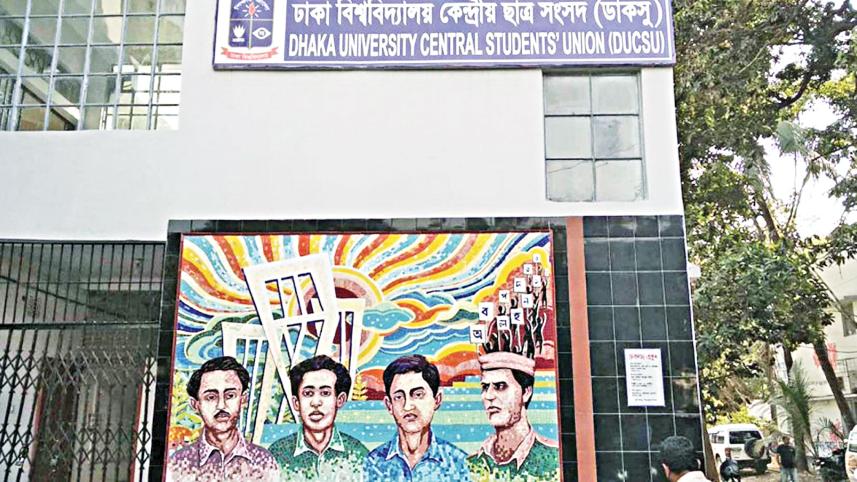
The recent removal of photographs and documents relating to the Liberation War from the archive gallery of Dhaka University Central Student Union (Ducsu) is not merely a dispute over photographs; it is a struggle over who gets to define Bangladesh’s historical memory. Few universities in the world can claim that their campus was at the epicentre of their nation’s birth. Dhaka University can; its history is inseparable from the country’s independence. From the Language Movement in 1952 to the Mass Uprising of 1969 and the struggle for independence in 1971, the university’s students and teachers repeatedly stood at the forefront of resistance. That history made DU one of the principal targets of the Pakistan Army and its collaborators in 1971.
The Ducsu election held on September 9, 2025 saw a panel backed by Islami Chhatrashibir win for the first time since independence. Shibir is a student organisation backed by Jamaat-e-Islami, which opposed Bangladesh’s independence and sided with the Pakistan Army in 1971. Its predecessor, Islami Chhatra Sangha, was associated with the formation of Al-Badr, which took part in the abduction and killing of Bangalee intellectuals, including DU teachers, in the final days of the Liberation War.

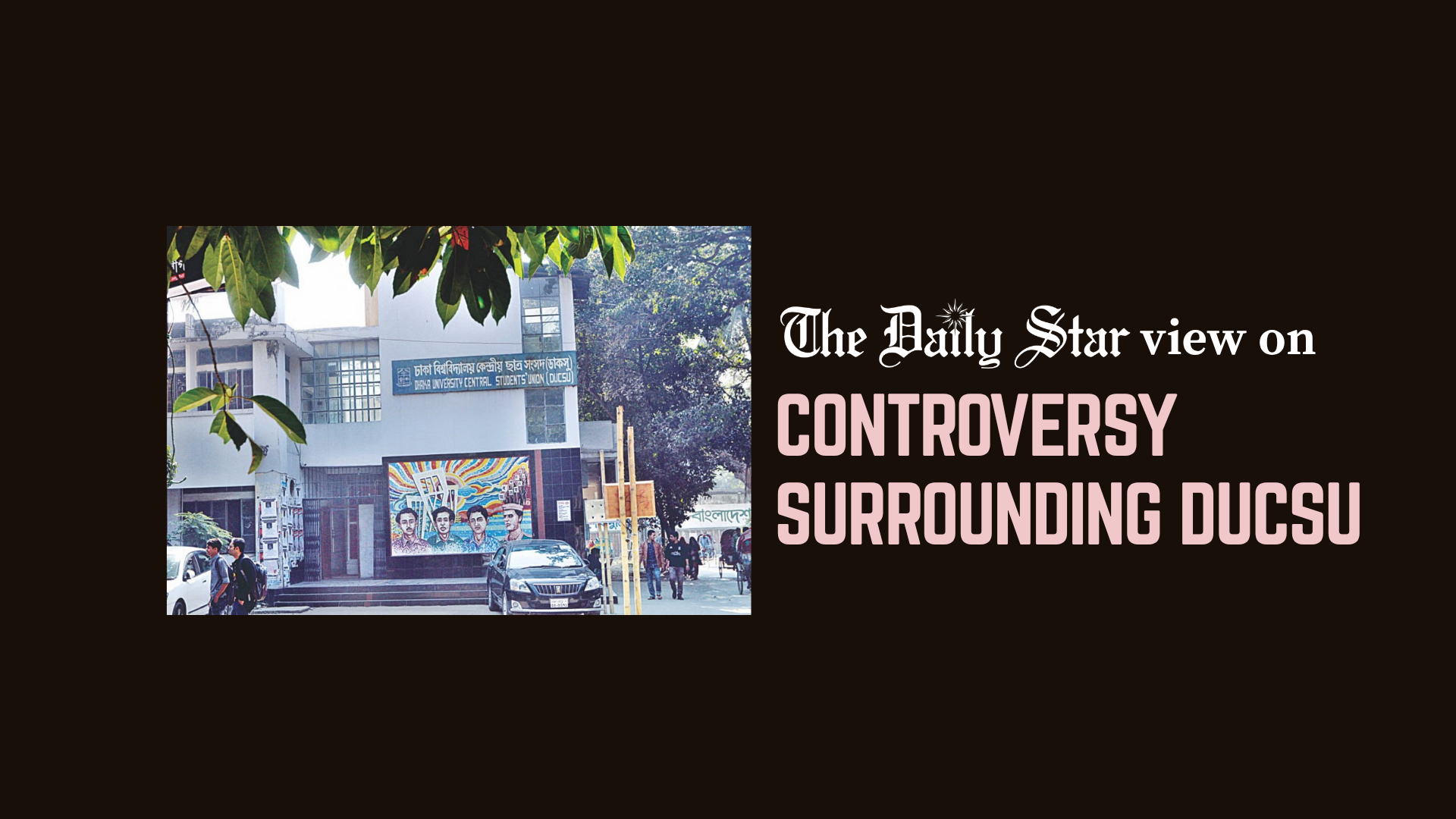
A year later, decisions made under the Ducsu leadership have raised questions about how the university’s history is being represented. The Ducsu Charter states that one of its first objectives is to uphold and nurture the values of the struggle for independence and the Liberation War. That makes the recent controversy particularly troubling. Photographs and documents associated with the Liberation War were removed during what the University Teachers’ Network described as “unauthorised and unlawful” renovation work. Among the photographs removed was one of Bangabandhu Sheikh Mujibur Rahman, the central political figure in the country’s independence struggle, who was also a former student of the university. In its place, a portrait of Muhammad Ali Jinnah, the first governor general of Pakistan, who took a stance against Bangalees, was installed.
Other photographs and documents relating to the March 25 massacre and atrocities committed on the DU campus by the Pakistani military and their local collaborators, including Razakars and Al-Badr members, were also reportedly removed, said the University Teachers’ Network. The choice of what was removed and what was put up sends a troubling message.
One of the newly displayed photographs showed Jinnah delivering his controversial speech at DU in which he declared that Urdu would be the state language of Pakistan. Jinnah made the statement in 1948, when Bangla was spoken by the overwhelming majority of Pakistan’s population. His declaration immediately provoked student protests. The attempt to impose Urdu as the sole state language became one of the catalysts of the Language Movement and contributed to the broader struggle for political and cultural self-determination. The Language Movement eventually became a defining foundation of Bangalee nationalism.
Against that background, placing Jinnah’s photograph in a gallery dedicated to DU’s historical struggles while removing photographs documenting its suffering in 1971 is difficult to portray as simply an exercise in historical neutrality. Removing the photograph of Bangabandhu Sheikh Mujibur Rahman’s historic March 7, 1971 speech is equally significant. That speech was a watershed moment in the struggle for independence. It prepared the Bangalee population for the decisive confrontation that followed and became one of the defining moments on the road to Bangladesh’s liberation. This does not mean Sheikh Mujib’s historical role should be placed beyond criticism. His record as the country’s post-independence leader can and should be examined critically—like that of any political leader. But criticising a historical figure is not the same as erasing his presence from the historical archive of the very university whose students and teachers were central to the independence movement.

The issue, therefore, is not whether one should admire or criticise Mujib, Jinnah or any other historical figure, but whether Ducsu should selectively remove evidence of its own history because political power has changed. And this controversy cannot be viewed in isolation.
In August 2025, Shibir’s DU unit organised a three-day exhibition titled “36 July: We Will Not Stop.” Photographs of convicted war criminals displayed at the exhibition triggered widespread criticism. The university administration subsequently removed the photographs, although banners carrying their names remained. In December 2025, students at Jagannath Hall alleged that the administration had removed caricatures of war criminals painted on pavements ahead of Martyred Intellectuals Day.
Taken together, these incidents point to a larger question: who decides which parts of Bangladesh’s history deserve to remain visible? Historical memory cannot be treated as the property of whichever political group happens to control an institution at a particular moment. DU does not belong to any particular party. Its history belongs to Bangladesh. Historical facts don’t change. People’s sacrifice for the liberation of the nation doesn’t either. The real danger here is not that one photograph disappeared from one gallery—it is what happens when history is altered gradually. Piece by piece, a younger generation could inherit a version of 1971 in which perpetrators are blurred, collaborators are rehabilitated, and those who made supreme sacrifices become footnotes.
Dhaka University, of all institutions, must understand the responsibility to resist this trend. Its duty here is simple: preserve the evidence, protect the archives, remember the victims, and identify the perpetrators through documented history. No political victory gives anyone the right to rewrite history.
Mohiuddin Alamgir is senior reporter at The Daily Star.
Views expressed in this article are the author's own.
Follow The Daily Star Opinion on Facebook for the latest opinions, commentaries, and analyses by experts and professionals. To contribute your article or letter to The Daily Star Opinion, see our guidelines for submission.
 For all latest news, follow The Daily Star's Google News channel.
Comments