


To end learning poverty, we must embrace global assessments

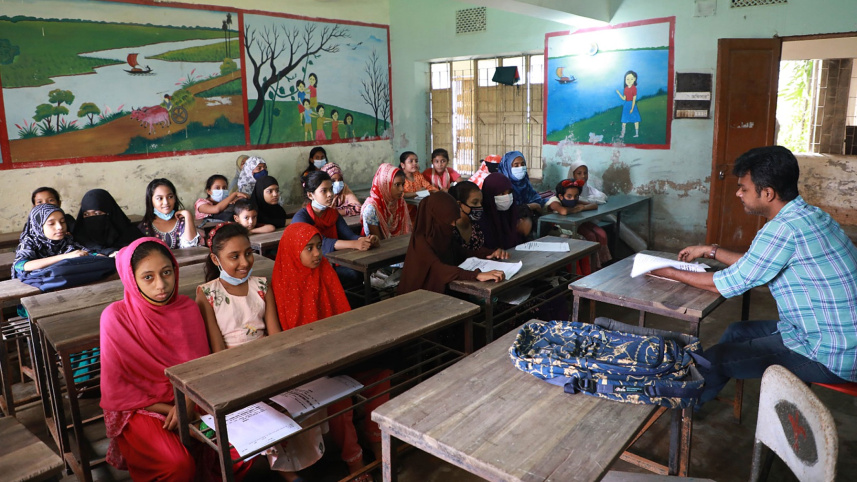
How we measure progress in education is becoming increasingly important as the world approaches the 2030 deadline for Sustainable Development Goals. Governments have promised to reduce learning poverty—the inability to read and understand a simple text by 10 years of age—yet enrolment rates, examination pass rates and official claims of reform cannot tell us reliably whether children are actually learning. Hence, growing concerns about the credibility and comparability of national results have increased the importance of common international assessments.
The most widely publicised among such assessments is the Organisation for Economic Co-operation and Development’s (OECD) Programme for International Student Assessment, better known as PISA. It examines whether 15-year-old students can apply what they have learnt in reading, mathematics and science to unfamiliar, real-life problems. It’s not simply another school examination or international ranking but a diagnostic of educational performance and inequality.

The PISA 2025 results painted a bleak picture. Among OECD countries, reading performance fell by 28 points between 2015 and 2025—equivalent to roughly one and a half years of learning—while mathematics fell by 22 points. However, participation reached a record 760,000 students from 91 countries and economies, representing approximately 3.3 crore 15-year-olds.
Bangladesh was not among the participants.
An increasing number of low- and lower-middle-income countries are willing to submit their education systems to external scrutiny. Bangladesh is not. As a result, we cannot answer a basic question: by age 15, are our children learning more or less than students facing similar economic and institutional constraints?
Even participation can be an act of reform. South Asia offers Bangladesh both a warning and an opportunity. India participated in an expanded PISA exercise through Tamil Nadu and Himachal Pradesh in 2009 but withdrew after poor performance, later announcing—but not completing—a return. Bhutan joined PISA-D. Pakistan took part in a different form of international scrutiny by entering the 2019 Trends in International Mathematics and Science Study (TIMSS) at Grade 4 for the first time. The results were uncomfortable. But the country acquired something Bangladesh still lacks: an internationally comparable baseline in foundational subjects and detailed evidence about the home and school conditions associated with achievement. Poor results can provoke scrutiny and reform; unmeasured results can be denied indefinitely.
PISA and TIMSS, however, assess students who have remained within the education system. Bangladesh also needs to know what is happening to absent children—those who have dropped out or never enrolled. This is where the Annual Status of Education Report (ASER) model matters. ASER is a citizen-led household assessment that uses simple reading and arithmetic tasks to measure what children can actually do, regardless of whether they attend school.
India conducted ASER annually from 2005 to 2014 and every alternate year from 2016. Pakistan has also institutionalised a recurring, large-scale household series. Bangladesh has piloted ASER-style tools and participated in comparative citizen-led assessment initiatives, but it has never converted these efforts into a continuous, nationally representative and publicly anticipated series.
These instruments answer different but complementary questions. An ASER-style survey would tell us whether children—including those outside school—can read a short Bangla text and perform basic arithmetic problems. TIMSS would benchmark the mathematics and science learnt by pupils at primary and lower-secondary levels. PISA would reveal whether enrolled 15-year-olds can apply accumulated knowledge at the point when many are approaching the end of compulsory schooling.
As one of the top performers in PISA, Singapore demonstrates the planning value of such a sequence. Its participation in TIMSS and PISA allows policymakers to follow the development of learning from the primary grades to age 15. Bangladesh has no comparable international learning trajectory.
The need is visible in the World Bank’s learning-adjusted schooling measure. Its Human Capital Index 2020 estimates that a Bangladeshi child can expect 10.2 years of schooling but will acquire only 6.0 learning-adjusted years, a loss of 4.2 years once educational quality is considered. The planning problem remains: time spent in school cannot be treated as equivalent to learning acquired.
Bangladesh’s own Five-Year Strategic Framework records learning poverty at around half of children. It aims to reduce the rate to 25 percent by FY2030 and 22 percent by FY2031. A child leaving primary school unable to read fluently in Bangla is unlikely to become a confident reader, mathematical problem-solver or scientific reasoner at 15. PISA must therefore be understood as the endpoint of a learning chain, not as a last-minute test preparation exercise for secondary students.
National examinations cannot fill this evidence gap. SSC and HSC certify individual students against domestic curricula; they are not designed to provide stable international comparisons or include children who have left school. Moreover, changes in syllabuses, grading practices and examination administration make results across years difficult to interpret. Bangladesh does not need another high-stakes examination for children. It needs low-stakes assessments of the education system itself.
The government should therefore make two linked commitments. First, it should apply for PISA 2029. The OECD currently invites applications from new participants, which must submit an official letter of intent, appoint a national project manager, and nominate a representative to the PISA Governing Board. The base international cost is 234,000 euros over 2027-29, while national implementation is expected to cost approximately 350,000 euros, depending on local conditions.
Second, Bangladesh should establish a recurring, nationally representative household assessment of foundational reading and numeracy, administered by an independent consortium of universities and civil society organisations. It should also explore participation in the next feasible TIMSS cycle. Results, coverage rates, technical documentation and anonymised data should be made public.
PISA and TIMSS should not be used to punish teachers, rank individual schools or encourage teaching narrowly to a test. Nor are they wholly independent of government: national authorities organise their domestic implementation. Their value comes from common international frameworks, sampling standards, external quality controls and comparability. A citizen-led household assessment would provide the more institutionally independent check.
There is reputational risk in discovering how poorly students perform. But the economic and moral risk of flying blind is greater. Bangladesh cannot credibly promise to halve learning poverty while declining to measure learning consistently from childhood to adolescence. Joining PISA, and building the assessment chain beneath it, would be a commitment not to manufacture a favourable report card but to confront the evidence and improve it.
Dr M Niaz Asadullah is professor of economics at Dhaka University and a visiting professor at the University of Reading in the UK.
Views expressed in this article are the author's own.
Follow The Daily Star Opinion on Facebook for the latest opinions, commentaries, and analyses by experts and professionals. To contribute your article or letter to The Daily Star Opinion, see our guidelines for submission.
 For all latest news, follow The Daily Star's Google News channel.
Comments