


Rethinking how we teach political science
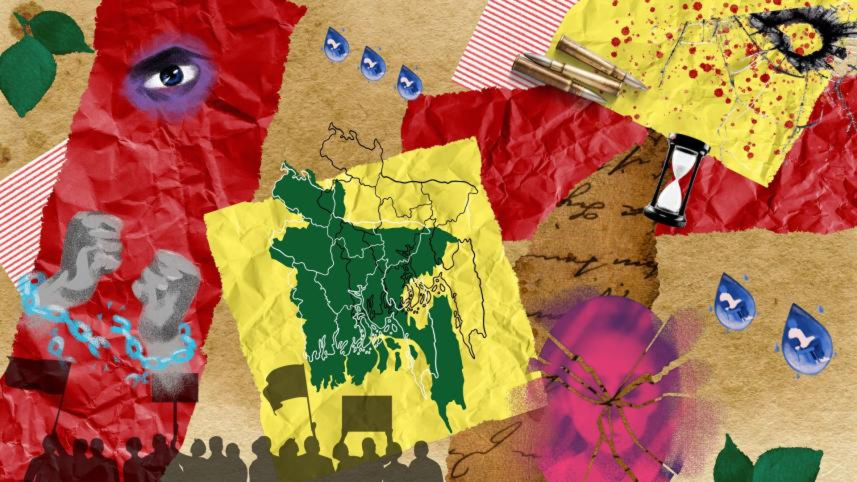
A political science student in Bangladesh will spend the first year studying European history. By the time their own country appears in the curriculum, they have been taught, without anyone saying so directly, that thinking about politics means beginning somewhere else.
In a paper published recently in the Journal of Asian and African Studies, I read Dhaka University’s undergraduate political science curriculum as a set of choices whose familiarity has made them nearly invisible. Western Political Thought occupies the first year, while Oriental Political Thought arrives only in the third semester, and comparative politics opens in the UK, the US and France before reaching Bangladesh at all. Quantitative methods are compulsory in the fourth semester; qualitative methods are deferred to the seventh. English is the language in which knowledge becomes credible; Bangla is the language in which it is gathered. Each of these is a decision about whose thinking counts as foundational, and together they constitute a governance structure for knowledge that has never been formally declared and is therefore rarely challenged.

Bangladesh has experienced colonial rule, the Language Movement, the Liberation War, famine, military regimes, party dominance, garment labour, student insurgency, indigenous dispossession, and climate precarity within an unusually compressed history. When this experience enters the classroom, it is processed through categories: the Language Movement becomes nationalism, garment workers become labour, the Chittagong Hill Tracts (CHT) become ethnic conflict, and student protests become mobilisation. Each of these headings tames what it describes, pulling Bangladeshi experience into containers built elsewhere for different contexts.
Consider what this costs at the language level. Translating andolon as protest drops the moral weight the word carries, the accumulated memory of injury, demand, sacrifice, and the particular courage that moves ordinary people past fear. Andolon can transform students into citizens, streets into tribunals, silence into accusation, and a theory of contentious politics that substitutes “social movement” or “collective action” with a thinner concept than the politics it is trying to explain. A vocabulary that cannot capture that will keep missing what it is looking at.
That the discipline has not yet reckoned with this state of things is partly a product of how research gets rewarded in the country. Promotion systems at Bangladeshi universities are tied to Scopus and Web of Science publications, and the University Grants Commission (UGC) similarly favours internationally legible outputs, a pattern reinforced by the World Bank’s Higher Education Quality Enhancement Project (HEQEP), which introduced quality assurance frameworks that measured research productivity in ways that made slow, archive-based, vernacular scholarship invisible. Annotated translations, Bangla monographs, oral histories, and community-grounded inquiry accumulate no formal credit, and a discipline can sustain the appearance of productivity while the slow labours that make an intellectual tradition durable simply don’t get done.
Bangladesh has produced scholarship that travels, generating frameworks for understanding how elite bargains shape institutions, how labour and gender intersect in ways that reframe global debates on empowerment, how parliamentary weakness reproduces itself under party dominance, how peace agreements can entrench dispossession rather than resolve it. These arguments have reshaped conversations in comparative politics, political economy, and governance well beyond South Asia, and what keeps them at the edge of syllabi rather than at their centre is not their intellectual quality but where they were written.
The reform I propose in the paper works through institutions, not through arguments, because the problem is institutional. It means resequencing introductory courses so that Bangladeshi and South Asian thinkers sit beside Western canonical figures from the first semester, treating translation as a scholarly output that counts towards promotion, building a publicly accessible digital archive of parliamentary debates, party manifestos, and court records in Bangla, and restructuring evaluation criteria so that a rigorous Bangla monograph carries real professional weight. What this requires, above all, is a willingness to treat theory as something that can be generated here.
Our discipline has trained itself to enter a campus gate, a garment factory, a union parishad office, a cyclone shelter, a party office as a researcher collecting data rather than as a thinker encountering concepts. That training is what needs to change.
Arifur Rahaman is a PhD student of political science at the University of Alabama in the US.
Views expressed in this article are the author's own.
Follow The Daily Star Opinion on Facebook for the latest opinions, commentaries, and analyses by experts and professionals. To contribute your article or letter to The Daily Star Opinion, see our guidelines for submission.
 For all latest news, follow The Daily Star's Google News channel.
Comments