Orchid Chakma
Can Bangladesh’s 250 million tree pledge succeed?

A quiet revolution in the hills
In the denuded hills of Betagi and Pomora in Chittagong, a quiet experiment began in the late 1970s. A handful of visionary locals brought together 101 landless families, gave them access to degraded slopes and a little microcredit, and asked them to plant and care for trees. What emerged was far more than timber. The Betagi-Pomora community forestry model created livelihoods, restored barren land, and built genuine local stewardship. It proved a powerful truth: ecological restoration succeeds when ordinary people are treated as co-owners, not mere spectators. Decades later, it remains one of the inspiring foundations of Bangladesh’s social forestry movement.
The ritual of “photo-session afforestation”
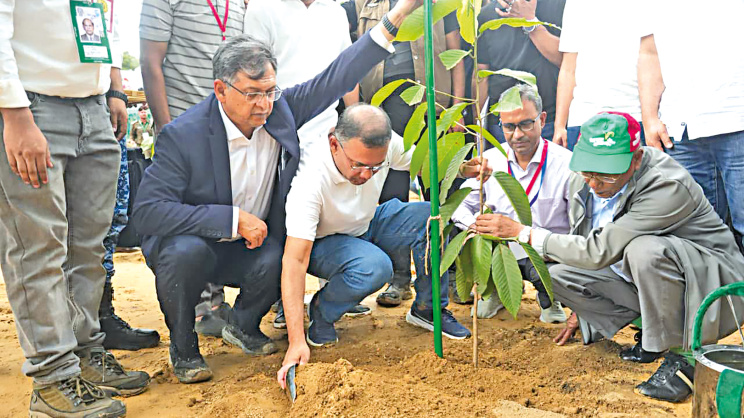
Yet today, a different, more familiar story dominates. Officials and politicians gather for ceremonial sapling plantings in front of cameras and the media, only for most of the trees to die from neglect. Survival rates and canopy cover are low, and the ecological benefits are negligible. Bangladeshis have coined a telling phrase for this ritual: “photo-session afforestation.”
A historic crossroads
Bangladesh now stands at a historic crossroads. The government’s bold pledge to plant 250 million trees over the next five years offers a rare historic opportunity. Done right, it can move beyond numbers and political symbolism to deliver large-scale ecological restoration, biodiversity protection, climate resilience, and inclusive green growth. If mismanaged, it will simply repeat the cycle of short-lived, publicity-driven campaigns that fail both nature and people.
The high stakes for a vulnerable nation
The stakes could hardly be higher. More than 170 million people live in just 147,000 square kilometres, making Bangladesh one of the world’s most densely populated and climate-vulnerable nations. Rising seas, saline intrusion, river erosion, floods, droughts, heat, and intensifying cyclones already threaten lives, homes, and livelihoods. Scientists project that 10–15% of the country’s land could be lost to the sea by 2050, displacing millions. In this reality, forests and trees are not luxuries—they are vital national green infrastructure that needs to be integrated with grey infrastructure.
The true value of forests
Healthy forests stabilise coastlines against cyclones and storm surges, regulate rivers, conserve watersheds, recharge groundwater, prevent soil erosion, cool cities, capture carbon, and support wildlife. The Sundarbans—the world’s largest mangrove forest and a UNESCO World Heritage Site—stands as a powerful example. It protects millions of coastal residents, sustains fisheries, stores carbon, and provides a last refuge for the Royal Bengal Tiger, fishing cats, estuarine crocodiles, and countless migratory birds. Yet Bangladesh’s forests and plantations face relentless pressure from encroachment, illegal logging, infrastructure development, shrimp farming, and weak governance. Forest cover remains far below global averages, while biodiversity continues to decline.
From ceremony to real restoration
Planting trees must therefore become more than an annual monsoon ceremony. It is a long-term political, ecological, social, and economic commitment. Real success is measured not by how many saplings are handed out, but by how many trees survive, how well they restore ecosystems, support biodiversity, and improve people’s lives and livelihoods.
Tailored solutions for a diverse landscape
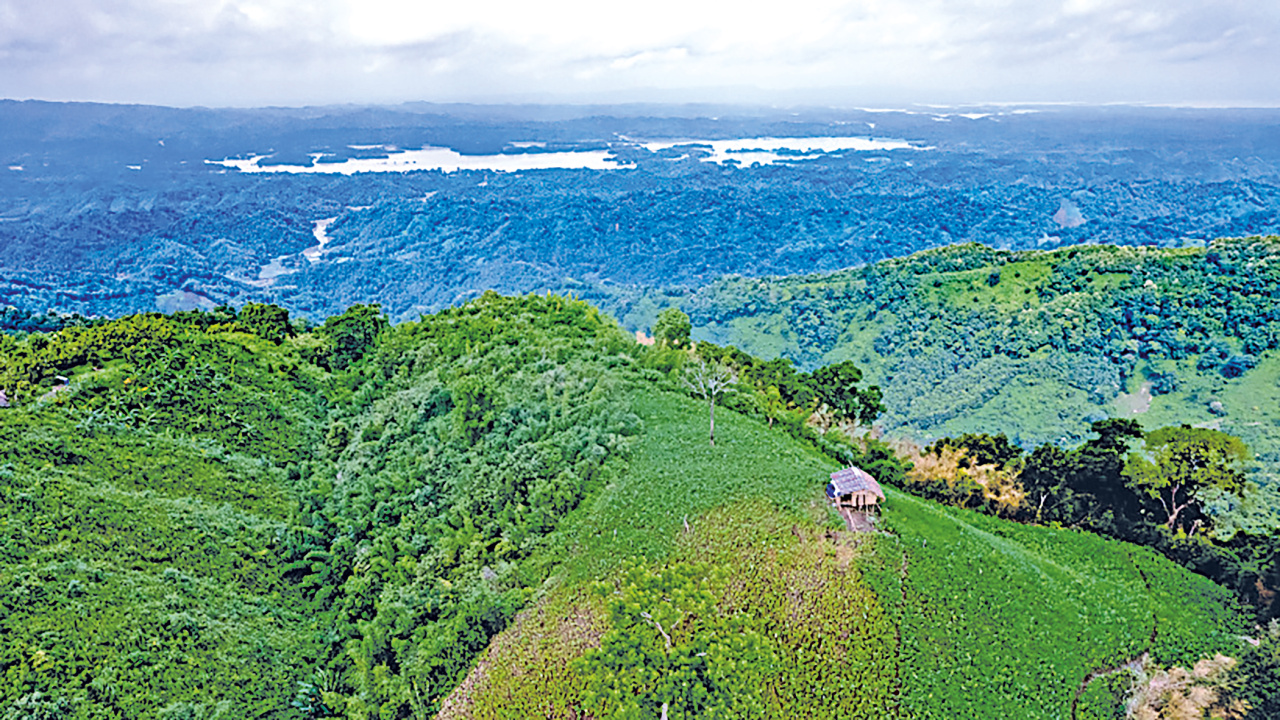
Bangladesh’s rich ecological diversity demands smart, locally tailored approaches. Bangladesh has been officially classified into 25 bio-ecological zones, and therefore site-specific species suitability maps are required for all bio-ecological zones. Coastal zones need salt-tolerant mangroves and resilient greenbelts. The Chittagong Hill Tracts require mixed native species that protect watersheds. Madhupur and the Barind need sal forest regeneration and drought-resistant plants. Haors and wetlands call for flood-adapted species, while riverine chars benefit from fast-rooting trees combined with agroforestry. In bustling cities such as Dhaka, Chattogram, Khulna, and Rajshahi, large-scale urban forestry, green corridors, Miyawaki forests, rooftop gardens, and peri-urban green belts are essential for liveability and climate adaptation.
Learning from the past
Past efforts provide both hope and hard lessons. Since the 1980s, social forestry programmes supported by the World Bank, the Asian Development Bank, the UNDP, and others have created thousands of hectares of plantations and improved incomes for poor households. Coastal mangrove planting across roughly 150,000 hectares has tangibly reduced cyclone damage. Yet many initiatives have been undermined by insecure land tenure, elite capture, poor maintenance, and low survival rates.
Native forests or green deserts?
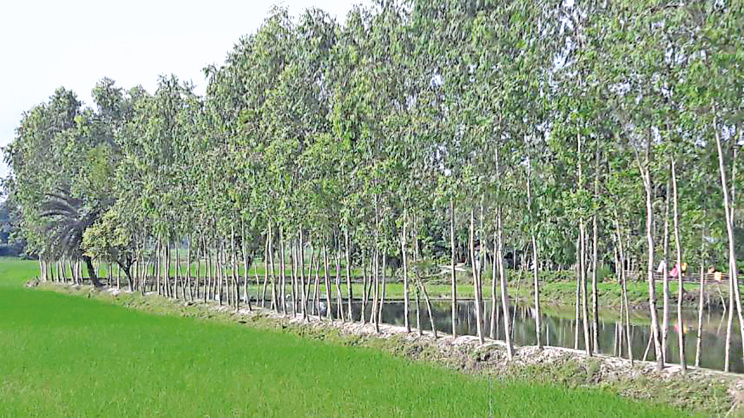
The heavy reliance on exotic monocultures such as eucalyptus and acacia is especially revealing. While they grow fast and meet short-term economic targets—and are popular because of their quick economic returns—they often deplete groundwater, degrade soils, and create “green deserts” that support little wildlife. In contrast, mixed native plantations can restore biodiversity, improve soil and water, sequester carbon, and provide diverse benefits: fuelwood, fruits, fodder, medicinal plants, bamboo, and stable incomes.
Lessons from global success stories
Countries around the world show what sustained commitment can achieve. South Korea, Costa Rica, China, Ethiopia, and India have all transformed degraded landscapes through determined national efforts. Singapore, Melbourne, and Bogotá demonstrate how urban forestry can dramatically improve public health, reduce heat, and enhance quality of life. Bangladesh can draw on these global examples while building on its own community forestry strengths.
Putting people first
People do not depend on forests for timber alone. Rural families need food, fruits, fodder, medicine, shade, and income security. Agroforestry systems that integrate trees with crops and livestock can boost resilience, improve soils, and ease pressure on natural forests. For Indigenous communities in the Chittagong Hill Tracts and elsewhere, respecting customary rights and ensuring genuine participation are essential. Secure tenure—especially joint rights for women and men—along with the involvement of women and young people in nurseries and planning, will determine long-term success.
A new economic opportunity: Carbon credits for social forestry
A powerful opportunity exists right now for the 700,000 Bangladeshi families already involved in the social forestry programme. Under current rules, they nurture trees for a decade only to see them cut at their peak value after a ten-year rotation, often receiving just $3,500–$17,700 after intermediaries and corrupt practices have taken their share. This cut-and-sell model is both wasteful and unfair. Reforming the existing participatory benefit-sharing agreements under the Social Forestry Rules can change this. By integrating carbon credit potential, communities can keep forests standing permanently and earn regular carbon dividends—paid directly through mobile money transfers—turning them into lifelong stewards while advancing national climate goals.
Blending international biodiversity and climate finance
The newly launched Tropical Forest Forever Facility (TFFF) at COP30 in Belém offers another historic opportunity. With more than $6.7 billion pledged, it pays countries roughly $4 per hectare per year for protecting and restoring tropical forests, with a guaranteed share for local communities. Bangladesh must act quickly to access this and other global funds before these windows close. Bangladesh should immediately move forward to sign the TFFF Declaration, register on the UN-run Country Access Platform, activate its existing REDD+ groundwork, upgrade its forest monitoring system with FAO support, lobby to have the Sundarbans recognised as eligible under the fund’s forest definition, and ensure that indigenous and forest-dependent local communities in the Chittagong Hill Tracts are registered as direct beneficiaries of the fund’s guaranteed 20% community payment. All of this must happen before the TFFF’s rules are finalised in 2026 at COP31. Bangladesh should also explore other multilateral funds (GBFF, GCF, and TFFF) to protect and conserve forests and plantations.
Orchid Chakma
Technology, transparency, and accountability
Technology can strengthen accountability and effectiveness. Satellite monitoring, drones, GIS-based ecological mapping, AI-assisted survival and canopy cover tracking, and community reporting platforms can help ensure transparency and reduce politically inflated plantation statistics. Plantation performance should be evaluated not by the number of saplings planted, but by survival rates, canopy cover, biodiversity outcomes, carbon sequestration, ecosystem restoration, and livelihood impacts after five or ten years.
Practical priorities for real change
The path forward is clear. End the culture of ceremonial planting. Protect the Forest Department from political interference. Guarantee secure tenure and direct benefit-sharing. Shift to native, climate-resilient species. Promote assisted natural regeneration. Make data public. And use international finance to make living forests more valuable than dead ones.
A living legacy for future generations
Bangladesh has already shown the world what committed communities can achieve under difficult conditions. The trees we plant today will shape the country’s future for generations. Nurtured with wisdom, care, and courage, they can do far more than green the landscape. They can help build a more resilient, prosperous, biodiverse, green, and liveable nation—a true living legacy for its people and an inspiring example for a climate-stressed world.
Dr Ainun Nishat is Professor Emeritus at BRAC University, and Arif M. Faisal is a former UNDP Programme Specialist.
Send your articles for Slow Reads to slowreads@thedailystar.net. Check out our submission guidelines for details.
Disclaimer: The views expressed in this article are those of the authors and do not necessarily reflect the views, policies, or positions of any affiliated organisation, institution, or employer.

Bangladesh’s gold paradox: From a shadow market to an export industry

Anu Muhammad speaks / Why Bangladesh’s energy crisis keeps coming back
The $5 billion opportunity Bangladesh is failing to see

How Bangladesh is failing its Qawmi graduates
Why is water-rich Bangladesh running short of water?

Bangladesh's education crisis: The future has already begun
The global injustice behind Bangladesh’s shipbreaking industry

How to make essential medicines affordable and accessible in Bangladesh
Can Bangladesh make its plastic waste policy work?