


Before signing energy pacts, Bangladesh must define its own strategy

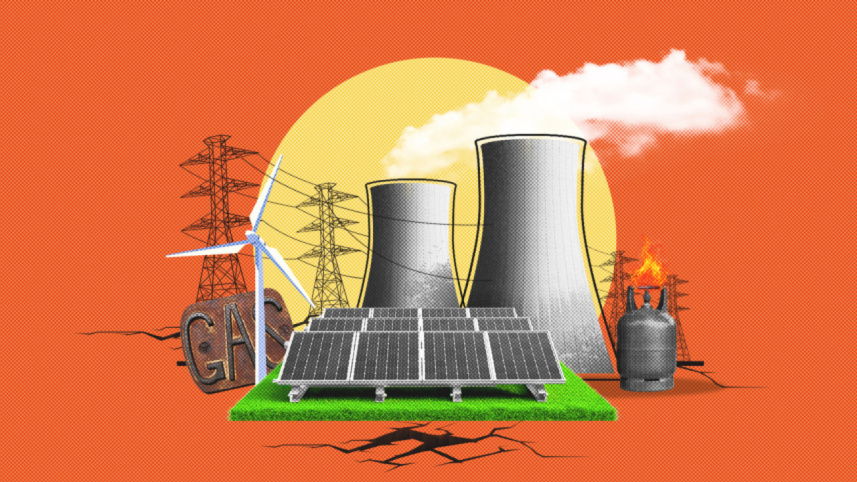
On May 14 this year, the Energy and Mineral Resources Division signed a memorandum of understanding (MoU) on strategic energy cooperation with the US Department of Energy. In a press note on its website, the US Department of Energy said, “The agreement builds on President Trump’s commitment to unleashing American energy dominance and strengthening global partnerships through affordable, reliable and secure energy. The MoU is expected to facilitate millions of dollars in energy-related projects and investment opportunities across the energy value chain, including liquefied natural gas (LNG), liquefied petroleum gas (LPG), petroleum products, geothermal energy, and bioenergy.”
The agreement promises affordable and reliable supplies and diversification of energy sources to secure US energy to drive peace and prosperity at home and abroad. As per a The Daily Star report, it also pledges cooperation on capacity-building, knowledge exchange, and research in oil, gas, geothermal and bioenergy. The memorandum points to easier access to LNG, LPG, and other fuel imports from the US at favourable terms.
 For all latest news, follow The Daily Star's Google News channel.
 But this raises two questions: why were these fuels chosen as strategic priorities, and how do they fit in Bangladesh’s own sustainable energy future?
The timing deserves scrutiny. Days before the MoU, the Gas Exporting Countries Forum published an expert commentary warning that the global LNG market had entered a new structural phase. Future supply would not be driven by resource scarcity alone but by rising marginal costs and capital constraints.
While LNG trade is expected to expand, the incremental cost of new supply is rising. Projects that once liquefied gas at under $3 per one million British thermal units (MMBtu) are now seeing rising costs that exceed $4 per MMBtu—an increase of roughly 45-55 percent. The analysis points to rising capital costs, greater technical complexity, environmental pressures, and growing uncertainty in project delivery, higher construction costs, remote and risky field development, and fewer low cost sources as reasons.
In short, new LNG is likely to be much more expensive than many policymakers assume.
That findings should make Bangladesh cautious. Locking into long‑term LNG deals with the US could bind us to costly imports and expose us further to global market shocks. Although not ratified, Bangladesh has already signed a reciprocal trade agreement with the US that requires the former country to buy $15 billion’s worth of LNG over the next 15 years. Presenting LNG infrastructure as an affordable route to “long‑term energy security” looks increasingly problematic when even suppliers warn that new capacity addition will involve higher prices and higher risks. While existing and under‑construction projects remain moderate cost anchors, proposed projects mark a clear step‑up in capital intensity and technical complexity. Costs now vary widely by region and technology, with the Middle East as the low‑cost anchor, Asia Pacific and Eurasia at the high‑cost frontier, and Africa and North America forming a mixed core.
Beside LNG, the MoU elevates bioenergy and geothermal as strategic fuels. That choice is troubling. Bioenergy, outside of energy recovered from waste, competes directly with forests and food production. It increases pressure on land, can raise food prices, and risks harming rural livelihoods. The UN Food and Agriculture Organization has repeatedly warned that unchecked bioenergy expansion can damage food security and the environment. Bangladesh already faces shrinking arable land from urbanisation, infrastructure needs, river erosion, and salinity intrusion. Pursuing large‑scale bioenergy may risk aggravating food security at a time when agriculture is under stress. Meanwhile, the country’s geology and hydrology make it an unlikely candidate for meaningful geothermal development. Prioritising bioenergy and geothermal over abundant solar and wind potential is, therefore, neither comforting nor sensible.
These strategic choices also raise domestic political questions. Amid public unease over trade deals, the government has been actively courting investors. A Bangladesh delegation recently led a group of some 25 business leaders to the SelectUSA Investment Summit in Washington and, along with US diplomats, they met with senior executives from Chevron and LNG infrastructure firms. One must ask whether this concentrated attention on export suppliers and investors was aimed at cementing foreign commercial footholds rather than protecting national priorities.
The core issue here is sovereignty of strategy. Today’s global gas market outlook suggests that an LNG‑centric path will be expensive and risky. Simultaneously, bioenergy and geothermal can carry social and environmental costs for Bangladesh. Before making major binding commitments, the government must test these options against our national capabilities, interests, and food‑security needs. Where is that independent assessment? Why has parliament not been engaged in a public debate?
It is encouraging that the new energy minister speaks in favour of renewables. If the government genuinely wants to expand renewable use and protect national interests, it should avoid fast‑tracking import deals and infrastructure that may strain future budgets. International cooperation must align with Bangladesh’s own priorities, not primarily with foreign commercial aims. Otherwise, these memorandums may contradict ministerial promises and lock the country into costly, environmentally risky technologies.
For decades, Bangladesh has relied on externally driven plans: foreign contracts, foreign loans, and imported fuel. This has increased import dependency, raised debt, and failed to resolve recurring power and fuel shortages. Crises come one after another because domestic expert coordination and national interest seldom lead policy. If one ministry champions sustainability while another signs contrary agreements, the cycle of dependency will continue. Any pact with foreign powers must conform to a domestically determined energy strategy.
The sequence should be clear: define our national energy strategy first, then negotiate international agreements that support it. That is the hallmark of a truly independent state.
Dr Moshahida Sultana is associate professor in the Department of Accounting and Information Systems at the University of Dhaka.
Views expressed in this article are the author's own.
Follow The Daily Star Opinion on Facebook for the latest opinions, commentaries, and analyses by experts and professionals. To contribute your article or letter to The Daily Star Opinion, see our guidelines for submission.
Comments