


The budget must rebuild social protection for a changing economy

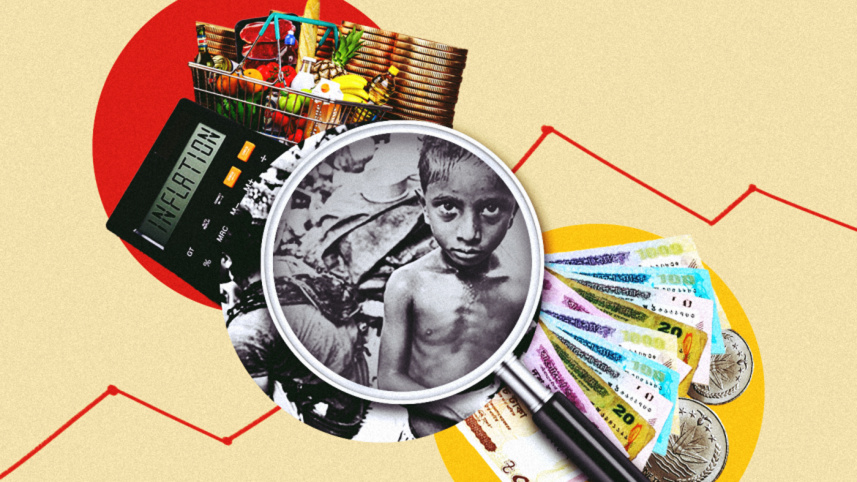
Bangladesh has reached a point where social protection can no longer be treated as a set of small compensatory programmes for the poor. This is why the upcoming national budget should be seen as a test of reform seriousness, not merely as an annual exercise in adjusting allowances. The old vocabulary still dominates: safety nets, fund transfers, relief. These instruments matter and still remain a lifeline for many households. But changing realities have exposed their limits. Inflation has eroded purchasing power. Urban informality has expanded. Climate shocks are no longer exceptional. Migration, care deficits, ageing, youth unemployment, and insecure work now shape vulnerability in ways that narrow protection systems cannot address.
First, social protection should be part of Bangladesh’s growth strategy, not merely welfare. A society cannot sustain productivity gains when many live one illness, flood, or job loss away from distress. Workers cannot invest in skills when survival consumes all income. Children cannot learn properly when households have to cut down on food, healthcare, and/or school expenses during shocks. Social protection is not about charity; it is about having a durable infrastructure.
 For all latest news, follow The Daily Star's Google News channel.
 Bangladesh spends little on social protection as a share of GDP compared with many Asian and Pacific countries, and low spending sets a tight ceiling on ambition. It encourages fragmented schemes and thin benefits. The result is many initiatives, lists, and channels, but limited protection against life-cycle risks.
Bangladesh has long relied on poverty-based and category-based approaches to targeting. These remain relevant for chronic deprivation, but vulnerability is more fluid now. A household just above the poverty line may fall under the line after a medical emergency, crop loss, cyclone, wage arrears, or food price spike. This also means taking urban poverty seriously, as urban low-income households face increasingly volatile rents, insecure jobs, limited subsidised services, and high health costs, and they are often invisible because of migration and weak documentation.
Adequacy matters, too. Coverage has expanded of late, but the value of benefits often remains too low to make a meaningful difference. During high inflation, fixed benefits lose value quickly, and poor households adjust by reducing diet quality, delaying treatment, or borrowing at punitive rates. Benefit levels should be reviewed periodically and linked to realistic household needs.
The national budget, therefore, should treat social protection reform as a core fiscal and development priority. Budget speeches often mention the poor, but programme design must confront harder questions: which schemes to consolidate, which benefits to raise, which databases to clean, and how to reach urban informal workers, women, elderly people, persons with disabilities, and climate-affected households. The budget should also identify how much allocation is genuinely protective and how much is absorbed by pensions or administratively convenient categories. Additionally, allocation alone is not enough. There must be a credible reform roadmap, with financing, responsibilities, indicators, timelines, and grievance systems. Without this, new initiatives may add another layer to an already crowded system.
We also must move away from fragmented programmes. True, the current system contains useful elements, but it operates largely in silos. Cash transfers are not consistently connected to health insurance, nutrition, childcare, skills, employment services, disability inclusion, or climate adaptation. A poor adolescent girl may receive a stipend, but not the support needed to move into decent work. A worker displaced by automation may receive no retraining or temporary income support. A climate-affected family may receive relief after a flood, but not the instruments to rebuild livelihoods.
Social protection should help households manage shocks, but it should also expand their choices. For children, this means linking transfers to nutrition, early childhood development, school retention, and learning quality. For working-age people, it means connecting income support with skills, apprenticeships, job placement, transport access, and affordable childcare. For older persons, it means predictable pensions and access to health and long-term care. For persons with disabilities, it means moving beyond allowances towards assistive devices, inclusive education, accessible workplaces, and community services.
Bangladesh’s economy is dominated by informal work, while formal social insurance remains limited. This mismatch is a major weakness of the present model. A future-oriented system must gradually build contributory and subsidised social insurance for workers, including those outside standard formal employment. Health protection, unemployment support, maternity benefits, employment injury insurance, and pensions cannot be left entirely to households or employers.
It should also be noted that women experience vulnerability differently because of unequal wages, unpaid care responsibilities, occupational segregation, mobility constraints, violence, and weaker claims over assets. Bangladesh needs social protection that recognises care as an economic activity. Public childcare, maternity protection, safe transport, survivor-sensitive services, and fair pensions are, therefore, not peripheral concerns.
Climate vulnerability is also a social protection challenge. Traditional relief remains necessary, but not enough. Shock-responsive registries, anticipatory transfers, livelihood support, and planned assistance for displaced households should become mainstream.
Governance is the hard part here. A new paradigm would remain rhetorical unless delivery systems improve. Bangladesh needs cleaner databases, stronger grievance mechanisms, transparent selection criteria, interoperable digital systems, and better coordination. Digital payments can reduce leakage, but technology is not a cure-all. Exclusion worsens when people lack documents, phones, literacy, or network access. In such cases, appeal systems are essential.
Expanding and modernising social protection also requires fiscal space, and that leads directly to tax reform. Bangladesh cannot build a serious system on a narrow revenue base. Development partners can support design and transitional financing, but the core responsibility must be domestic.
Unfortunately, social protection programmes often become vehicles of political patronage, visibility, and short-term electoral signalling. But a serious reform requires a different bargain between the state and citizens. Citizens should be able to claim protection as a right, not as a favour. The state should expect social protection to strengthen human capability, labour productivity, social cohesion, and resilience.
In this context, the Family Card initiative could become a turning point, but only under demanding conditions. A pilot covering 6,500 families in 14 upazilas, with Tk 2,500 monthly through mobile wallets or bank accounts, is modest in scale. Its significance lies elsewhere: a dynamic social registry, integrated cards, and a common social identity instrument. If pursued seriously, this could replace fragmented entry points. The direction should be clearer to all involved—from relief to resilience; from fragmented schemes to integrated systems; from charity to rights; from poverty lists to life-cycle and risk-based protection; from token benefits to adequate support; and from administrative delivery to accountable citizenship.
Dr Selim Raihan is professor of economics at Dhaka University and executive director at the South Asian Network on Economic Modeling (Sanem). He can be reached at selim.raihan@gmail.com.
Views expressed in this article are the author's own.
Follow The Daily Star Opinion on Facebook for the latest opinions, commentaries, and analyses by experts and professionals. To contribute your article or letter to The Daily Star Opinion, see our guidelines for submission.
Comments