


The fault lines that set the stage for August 15
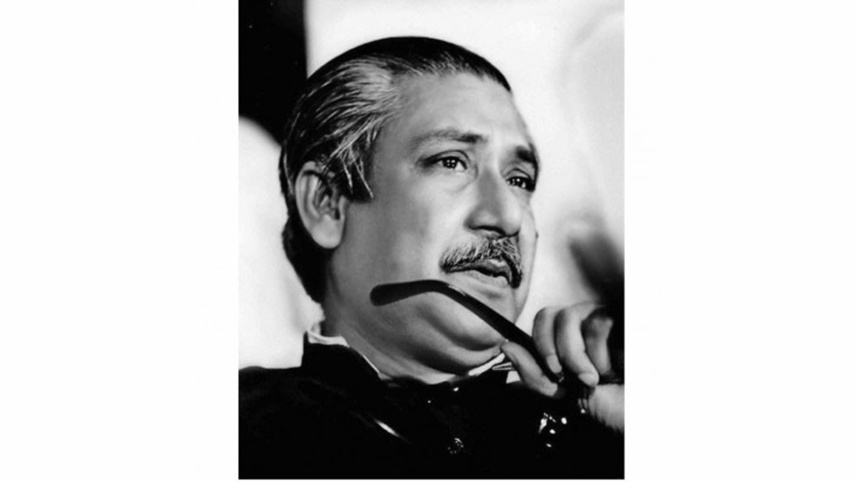
The people of Bangladesh are said to be an old nation but a new nation-state. Fifty-five years of statehood is not a long period in a broader canvas. Since independence, the country has witnessed many ups and downs. The first in the series of upheavals is the political changes of 1975, which was an eventful year starting with a shift from a parliamentary pluralistic system to a monolithic presidential rule, and ending with the assassination of the then President Sheikh Mujibur Rahman.
Sheikh Mujib’s murder was the combined result of political authoritarianism, economic hardship, military resentment, and even ambition. The question remains as to whether the coup could have been prevented if the then government had maintained multiparty democracy, curbed corruption, and balanced the civil-military relations. Sheikh Mujib, the supreme leader, lived in a state of complacency, largely ignoring the potential dangers brewing around him or the changing needs of the time. That said, the assassination was driven largely by internal military dynamics: resentment within the army, factional rivalries, and alienation caused by Mujib’s policies. The conditions inside the armed forces made a coup d’état increasingly likely.

Mujib’s creation of the paramilitary force Jatiya Rakkhi Bahini (JRB), which was directly loyal to him, sidelined the regular army. As a result, military officers felt humiliated and feared losing relevance. Senior officers accused Sheikh Mujib of promoting loyalists and family connections over merit. Intra-group conflicts in the army created divisions. Mujib’s inability to balance these rivalries weakened cohesion. By mid-1975, Bangladesh was a fragile state: authoritarian politics, economic collapse, and military resentment had created a combustible environment. The pre-August situation made Mujib’s regime highly vulnerable to a military strike.
The coup was led by a group of majors and captains, not by senior generals, reflecting disillusionment among younger officers who felt ignored. Khondaker Mostaq Ahmad, a cabinet minister, quickly aligned with the mutineers, declared himself president, and legitimised them under the Indemnity Ordinance, 1975, which granted them immunity.
On August 15, 1975, Sheikh Mujibur Rahman was assassinated in a pre-dawn military action at his own home in Dhaka. The operation was swift and took a few hours. Such a precisely timed operation, in which participants at the field level achieved their goal with minimum casualty of their personnel in the shortest possible time, was unprecedented in our history. By sunrise, Sheikh Mujib and most of his family members were dead. In the aftermath, Gen Ziaur Rahman rose to prominence and eventually succeeded as the power centre.
Civil-military relations were at the heart of Mujib’s assassination. His government’s handling of the armed forces and his way of navigating civilian supremacy and military power created tensions that ultimately exploded into the coup. Mujib believed in keeping the military under tight civilian control. He distrusted the army’s political ambitions, especially after seeing military dominance in Pakistan before 1971.
His era is marked by a paradox. He strongly condemned corruption and nepotism, yet his government became associated with both. The combination of rhetoric without enforcement, favouritism towards family and loyalists, and widespread graft eroded trust in his leadership. This breakdown in governance and credibility was a key factor behind the military’s resentment.
The rise of authoritarianism was a gradual process between January 1972 and August 1975, shaped by the challenges of governing a war-torn country, economic crises, and his desire to consolidate power. Even though Mujib began as a symbol of democracy and liberation, by 1975, his government shifted into a one-party authoritarian rule. This authoritarian turn was driven by crisis management, distrust in opposition, and desire for control.
The 1974 famine was a turning point in Mujib’s relationship with the masses. It not only devastated livelihoods but also shattered his image as the “father of the nation” who had promised prosperity after independence. Mujib and his colleagues, in denial, ignored the severe food crisis and smelled conspiracy involving foreign hands, particularly the US government.
The famine was more than a humanitarian disaster; it was a political disaster for Mujib. It eroded his moral authority, alienated him from the people, and fuelled resentment within both society and the military. This breakdown of trust was a critical factor that set the stage for the coup. For the military, the famine was proof of the government’s incompetence and corruption, deepening their resentment towards Mujib’s leadership.
The famine narrative became a political weapon for the coup leaders. By linking mass suffering directly to Mujib’s leadership, they justified his assassination as necessary for the nation’s survival. In reality, the famine was both a humanitarian tragedy and a political turning point, exploited by coup actors to gain public acceptance of their violent takeover.
The question of whether Sheikh Mujib’s one-party rule (BAKSAL) was necessary is one of the most debated aspects of Bangladesh’s history. Mujib loyalists argue that it was introduced as a response to prevailing crises. But it was not inevitable. It was a political choice. Inevitability often drives tragedy—think of Oedipus, whose fate was sealed despite every attempt to avoid it. It was a political strategy born out of desperation to stabilise a fragile state, but it backfired. While he hoped BAKSAL would unify Bangladesh and accelerate development, it alienated the stakeholders instead.
Mujib’s leadership evolved into authoritarianism, and in practice he behaved like a dictator in his final year. One may argue that his authoritarian turn was rooted in desperation to stabilise a war-ravaged, famine-stricken country rather than a lifelong ambition to rule absolutely. This distinction is why academia and politicians debate whether he was truly a dictator or a democratic leader who slid into authoritarianism under immense pressure.
The question whether Mujib’s murder could have been avoided still remains. Alternatives like exile, house arrest, or negotiated reform could have removed him from power without bloodshed. But the coup leaders—driven by resentment, fear of Mujib’s enduring influence, and a desire for total control—chose assassination as the most decisive option.
While the coup was carried out by mid-ranking officers, conspiracy theories highlight Mostaq’s betrayal, possible US foreknowledge, Pakistani influence, and Gen Zia’s conspicuous silence. These theories underscore that Mujib’s assassination was not just a military mutiny but part of a broader web of political and geopolitical intrigue. There is, however, no definitive documented evidence implicating top military officials of the time. What exists are circumstantial indications, testimonies, and political actions that suggest complicity or tacit approval of some, but researchers still debate the extent of their involvement.
 For all latest news, follow The Daily Star's Google News channel.
Comments