


The industrialisation of human cognition
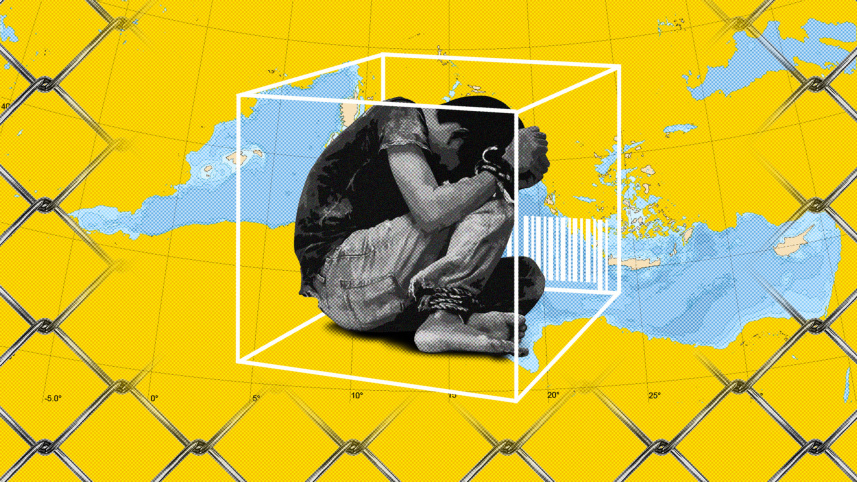
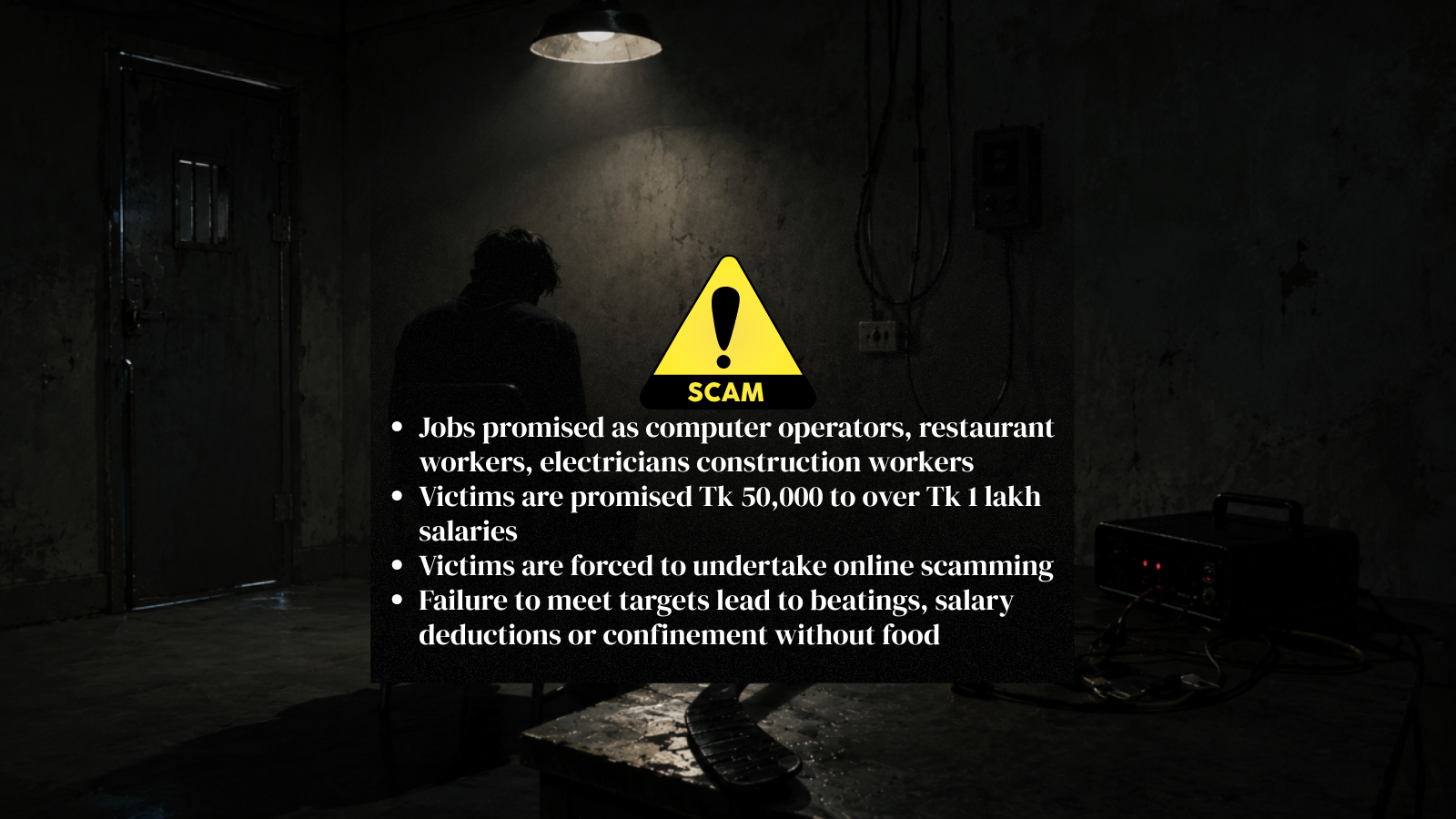
A few years into my career, I started meeting young Bangladeshis who had flown abroad believing they had landed IT jobs, but who instead woke up inside guarded compounds, forced to run scripted romance scams on strangers on the other side of the world. What I was documenting in these interviews was not simply labour exploitation; it was closer to being the industrialisation of human cognition, where a victim's education and language skills, rather than their muscle, become stolen.
Every criminal economy borrows its methods from whatever technology defines its era. Factories gave organised crime forced labour. Open borders and cheap transport introduced transnational trafficking networks. The digital economy has given it something new: compounds that traffic people not to manufacture goods, but to carry out fraud.

A UN Office on Drugs and Crime (UNODC) assessment released in Bangkok recently puts combined scam losses across East Asia, Southeast Asia, Australia and New Zealand at between $88.3 billion and $114.1 billion for 2025, roughly triple the estimate from two years earlier. The report describes these operations as a single interconnected ecosystem spanning cyber fraud, trafficking, migrant smuggling, and underground banking rather than separate criminal markets. Bangladeshi nationals make up a real share of the victims caught inside it, generally with far less diplomatic urgency behind their cases than the numbers would justify. Interpol estimates that around 74 percent of known scam-centre trafficking victims worldwide between 2020 and 2025 were brought into Southeast Asia, many of them educated and digitally fluent people who thought they were accepting ordinary work.
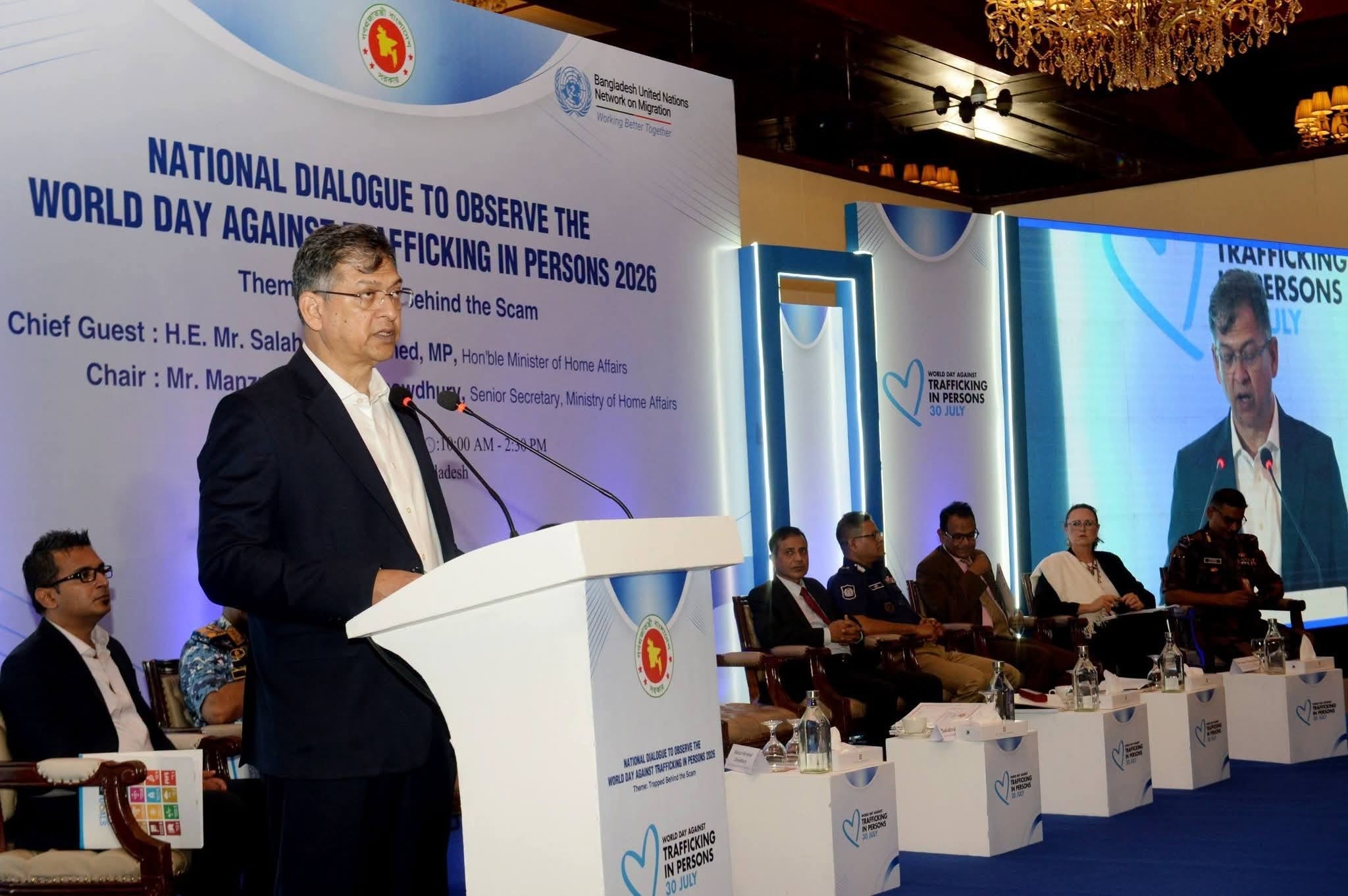
What policymakers have yet to fully recognise is that human trafficking has acquired a geopolitical angle, because it now shapes the distribution of power, not just the fate of individuals. States used to compete mainly over territory and raw resources. Now, increasingly, they compete over people, data, technology, and money. Every victim trafficked into a scam compound transfers knowledge, economic value, and strategic capability away from the legitimate state and into criminal hands.
That is also what separates this from older trafficking models. Earlier operations extracted physical labour. This one extracts cognitive capital. The victim is sought for their sense of judgement, ability to persuade, and technical skills. Organised crime, in the process, stops trafficking workers and starts assembling operational capability out of people.

Scam compounds in Shwe Kokko and across the wider Golden Triangle Special Economic Zone did not take root because law enforcement was slow. They took root in genuine governance gaps, where contested sovereignty became commercially useful for whoever held local power, and they now run as a self-funding parallel economy that outside authorities struggle to reach. The financial side works the same way: illicit proceeds move via underground banking and crypto rails fast enough that Financial Action Task Force (FATF), Interpol, and UNODC have jointly pressed governments to treat these flows as matters of international financial security, not simply criminal justice. These compounds also function as repositories of stolen personal information, identity documents, biometric data, and financial behaviour gathered at a scale few public institutions could match.
Bangladesh cannot rescue its own trafficked citizens through domestic effort alone; that depends on bilateral relationships and regional cooperation largely outside its control. In practice, coordinated crackdowns tend to accelerate once citizens of more powerful countries are affected, while Bangladeshi, Indian, and Pakistani victims have often waited years for comparable attention.
These networks flourish when states remain politically fragmented. Every jurisdictional boundary, diplomatic disagreement, and gap in legal cooperation becomes operational space for organised crime to take place. And this is a space that any single well-resourced state, acting alone, cannot close.
Governments also tend to divide trafficking, cybercrime, financial intelligence, immigration, and diplomacy into separate ministries with separate mandates. Criminal networks, on the other hand, run recruitment, coercion, laundering, and use of technology as one continuous operation. This mismatch, more than any shortfall in resources, is why the state keeps acting reactively, rather than proactively.
The law can close part of that gap, but right now it largely doesn't. Bangladesh's Prevention and Suppression of Human Trafficking Act, 2026 is a real achievement for the physical exploitation model it was written to address, but it has not been built to address digital coercion or trafficking evidence sitting on a server in another country that has no obligation to share it. Much of South Asia's legal framework suffers from the same limitation.
Moreover, even after rescue, survivors come home having learned fraudulent and crypto-laundering skills under duress, and regional evidence shows syndicates actively trying to pull former operators back in. So, reintegration without sustained protection of victims risks handing their “training” back to the people who built it.
For years, success in this field was measured by how many victims were rescued. But the test now is whether states can stop the ongoing transfer of human capital, money, technology, and information into criminal hands in the first place. The real cost of failing here won't just be measured in terms of how many people have been exploited, but also in how much authority the state has ceded.
M Rayhan Kabir is a liaison officer (migration) at BRAC’s Migration Programme.
 For all latest news, follow The Daily Star's Google News channel.
Comments