


The real solution to our garbage problem lies in governance

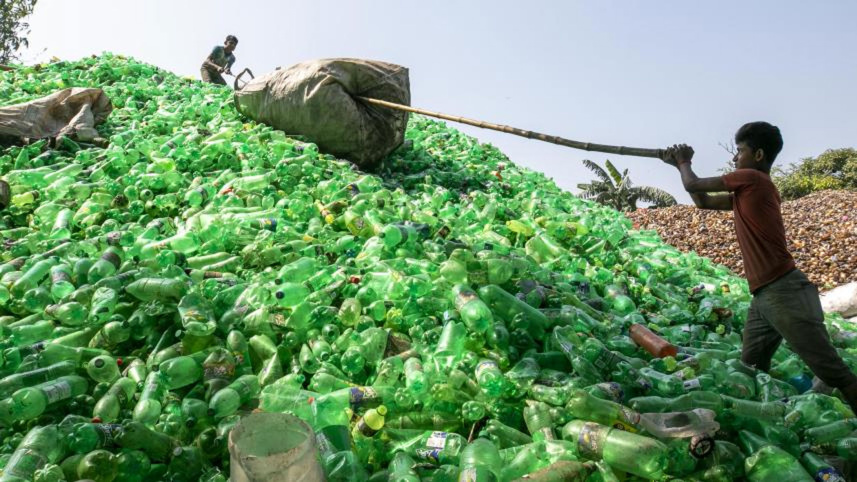
Bangladesh’s urban garbage problem has been addressed by many. The problem has become so dire and persistent that even foreign diplomats have felt compelled to comment. Denmark’s ambassador, Christian Brix Møller, and Maria Stein Knudsen, in an article published on September 29, 2025, appropriately highlighted technology, storage, public awareness and international cooperation in addressing waste and food loss. The complementary issue is whether Bangladesh has the institutional and incentive structure needed to make such measures work. That is where the problem becomes a matrix: outcomes depend on how the elements interact. A central principle of systems thinking is that improvements in one part of a system may achieve little if weaknesses elsewhere continue to undermine its overall performance.
Waste management begins before the garbage truck arrives. Households decide whether waste is separated. Restaurants and markets decide how food waste is handled. Manufacturers determine how much packaging enters the system. Municipal authorities oversee collection, contractors influence where collected waste ends up, informal pickers recover recyclables, and recycling firms depend on receiving commercially usable material.

Mixed waste makes recycling difficult. Irregular collection encourages dumping in open spaces and drains. Weak recycling markets leave separation unrewarded, while minimal producer responsibility allows hard-to-recycle packaging to proliferate. Contractors paid without performance standards can absorb higher municipal spending without producing cleaner streets.
Dhaka’s two city corporations account for about 6,500 tonnes of solid waste daily, roughly 75 percent organic and high in moisture. Community collectors transport it by rickshaw vans to secondary transfer stations, and hundreds of trucks carry it to the landfills at Aminbazar and Matuail. Official estimates of waste generation and collection vary considerably, making it difficult to assess the system’s performance and hold those responsible accountable. Informal pickers recover recyclables along the way, largely unrecorded and unprotected.
Technology matters, particularly because Bangladesh loses food during production, transportation and storage. But a refrigerated supply chain requires reliable electricity, financing, maintenance, trained operators and commercial scale. Digital platforms work only if producers and buyers have incentives to use them and the infrastructure to complete transactions. Standards require monitoring and enforcement.
International partners can provide knowledge, equipment and technical assistance. Bangladesh must supply the institutional environment where these can function; otherwise, it imports the visible part of a foreign system while leaving behind the institutions that made it succeed.
Waste must therefore be examined across multiple dimensions: household behaviour, collection, municipal finance, regulation, producer responsibility, recycling markets, technology, informal labour and enforcement. Plastic discarded on the streets enters drains; blocked drains contribute to waterlogging, damaging roads and disrupting transportation. Accumulated waste and stagnant water also create conditions favourable to mosquito breeding, adding to public health risks.
Food waste follows the same pattern. Losses at farms and markets reduce farmers’ incomes. Inadequate storage increases spoilage, shrinks effective supply and may push up prices. Food that has consumed land, water, labour, transportation and energy is discarded before providing nutrition. Its economic cost extends well beyond its market value.
Bangladesh should resist the search for one dominant solution. Awareness cannot substitute for reliable collection, collection without segregation limits recycling, and recycling cannot be commercially sustainable without markets for recovered materials.
Technology attracts policymakers because it is visible: waste-to-energy plants can be inaugurated and smart bins photographed, while institutional reform is less visible and slower. However, a sophisticated waste-to-energy facility cannot compensate for unsuitable waste composition or weak contract management, particularly where waste is overwhelmingly wet and organic. Sensors accomplish little if overflowing bins are reported electronically, but collection remains irregular.
Before adopting any technology, Bangladesh should ask what conditions must exist for it to work. That shifts the focus from procurement to performance. Officials usually count the plants built; the better measure is streets that stay clean month after month.
Bangladesh needs a waste management system that fixes responsibility across the entire chain. Households and businesses need practical source-segregation arrangements. Municipalities need measurable collection and cleanliness standards, with contractor payments tied to performance. Producers should gradually assume greater responsibility for packaging and hard-to-dispose products.
Informal waste workers, who already perform much of the country’s recycling, should be brought into safer and more productive arrangements. Formal recognition would allow their contribution to be counted, supported and protected.
Financing, service obligations and accountability must move together. Citizens cannot reasonably demand services comparable to wealthier countries without adequate municipal capacity. Spending without accountability will not solve the problem either. Governance must establish who is responsible, how performance is measured, and how the system is financed. Technology should then be selected to serve that system, rather than substitute for it.
Cleaner cities will not come from another appeal not to litter, smarter equipment or a new project. They will come when every participant knows what must be done, who pays, who benefits from doing it properly, and who is accountable when the system fails.
Dr Abdullah A Dewan is professor emeritus of economics at Eastern Michigan University in the US, and former physicist and nuclear engineer at the Bangladesh Atomic Energy Commission. He can be reached at aadeone@gmail.com.
Views expressed in this article are the author's own.
Follow The Daily Star Opinion on Facebook for the latest opinions, commentaries, and analyses by experts and professionals. To contribute your article or letter to The Daily Star Opinion, see our guidelines for submission.
 For all latest news, follow The Daily Star's Google News channel.
Comments