


The Rohingya must not become pawns in regional politics

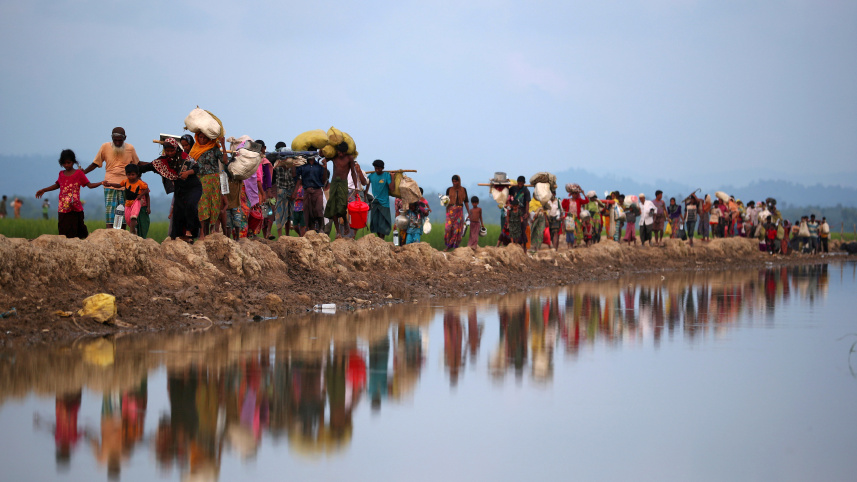
Decades of systematic discrimination, statelessness, persecution, ethnic cleansing, and what numerous international bodies have described as genocidal acts have transformed the Rohingya into one of the world's most vulnerable populations. Yet, after surviving violence, displacement, and humanitarian catastrophe, they are now increasingly becoming political pawns in domestic electoral politics, while remaining geopolitical pawns in regional diplomacy.
The latest example comes from Malaysia. Prime Minister Anwar Ibrahim recently announced that Myanmar had agreed to take back 5,000 Rohingya refugees from Malaysia. He also went further by suggesting that approximately 300,000 Rohingya could eventually be repatriated from Bangladesh. The timing of the statement is difficult to ignore. With crucial state elections approaching and the Rohingya issue becoming politically charged following protests involving Rohingya refugees that reportedly disrupted public order and caused damage to several Malaysian businesses, immigration and refugee management have become potent electoral issues.

Whether intentionally or otherwise, the announcement appears designed to reassure Malaysian audiences that their government is making decisive progress on an issue that has generated growing public frustration. But political messaging cannot negate diplomatic reality. The Five-Point Consensus (5PC), adopted on 24 April, 2021 in Jakarta, remains Asean's official framework for addressing the Myanmar crisis, including the conditions that have driven the Rohingya refugee crisis. However, its implementation has been largely unsuccessful.
The issue is not simply the announcement made by the Malaysian prime minister, but the apparent lack of evidence to substantiate it. No publicly available evidence suggests the existence of a comprehensive, verifiable agreement with the Myanmar authorities that guarantees the safety, citizenship, dignity, and rights of returning Rohingya. More importantly, any meaningful repatriation process cannot ignore the military and political realities on the ground. The Arakan Army has emerged as the dominant territorial actor in Rakhine, reportedly controlling nearly 90 percent of the state. Any discussion of sustainable repatriation that excludes engagement with the de facto authority exercising control over the intended areas of return is, at best, incomplete and, at worst, politically performative.
Refugee repatriation under international norms must be voluntary, safe, dignified, and sustainable. None of these conditions currently exist in Myanmar. Unfortunately, this is hardly the first time the Rohingya have become subjects of ambitious political promises.
In March 2025, during the visit of the UN Secretary-General to the refugee camps in Cox's Bazar, Bangladesh's then Chief Adviser Muhammad Yunus, expressed hope that the Rohingya would celebrate the next Eid in their homes in Myanmar, and even invited the UN chief to join them there for Eid sweets. The optimism undoubtedly reflected Bangladesh's understandable desire to resolve one of the world's largest refugee crises. However, the political and security realities have not moved in tandem with such aspirations.
The conflict inside Myanmar has intensified rather than subsided, and no credible framework for large-scale repatriation has emerged even now.
For years, international leaders, foreign ministers, ambassadors, and humanitarian officials have visited camps in Cox's Bazar. They have consistently reaffirmed their commitment to the Rohingya cause, called for accountability, demanded safe repatriation, and pledged continued international solidarity. Such statements have become almost ritualistic components of official visits to Bangladesh. But rhetoric has rarely translated into meaningful political leverage over Myanmar or sustained financial support for Bangladesh.
Humanitarian funding continues to decline. International agencies repeatedly warn of funding shortages, food ration cuts, educational gaps, and deteriorating living conditions. Meanwhile, Bangladesh continues to shoulder the overwhelming social, economic, environmental, and security costs of hosting a massive refugee population exceeding one million people.
Bangladesh has undoubtedly demonstrated remarkable humanitarian leadership in this regard since 2017. However, humanitarian generosity must not be an indefinite substitute for durable political solutions. The burden-sharing envisioned by the international community has remained largely rhetorical, leaving Bangladesh to absorb costs that extend far beyond humanitarian assistance.
The Rohingya crisis has therefore become a textbook example of how humanitarian crises can evolve into geopolitical stalemates. Major powers continue to view Myanmar through competing strategic lenses. Regional organisations remain divided on the issue and international legal proceedings are moving slowly. The competing interests of regional and global powers, and various armed actors inside Myanmar, have made it so that strategic calculations frequently outweigh humanitarian imperatives. The Rohingya, meanwhile, remain trapped within these geopolitical calculations.
Malaysia's recent announcement illustrates how refugee policy can become intertwined with electoral politics. Bangladesh has witnessed similar cycles of optimistic declarations without corresponding diplomatic breakthroughs. Neither serves the interests of the Rohingya nor contributes to a realistic pathway towards sustainable repatriation.
The humanitarian situation within Rakhine State deteriorated further during 2024-2026 as fighting intensified between the Myanmar military and the Arakan Army, displacing additional Rohingya internally and also prompting further cross-border movements, all the while making any near-future repatriation even less feasible. According to the UNHCR, approximately 150,000 new Rohingya refugees entered Bangladesh from Rakhine State following the fighting that began in November 2023, when the Arakan Army launched its major offensive against the Tatmadaw. This latest influx serves as a bitter reminder that the prospect of Rohingya repatriation is increasingly becoming a myth rather than a realistic possibility.
Bangladesh must continue working with all relevant stakeholders who shape realities inside Myanmar; diplomatic engagement should accurately reflect facts on the ground. Sustainable solutions require engaging with those capable of implementing them, regardless of how politically uncomfortable such engagement may appear.
The Rohingya, who have already paid an unbearable price through decades of persecution, should not have to bear the additional burden of becoming political pawns. The international community must move beyond symbolic declarations and photo opportunities to focus on serious diplomacy grounded in the realities of contemporary Myanmar, meaningful burden-sharing, sustained humanitarian financing, and a credible roadmap towards voluntary, safe, and dignified repatriation. Until then, every grand announcement promising returns should be treated with caution.
Sk Tawfique M Haque is professor and director of South Asian Institute of Policy and Governance (SIPG) at North South University.
Simon Mohsin is a political and international affairs analyst.
Views expressed in this article are the author's own.
Follow The Daily Star Opinion on Facebook for the latest opinions, commentaries, and analyses by experts and professionals. To contribute your article or letter to The Daily Star Opinion, see our guidelines for submission.
 For all latest news, follow The Daily Star's Google News channel.
Comments