


We must do more to protect boys from sexual abuse

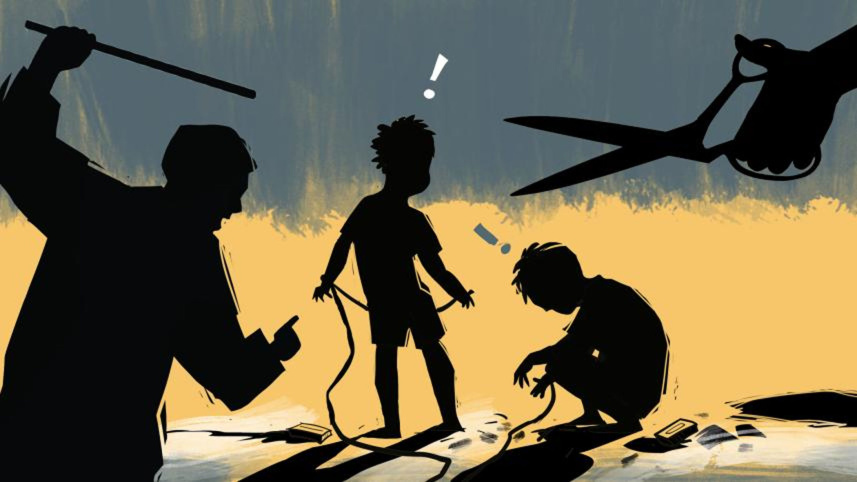
Another case of child sexual abuse at a residential madrasa in Savar has made headlines in national newspapers in recent times. The victim’s father, visibly upset and in tears as he spoke to the media, alleged how older students repeatedly raped his seven-year-old son. His distress also showed how vulnerable parents can be when they entrust their young children to the care and protection of residential institutions. When the boy sought help from a teacher, he was allegedly punished and raped again, and the teacher warned him not to tell anyone.
For a young child living in a residential setting, away from the immediate protection of his parents, such vulnerability is difficult to imagine. His parents eventually rescued him, and he is now receiving medical treatment for serious injuries, while efforts are underway to bring those responsible to justice. But the case has exposed a grave issue that we rarely discuss.

There appears to be a perception among some that the sexual abuse of a boy is somehow less serious than the sexual abuse of a girl child. The sexual abuse of any child is a serious crime and a grave violation of that child’s safety, dignity, and trust. Yet when the victim is a boy, shame, stigma, and misconceptions may make the abuse more difficult to disclose and discuss. This may also lead to cases remaining hidden and under-reported. Regardless of gender, the physical, emotional, and psychological consequences of sexual abuse can be long-lasting, affecting a child’s health, confidence, and sense of safety all their life.
There have been repeated reports of alleged physical abuse of children in residential educational institutions, while emotional abuse may be less visible and difficult to recognise. Such incidents highlight why educating parents about child abuse is an essential part of safeguarding. Young children may not always be able to explain clearly what has happened to them, particularly when they have been threatened, frightened, or made to feel ashamed. A child living in a residential institution may become unusually anxious or persistently reluctant to return after spending a holiday or break with their parents. Parents may interpret this simply as a child’s natural reluctance to leave home. They may insist the child return or even punish them for refusing without realising that the child may be trying to communicate something very serious. Parents therefore need to know what changes in behaviour to look out for, how to speak to a child without frightening or blaming them, where to seek help, and how to raise concerns with an institution. Parents should be the primary layer of protection, and informed ones can question and hold institutions accountable when necessary.
Several recent cases of child abuse in some religious residential organisations also highlight the power imbalance between institutions and parents, particularly where parents with limited education or resources have little confidence in questioning institutional authority. In residential settings, this becomes even more important because parents entrust the institution with children’s day-to-day care and protection. Strengthening safeguarding therefore requires not only stronger institutional accountability, but also empowering parents with knowledge of children’s rights, their own rights, safeguarding policies, and appropriate complaint procedures.
Teaching and caring for children in a residential setting involves far more than delivering lessons. Perhaps most teachers and staff carry out their responsibilities with dedication and care. However, good intentions alone are not enough. Working with children, particularly in residential settings where adults are responsible for their safety around the clock, requires appropriate training and continuous professional development. Beyond subject knowledge, teachers, supervisors, and management staff need knowledge and skills in child development, safeguarding, professional boundaries, positive behaviour management, communication with children, and emotional regulation. Clear safeguarding policies and codes of conduct are equally important so that everyone understands what is expected of them. The recent directive by Al-Hayʼat al-ʿUlyā lil-Jāmiʿāt al-Qawmiyyah Bangladesh—the body under which the certificates of Dawra-e-Hadith by the existing six Qawmi madrasa boards were given the equivalence of a master’s degree in 2018—prohibiting all forms of corporal punishment of students is a step in the right direction. The directive also asked the six Qawmi madrasa boards and the madrasas operating under them to form a student protection committee at every institution.
Besides these moves, institutions need to think more broadly about the well-being of their staff. Teachers and other staff may live away from their families for long periods and experience isolation, stress, or emotional pressure. However, none of these circumstances can ever explain or justify the abuse of a child. Governing bodies should therefore direct serious attention to their suitability to work with children. Appropriate safeguarding checks, supervision, and clear reporting procedures must be part of the system. Protecting children must always remain the priority, and staff must be held accountable for their own conduct.
In addition, the education system should seriously consider how young children can access education while continuing to live with their parents. Living with parents is important not only for children’s safety, but also to ensure the love, attention, and emotional support they need as they grow. This raises another question: should there be a minimum age for children to enter residential religious educational institutions? The government could consider an age-based policy, drawing on the approach used by other residential educational institutions, such as cadet colleges. Such policies would not address every safeguarding concern, but they could reduce the vulnerability of very young children who may not yet be emotionally ready to live away from their families.
Most importantly, safeguarding children requires stronger institutions and informed, empowered parents. The education system should therefore make parental education and support an important part of its child protection approach.
Dr Sina Akand is a London-based sociologist and development consultant. She can be reached at
sinaaknd@gmail.com.
Views expressed in this article are the author's own.
Follow The Daily Star Opinion on Facebook for the latest opinions, commentaries, and analyses by experts and professionals. To contribute your article or letter to The Daily Star Opinion, see our guidelines for submission.
 For all latest news, follow The Daily Star's Google News channel.
Comments