The global injustice behind Bangladesh’s shipbreaking industry

The shipbreaking industry needs an industry-specific civil liability framework: one that compensates workers who are killed, injured or made ill by their work, while also changing current industry practices by putting an effective civil remedy system in place. The recent deaths of workers at a shipbreaking yard owned by Ferdous Steel demonstrate how urgently such a remedy is needed in a country like Bangladesh, where compensation based on negligence is all but unknown.
The Shipbreaking Liability Certificate (SLC) scheme I propose in my book, Worker Injustices in the South Asian Shipbreaking Industry: Developing a Framework for International Legal Accountability, is designed to meet that objective. It could also be applied regionally or globally, wherever practices common in Bangladesh, India and Pakistan—beaching ships and relying heavily on manual labour—are followed. Under the SLC, a shipowner would be required to maintain shipbreaking insurance until a ship was completely demolished, covering claims by any worker who suffered a minor or serious injury, developed a work-related illness or died as a result of the work. Workers and their families should not have to go from door to door seeking compensation; compensation is their right. The scheme would supplement compensation available under labour law, which is far too low given the profits generated by the global industry.
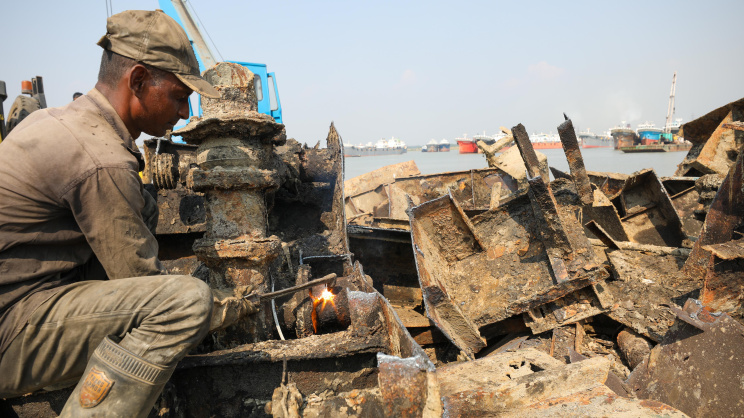
One of the underlying problems is that existing domestic and international legal frameworks provide no effective mechanism for addressing shipowners' financial responsibility. Because of this legal gap, every major party in the business chain—the shipping industry, cash buyers and open-registry countries—can benefit financially from the industry, while none bears adequate legal responsibility for the deaths, injuries and diseases that shipbreaking workers routinely suffer.
The theory of rectificatory justice, which seeks to address wrongs by correcting unjust losses and gains, provides an important framework for regulating the shipbreaking industry. Its emphasis on remedying injustice offers a way of thinking through how the wrongs suffered by shipbreaking workers might be put right: namely, by addressing the lack of adequate and prompt compensation for those who suffer work-related deaths, injuries and diseases. Since it is unrealistic to expect casualties in the yards to be eliminated altogether in the near future, an SLC built on the principles of rectificatory justice would at least introduce an effective system of remedy and deliver some measure of justice to workers and their families.
Seen through the lens of rectificatory justice, one of the most relevant factors is the profit earned by the dominant actors in the shipbreaking industry, particularly those in the global maritime business. Those profits highlight an underlying injustice: the economic benefits generated by the industry are not matched by adequate recognition of, or responsibility for, the harms suffered by workers. This is where postcolonial theory becomes relevant, as it raises the question of whether the existing legal order has granted significant power and economic advantage without corresponding responsibility to dominant entities based largely in developed nations.

Postcolonial theory is relevant to shipbreaking law for two main reasons. First, these laws were adopted long after the formal end of colonialism. Yet they can still serve the interests of international shipowners based predominantly in developed nations, paying greater attention to facilitating maritime commerce than to the working conditions and human consequences in shipbreaking yards. Second, in practical terms, the existing legal frameworks do not adequately acknowledge that developing countries often have limited financial, institutional and technical resources with which to raise standards across their shipbreaking industries.
Postcolonial analysis also draws attention to the proposition that global institutions and regulatory structures can be biased in favour of developed nations. That imbalance can be seen in the design of the Hong Kong International Convention for the Safe and Environmentally Sound Recycling of Ships (Hong Kong Convention). Although it is the principal international instrument specifically governing ship recycling, the Convention permits a business model under which companies from major shipping countries can sell end-of-life ships containing hazardous materials to ship-recycling companies in South Asia, subject to the Convention's regulatory requirements. Yet it does not impose direct financial liability on those shipowners for compensating workers who suffer work-related deaths, injuries and diseases in the yards, nor does it create the comprehensive liability regime necessary to ensure that the costs associated with those harms follow the commercial actors that benefited from the vessels.

The global injustice argument, grounded in postcolonial theory, therefore provides a distinctive basis for legal reform. Shipbreaking is an integral and profitable component of the global maritime industry. Yet the existing international framework imposes no comprehensive civil liability on international shipowners for work-related deaths, injuries and diseases suffered by shipbreaking workers, or for the wider environmental damage associated with the industry. This provides the basis for arguing for a new liability framework. Applying a rectificatory global justice approach, the proposed SLC would establish a civil liability mechanism that makes shipowners financially responsible for specified harms and requires adequate compensation to be available to affected workers and their families.
Before such a framework can be established, however, it is important to examine human rights abuses in the industry through the lenses of global injustice and postcolonial theory, while asking more directly whether shipowners should bear financial and legal responsibility for the harms associated with the end-of-life disposal of their vessels. Drawing on several international reports and case studies from the EU, international oil transport and the wider shipping industry, my research argues that a global regulatory framework would represent an important step forward. Its effectiveness would depend on its capacity to require every relevant party involved in the shipbreaking chain to assume an appropriate share of responsibility for deaths, injuries and work-related diseases suffered by workers in South Asian yards.
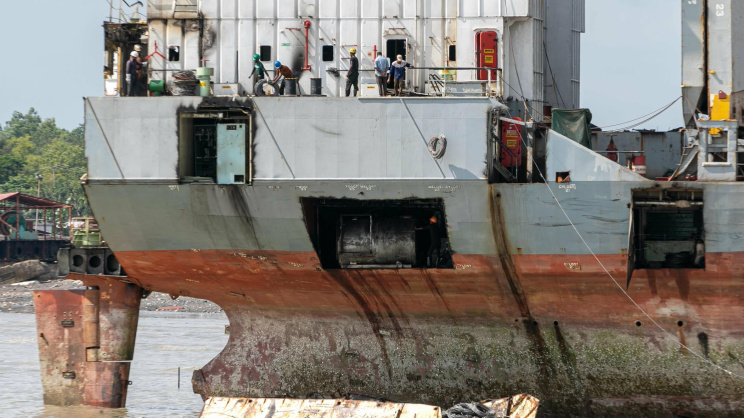
Raising standards, however, must not make shipbreaking in South Asia commercially uncompetitive. If South Asian countries improve their environmental and workplace standards, costs will inevitably rise, and shipowners may consequently stop selling their vessels to yards in the region. Competition from newly established yards elsewhere, operating at lower costs and under weaker standards, could then pull the industry away from South Asia altogether.
Against this background, the central challenge for the South Asian shipbreaking industry is to reconcile the high prices paid to shipowners with better labour and environmental practices. The region has retained its global competitiveness partly by offering shipowners high prices for end-of-life vessels, and yards are able to sustain those prices in part by minimising expenditure on labour, occupational health and safety, and environmental protection—at considerable cost to workers and the environment. One estimate suggests that South Asian shipbreaking companies spend 82 per cent of their total shipbreaking costs on purchasing the ship, leaving very little for maintaining adequate environmental and workplace safety standards. This business model contributes to a ‘race to the bottom’ in the shipbreaking industry. The industry remains heavily dependent on cheap but unsafe practices—beaching, importing ships without adequate pre-cleaning and dismantling vessels largely through manual labour—to maintain the high purchase prices offered to shipowners.

This business model contributes to recurring deaths, injuries and work-related diseases among workers, as well as pollution with long-term consequences for coastal and estuarine communities. Yet affected workers often lack the legal means and financial resources necessary to pursue adequate compensation, while environmental harms are similarly difficult to remedy through existing mechanisms. Many shipbreaking workers lack formal employment contracts, identity cards or effective registration. This context prompted the first major question of my research:
What legal and liability framework is required to make the international maritime industry accountable for harms to human life and health—including workers’ deaths, physical injuries and work-related diseases—in shipbreaking countries?
An examination of national and international legal frameworks reveals a persistent failure to balance the substantial economic benefits enjoyed by the global shipping industry against the human costs borne by workers in the shipbreaking industry.
An examination of national and international legal frameworks reveals a persistent failure to balance the substantial economic benefits enjoyed by the global shipping industry against the human costs borne by workers in the shipbreaking industry.
The regulatory frameworks adopted by India, Bangladesh and Pakistan are strongly influenced by each country’s demand for steel recovered from dismantled ships and by the local employment the industry generates. These economic needs create powerful incentives for each country to retain a significant share of the global shipbreaking market. The three countries may therefore be reluctant to impose stronger regulatory requirements for fear of losing business to competitors elsewhere. Such policies may help retain the industry, but they are insufficient to create safe workplaces or ensure adequate compensation for workers who suffer work-related deaths, injuries and diseases.
International regulatory frameworks present an even broader set of problems. Many global industries operate with both preventive regulation and mechanisms for liability and compensation. The international legal framework governing shipbreaking, by contrast, focuses primarily on prevention, while providing no dedicated international compensation scheme for workers who are killed, injured or made ill in shipbreaking yards. In practice, the preventive framework has also struggled to deliver adequate occupational health and safety protections across South Asian yards.
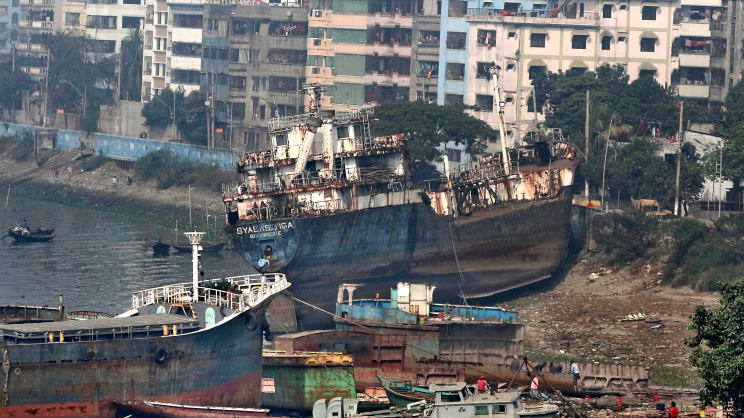
These weaknesses in the existing legal framework amount to a form of global injustice for two further reasons. First, the Hong Kong Convention places primary responsibility on ship-recycling states to ensure that facilities operating within their jurisdictions meet occupational health, safety and environmental requirements. Yet developing countries may lack the financial, technical and institutional resources needed to implement these standards effectively. As other authors have argued, this allocation of responsibility can leave developing countries bearing much of the cost of workplace safety and worker protection, while international shipowners continue to benefit from the comparatively low cost of recycling their vessels in South Asia. The result is an unequal distribution of benefits and burdens between the global shipping industry and developing shipbreaking countries, their environments and their workers. Second, although shipbreaking imposes substantial human costs on workers in developing countries, the Convention does not establish a dedicated civil liability and compensation regime for work-related injuries, deaths or diseases.
A critical examination of the existing regulatory options, therefore, reinforces the need for a more equitable balance between the benefits that the South Asian shipbreaking industry provides to the global maritime industry and the losses borne by workers further down the business chain. That balance is what the proposed SLC is designed to achieve, while also changing industry practices. The central claim is that the industry requires a global civil liability mechanism not only to compensate shipbreaking workers who suffer work-related deaths, injuries or diseases, but also to reshape industry practices by strengthening accountability throughout the transfer of ownership and responsibility for every ship, from cradle to grave. Such a mechanism would distribute responsibility among relevant parties across the business chain while seeking to preserve the industry's commercial viability.
Dr Mohammad Zulfikar Ali is a lecturer at Curtin Law School, Curtin University, Perth, Western Australia. He can be reached at alilaw5250@gmail.com.
Send your articles for Slow Reads to slowreads@thedailystar.net. Check out our submission guidelines for details.

Fixing Bangladesh’s broken medicine policy

Can Bangladesh make its plastic waste policy work?

Dhaka accidentally built the city planners now want. Can we make it liveable?

Can Bangladesh produce its own knowledge?

How we are killing Dhaka
Can Bangladesh afford not to invest in Bhola’s gas?

Bangladesh’s renewable policy: Still too little but not too late
Prabhat Patnaik speaks / Why the Global South must rethink export-led growth

Bhotekoshi flood: Another warning from the Himalayas. Are we listening?