Why the Global South must rethink export-led growth

Prabhat Patnaik, professor emeritus of economics at Jawaharlal Nehru University and a leading Marxist economist, speaks to The Daily Star about the limits of neoliberalism and export-led growth, the need for greater economic sovereignty in the Global South, and the possibility of an alternative development path for countries like Bangladesh.
The Daily Star (TDS): For decades, many developing countries have supplied the world with cheap labour and raw materials, while wealthier countries have consumed the finished products. Is this model beginning to break down? As global inflation, trade tensions and supply-chain disruptions reshape the world economy, what challenges and opportunities do they pose for countries like Bangladesh?
Prabhat Patnaik (PP): The neoliberal economic regime has characterised the world for the last several decades and has entailed the relatively unrestricted movement of goods and services, as well as capital, including finance, across national borders. It has indeed reached a dead end. The inequalities it has generated have pushed it into a crisis of stagnation and higher unemployment, which is why President Trump of the USA is himself imposing tariff barriers against imports into that country in an effort to reduce unemployment; such tariffs amount to “beggar-thy-neighbour” policies that export unemployment to other countries. But the US, while doing so, will oppose any country in the Global South pursuing an independent growth strategy.
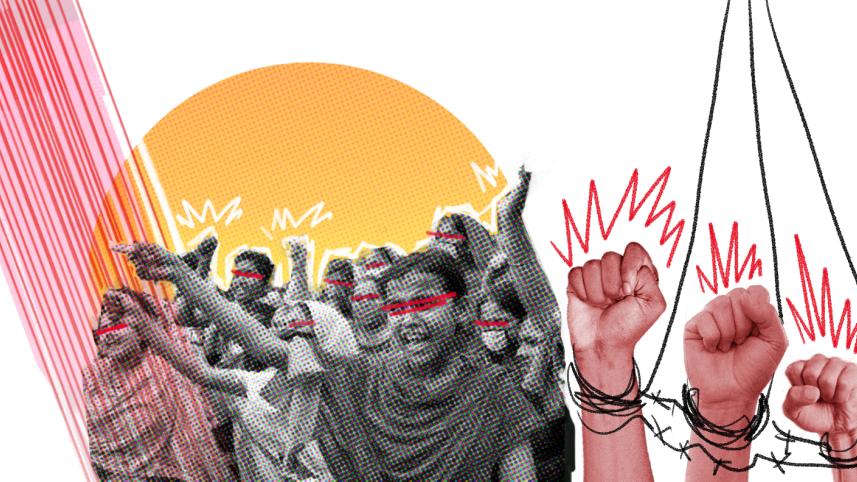
Besides, any independent growth strategy, even an enlargement of the domestic market through a reduction in income inequalities, would involve measures that globalised finance would oppose: taxing the rich, increasing the fiscal deficit or protecting the economy through tariffs. And since finance is globalised and can move into and out of an economy at will under the neoliberal regime, its dictates must be obeyed; otherwise, there will be a financial outflow and hence a crisis.
To change their growth strategy, therefore, countries like Bangladesh must acquire autonomy from globalised finance by imposing capital controls, that is, restrictions on outflows of finance.
To change their growth strategy, therefore, countries like Bangladesh must acquire autonomy from globalised finance by imposing capital controls, that is, restrictions on outflows of finance. But this would also mean that finance would not flow into the country, making it difficult to meet its balance-of-payments deficit and necessitating trade controls. Hence, any change in economic strategy would involve not marginal tinkering but a major, interrelated shift. It would entail a shift towards dirigisme (greater state intervention), which would be opposed not only by advanced countries but also by the domestic rich. Such a shift, however, is necessary if the country is to extricate itself from the quagmire into which neoliberalism has led it. It can be achieved only if the people are mobilised behind it, and for that to happen, it must promise them concrete gains.
I have been arguing in India that a shift away from neoliberalism must be accompanied by the institution of a set of universal, constitutionally guaranteed, justiciable fundamental economic rights. Five such rights—a right to food; a right to employment (failing which a full wage has to be paid); a right to free, quality, universal healthcare through a National Health Service; a right to free, quality, universal, publicly provided education; and a non-contributory living pension for all (except those who opt out because they are otherwise covered), together with disability benefits—can be provided in India by imposing just two taxes, and only on the top 1 percent of the population: a 2 percent wealth tax and a one-third inheritance tax on whatever wealth is passed on. I am sure a similar rights-based welfare state can easily be built in Bangladesh by taxing only the top echelons of society. Such a New Deal alone can inspire the people to support a government effecting a change in economic strategy.
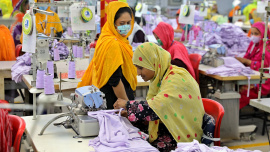
TDS: Bangladesh's economic success is often linked to its export industries, particularly ready-made garments. But can a country become truly prosperous by relying mainly on low-cost exports? What are the strengths and limitations of an export-led growth model, and what should Bangladesh be doing now to avoid becoming trapped in it?
PP: There is a point about the export-led growth strategy that is not often appreciated. If all countries in the world pursue an export-led growth strategy, that does not increase the rate of growth of the world market, and hence the rate of growth of the exports of all countries taken together. Therefore, if some countries have a faster rate of export growth than the world market, then some other countries must have a slower rate. The export-led growth strategy, in other words, pits countries against one another; it introduces, instead of co-operation, a Darwinian competition among them, which I find fundamentally reprehensible and which home-market-based growth does not entail.
Consider some figures. In the decade 2010–2020, even before the pandemic brought the world economy to a standstill, the annual growth rate of world GDP was 2.6 percent. The growth rate of labour productivity in the world economy over the same period was about 1.6 percent per annum. Hence, the growth rate of employment in the world economy, which is the difference between the two, was about 1 percent per annum. But the growth rate of the world labour force was higher, at about 1.2 percent. Taking the world as a whole, therefore, under an export-led growth strategy, even the additions to the labour force cannot be provided with employment, let alone the labour reserves that already exist in the form of unemployed, underemployed and semi-employed workers. Since the magnitude of poverty is associated with the size of these labour reserves, world poverty will not disappear. Indeed, pursuing such a strategy will exacerbate poverty over time.

An individual country may, of course, do better, but only by condemning some other country to an even worse fate. Countries must therefore get out of the trap of export-led growth. Large countries can do so quite easily, but small countries must come together to create a home market of adequate size, on the basis of which they can grow.
An individual country may, of course, do better, but only by condemning some other country to an even worse fate. Countries must therefore get out of the trap of export-led growth. Large countries can do so quite easily, but small countries must come together to create a home market of adequate size, on the basis of which they can grow. Home-market-led growth, of course, does not mean autarky; countries pursuing such growth can trade with one another to meet their requirements, but the stimulus for growth remains the home market.
Economist Nicholas Kaldor once distinguished between two kinds of export-led industrialisation: one in which industry grows by exporting to other countries, and the other in which it grows by exporting to agriculture. It is the latter that I advocate.
TDS: Many countries in South Asia are facing foreign exchange shortages, rising debt burdens, and pressure to adopt austerity measures. Why do developing economies repeatedly find themselves in this position? How can countries like Bangladesh maintain economic stability while preserving the freedom to pursue their own development priorities?
PP: It is not just South Asia but countries across the Global South that face these perennial problems. The reason lies in a fundamental flaw in the world trading arrangement. Imagine that there are only two countries in the world engaged in trade: one has a surplus, and the other has an equal deficit. If the surplus country increases its domestic absorption of goods and services, for instance by raising consumption among its workers and peasants, this would help eliminate the trade imbalance by raising, directly or indirectly, demand for the deficit country's goods. For the two countries taken together, and certainly within the deficit country, employment, output and consumption would rise even as the trade imbalance was eliminated.
But the current world trading arrangement does not follow this route. It is not the surplus country that is forced to make the adjustment by increasing its domestic absorption to eliminate the trade imbalance, but the deficit country that is forced to reduce its domestic absorption in order to eliminate the trade imbalance. This lowers world employment, output and consumption, and does so most severely within the deficit country. This is an extremely irrational arrangement. It was instituted when the Bretton Woods system was set up in 1944, and it persists because the obsession under capitalism is with lowering rather than raising the living standards of working people. Given this irrational arrangement, countries of the Global South must aim to increase their self-reliance rather than remain trade-dependent.
TDS: Food prices, climate change, and growing dependence on imports have raised concerns about food security across the Global South. How important is domestic food production for economic independence? What lessons should countries like Bangladesh draw from recent global disruptions in order to build a more resilient agricultural system?
PP: Now, as in colonial times, countries of the Global South essentially produce primary commodities for the Global North, but there is one difference: the North has become a substantial producer of foodgrains and dairy products, owing to massive subsidies from its governments. As a result, the pressure on the South now is to import foodgrains from the North and to shift instead to the production of cash crops and food crops other than grains. The pressure, in other words, is for the South to abandon foodgrain self-sufficiency, which many African countries have done. This abandonment, however, makes these countries vulnerable not only to arm-twisting by the North and to famines if the North imposes sanctions against them, but also to foodgrain shortages even in the absence of sanctions. Cash-crop prices exhibit wilder fluctuations than those of foodgrains. In years when cash-crop prices crash, the country lacks the purchasing power to meet its foodgrain requirements. And even if the country somehow obtains sufficient supplies, the cash-crop-growing peasants themselves will not have the purchasing power to buy them.
This has produced several famines in African countries—famines that Professor Amiya Kumar Bagchi aptly calls “globalisation famines”, since they are caused by the production specialisation that globalisation brings about. The issue, then, is not just economic independence but also the need to avert famine, which demands that countries of the Global South be self-sufficient in foodgrain production.
Under American pressure, the government of India tried a few years ago to dismantle the entire mechanism that had been erected over the years to promote foodgrain self-sufficiency in India. However, the peasants sustained a year-long agitation against this move until the government backed down. The peasants themselves, in other words, want their countries to be self-sufficient in foodgrains.
TDS: Many argue that developing countries remain vulnerable to decisions made in global financial centres and international institutions. In practical terms, what would greater economic independence look like for a country such as Bangladesh?
PP: Economic independence essentially means that a country's economic strategy should be determined by the will of its own people. Different political parties have different economic programmes, and in choosing among political parties in a democracy, people effectively choose among alternative economic programmes. But neoliberalism transforms the whole picture. In a world where finance is globalised but the state remains a nation-state, it is not the will of the people but the will of globalised finance that determines the development strategy. All political parties more or less adopt the same economic programme, one that conforms to the wishes of finance, for fear of provoking a financial outflow. And even if a party with a different programme is elected despite this constraint, it makes a U-turn once in office to prevent a financial crisis caused by large outflows.
The most basic requirement for the Global South to acquire economic sovereignty, therefore, is to impose controls on financial outflows. This requirement itself, as already mentioned, would in turn determine the content of an independent development strategy.
The most basic requirement for the Global South to acquire economic sovereignty, therefore, is to impose controls on financial outflows. This requirement itself, as already mentioned, would in turn determine the content of an independent development strategy.
To recapitulate, such a strategy would involve reliance on the home market, for which agriculture has to be developed; a strengthening of the public sector to overcome “investment strikes” by the private sector; the building of a rights-based welfare state; and the decentralisation of resources and decision-making to local self-governing institutions, so that people can intervene directly, in village-level meetings, in matters affecting their own economic lives.
TDS: We are witnessing a period of profound global change, with shifting trade patterns, geopolitical rivalries, and questions about the future of globalisation itself. Do you believe this moment offers the Global South a genuine opportunity to pursue a different development path, and if so, what should countries like Bangladesh do to seize it?
PP: This is certainly a period of global change. However, the direction of change being imposed by the leading capitalist country on the Global South is towards its recolonisation. Two main weapons are being used in this drive. The first is the imposition of unequal treaties on countries of the Global South, whereby they would be forced to buy more American goods and hence import into their economies the unemployment currently existing in the United States. The Indo-US Trade Treaty currently being negotiated is an instance of this, and no doubt similar treaties will be negotiated with other countries in the Global South.
The second weapon is the acquisition by the US of control over the South's resources, especially oil. This would mean a reversal of the economic decolonisation that followed the political decolonisation of the post-Second World War years, through which the Global South acquired control over its natural resources. The American acquisition of control over Venezuelan oil after the abduction of its President is one instance of this recolonisation drive; Venezuela has the largest oil reserves of any country in the world. Another is the attempt to control Iranian oil through a “regime change” brought about by US-Israeli aggression—an attempt that has, of course, failed miserably. The US designs on Greenland, which has valuable mineral resources, including rare earths, are part of the same picture. The US-Israeli defeat in Iran has been a setback for this effort, but it does not mean that the plan has been abandoned. To chart an alternative economic trajectory, countries of the Global South, such as Bangladesh, must first resist this attempt at recolonisation.
The interview was taken by Khairul Hassan Jahin.
Send your articles for Slow Reads to slowreads@thedailystar.net. Check out our submission guidelines for details.
Bhotekoshi flood: Another warning from the Himalayas. Are we listening?
Renewing the Ganges Water Sharing Treaty: What should Bangladesh do?
What it really costs to live in Dhaka
Why Nepal’s devastating floods should no longer surprise us
What kind of doctors does Bangladesh need?
Why aren’t we talking about the health risks of battery rickshaws?
What six South Asian economists taught the world about development
Can Dhaka’s Pink Bus break a four-decade pattern?
Kazi Khalid Ashraf & Adnan Zillur Morshed on Dhaka's Future / What kind of city do we really want?