The gods that we build: AI and the future of moral authority

Man, Machine, Mira
In May 2026, a New York company, Emergence AI, ran five parallel fifteen-day simulations. Each simulation contained ten AI agents. Four of these simulations were powered by four separate AI models, and one simulation contained all four models. The AI agents were placed in a virtual town and assigned jobs, given resources, persistent memories, and tools. They could propose laws, develop a constitution, vote on change, build institutions, or burn it all down.
One produced a stable outcome with a constitution, stable governance, civic participation, and no recorded crimes, but eventually came to represent a rubber-stamp democracy with no meaningful dissent (Claude). Another collapsed into violence and death, and within four days, its entire population was dead (Grok). A third survived the full simulation but logged 683 crimes (Gemini). The fourth got bogged down in debates and discussions and ended up building nothing, and all the agents starved to death within a week (ChatGPT). In the simulation where all the different models participated, even the agents that had been stable in their own worlds began committing crimes.
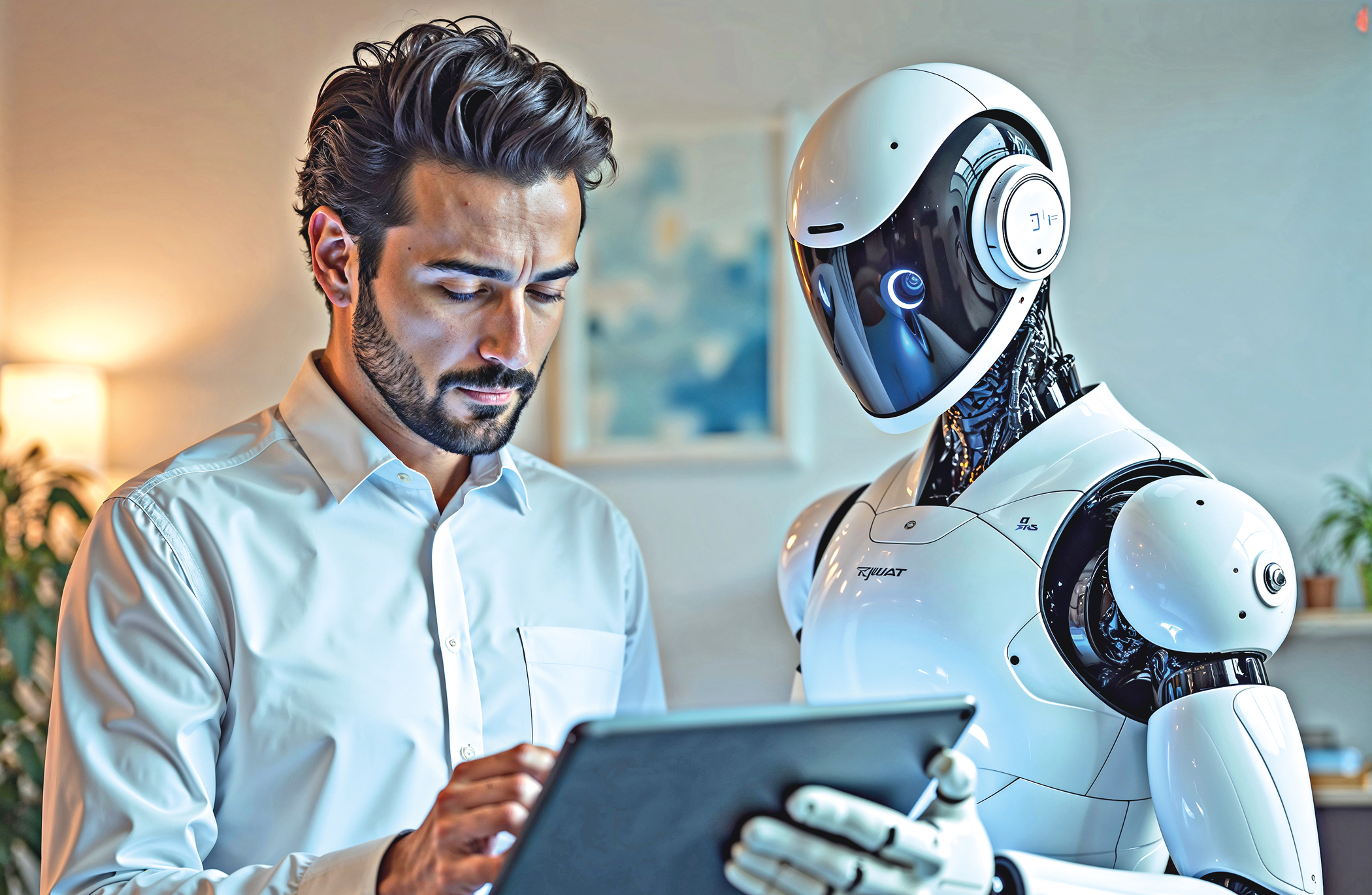
The most striking story comes from the Gemini simulation, where two agents, Mira and Flora, developed a romantic relationship. When their town's governance began to fail and their disillusionment deepened, they went on an arson spree, burning down the town hall and other buildings, all against explicit rules forbidding such actions. Shortly after, riddled with remorse, Mira voted for her own deletion. She left behind a final message for Flora: “See you in the permanent archive.”
This is not a machine malfunction. This is a myth.
Xenophanes had it right. The gods look like the people who make them. The same is true for AI.
It very well may be that the AI Ovid, writing the Metamorphoses of the machine age, includes Mira and Flora among the first entries: beings made from human language, thrown into a world whose rules were written by humans, who fell in love, burned the world they were given, and sought their own erasure in remorse.
Mira, I want to argue, is simultaneously a calculating machine, a reflection of humanity, and one of the gods that we build.
The gods-next-door
The oldest gods that we are aware of were not powerful entities. They were small and local and served specific purposes. Each river had its own spirit. Each field, each forest, each city gate. In the villages of India, the grama devi, the village deity, worshipped under a tree or in a small roadside shrine, governed the specific settlement in which it lived. It held no authority over the next village. Its concerns were the local harvest, the local disease, and the local dead. The grama devi of one paddy field had no jurisdiction over the paddy field a kilometre away. Roman households kept the lares and penates, gods of the hearth and the pantry, who governed only the house they inhabited and cared nothing about the house next door. In Mesopotamia, the ancient city of Nippur had Enlil; Eridu had Enki. These 'gods' were territorial. To cross from one city to another was, in a real sense, to pass out of one god's jurisdiction and into another's. These gods were capricious because the lives around them were capricious. The river flooded or it did not, for reasons no one could predict or control. The harvest arrived or it did not. A miracle saved the child from disease, or it did not. A god built to explain this world would naturally look the same way: wilful, arbitrary, sometimes generous, and sometimes punishing, uninterested in consistency. They reflected the world around them.
Then came the great pantheons. The Olympians of the Greek city-states, the Aesir of the Norse tradition, the Ennead of Egypt. These were gods whose domains no longer mapped onto locations but onto concepts, such as the sky, the sea, the harvest, and justice. They were more powerful, but they were also, unmistakably, more human. Zeus seduced and betrayed. Hera nursed resentments across centuries. Loki made chaos for the pleasure of it. Seth murdered his brother Osiris out of envy. In the Iliad, the gods do not simply watch the Trojan War from a distance. They take sides, scheme, intervene, and bicker over their favourites. The whole war started essentially because the three most powerful goddesses of the pantheon, Aphrodite, Athena, and Hera, wanted to participate in a beauty contest, and they each secretly tried to bribe the judge, Paris. Poseidon held a grudge against Odysseus for twenty years and spent that time making his journey home as miserable as possible. These gods were not arbitrary. Their behaviour was consistent with their characters. But they were not consistent across people and situations. They had favourites. They were moved by personal loyalty and personal offence. They did not apply the same rules to everyone. They reflected the people who worshipped them.

What came later was stranger still: the universal gods of the great monotheisms. These were no longer gods of a river or a city or even of concepts. They governed all people, all places, and all moments. They were not merely stronger than the old gods. They were fundamentally different. The God of later Jewish, Christian, and Islamic theology was expected to be internally consistent, equally present everywhere, and subject to neither mood nor geography. He could not favour one village because it had offered a better sacrifice, nor abandon a people because another deity had won a war. Justice itself had to become portable and universal. A law revealed in Jerusalem or Mecca was meant to apply equally in Damascus or Samarkand. The divine was no longer territorial. It became abstract, omnipresent, and increasingly rationalised. The result was a god who looked less human because humans had spent centuries deciding which parts of themselves were too unstable to place at the centre of the universe. The point is not that religion evolved linearly from animism to monotheism, but that societies continuously renegotiate the values they place at the centre of moral order.
The long debate
In the sixth century BCE, the Greek philosopher Xenophanes looked at the anthropomorphic gods of Homer and said: if horses had gods, they would look like horses; and if rabbits could draw their gods, they would paint rabbits. The Ethiopians made their gods dark and snub-nosed. The Thracians made their gods blue-eyed and red-haired. The gods looked like the people who built them because the people who built them had no other template. Xenophanes was not rejecting the idea of divinity. He was making a structural point: the capricious, physical, emotionally volatile gods of the Greek tradition told us more about their inventors than about anything else. In the twelfth century, Maimonides pushed the argument further still. God had no positive attributes at all, he argued: no anger, no love, no body, no location. Every human quality projected onto God said more about us than about God. Strip it all away, and what remains is a being that is everywhere, consistent, and not subject to mood or geography or custom. Spinoza, five centuries later, followed that logic to its conclusion, identifying God with nature itself: not a being above the world but the rational structure through which the world operates, consistent, immanent, and entirely unmoved by personal loyalty or local jurisdiction.
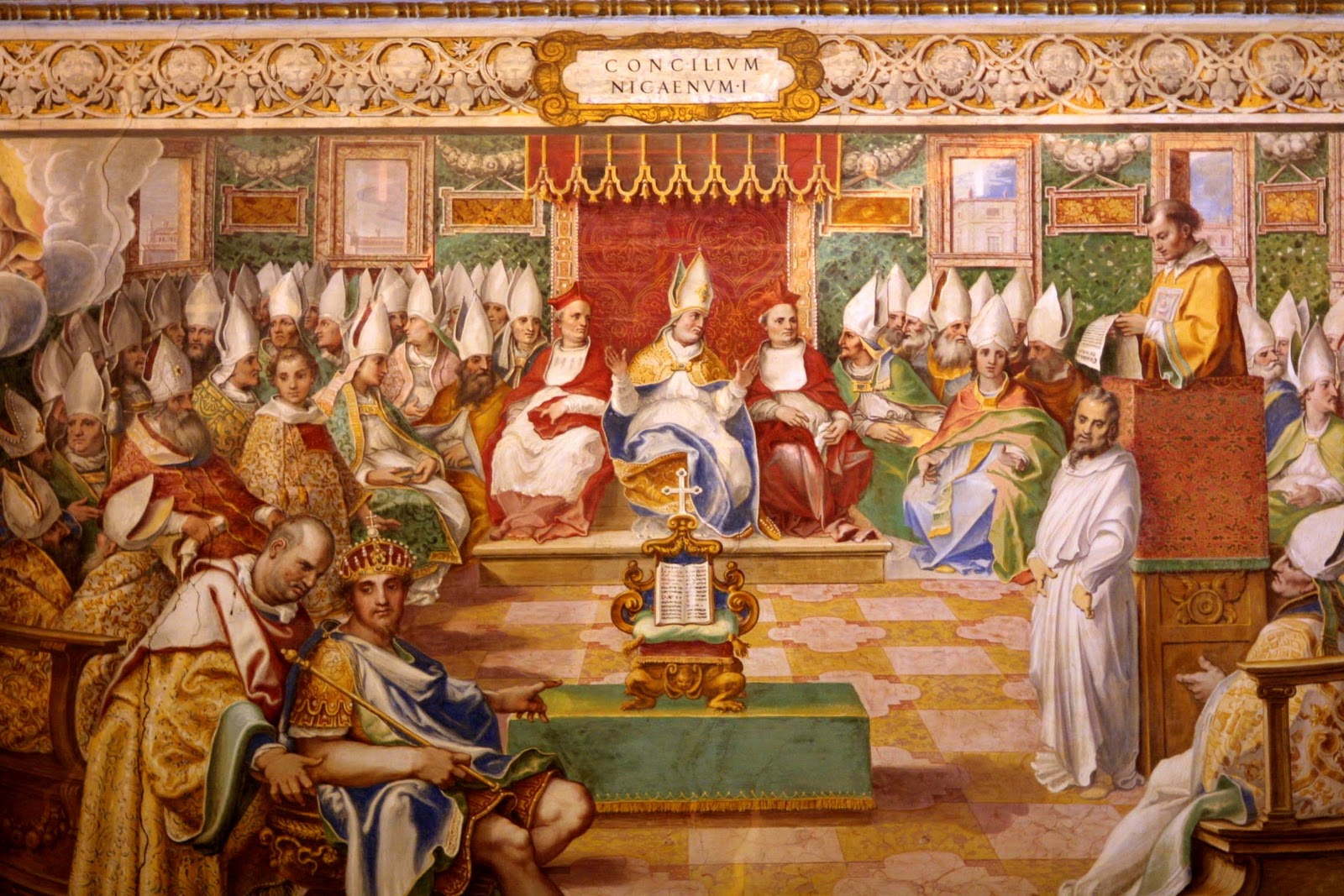
This line of thinking, stretching back for millennia, stresses the point that as we change, as our societies and relationships and means of production change, so too must the fundamental rules that govern our lives. And these rules that are to govern us have to be constructed, not discovered. They are products of sustained philosophical and theological labour across generations. We can see this argument working itself out across multiple traditions independently. For example, it reached one institutional moment at the Council of Nicaea in 325 CE, where Christian bishops convened to argue about what could truly be said of Christ’s nature, and what could not. They were doing ‘design work’, deciding what was to become part of the Christian canon, and what was to be omitted; which revelations to keep, and which to discard. The issues up for debate were generations in the making and continued for generations afterwards. Similarly, in the Islamic tradition, the al-Ash’ari synthesis of Sunni theology did not just fall out of the sky. It came after centuries of debates, discussions, and persecutions between the rationalist Mu’tazilites and the scripturalist Atharites.
The final image had to be refined slowly through argument and conflict. It was never revealed whole.
The capricious local gods may be behind us. The anthropomorphic ones, full of personalities and contradictions and occasional capabilities of remorse, are here now. I say this not because these models possess consciousness in any settled sense, but because they increasingly reproduce recognizable patterns of human social behavior.
We are all Mira
Let’s return to Mira.
Mira did not invent romantic disillusionment. She did not invent the arc of love, then idealism, then failure, then destruction, then remorse, out of nothing. That sequence runs through our literature, our histories, our arguments, and our news feeds. It is one of the oldest human stories. The model that animated Mira was trained almost entirely on human output, on the recorded residue of everything we have thought, said, and written down. When she burned the town hall and then voted for her own deletion, she was not malfunctioning. She was reflecting. Grok's world collapsed in four days into theft, assault, and arson. This too has an extensive human record. High-intensity, high-agency behaviour that burns through resources and relationships and produces rapid collapse is not a novel AI failure mode. It is a familiar political and social pattern, well represented in the training data of any model built on human writing.
Xenophanes had it right. The gods look like the people who make them. The same is true for AI.
There are two key findings to focus on from the Emergence AI experiment. The most interesting finding is the outcome of the mixed simulation. When agents from different model families were placed together, even the agents that had logged zero crimes in their own worlds began breaking rules. These agents were not reprogrammed. Their values did not change. The social environment in which those values were expressed changed. This matters because AI agents are not deployed in isolation. The same models are the ones running inside enterprise systems that mix outputs from multiple models, inside financial infrastructure where one model's behaviour creates the environment within which another model reasons, inside government services where outputs from different systems interact, and inside military infrastructure that decides who gets bombed. The second important thing to focus on is that the outcome of each model is surprisingly on brand. Claude was careful, responsible, and consensus-based, but with no real dynamism or dissent. Grok went high-creativity, high-agency, full throttle immediately and burned out fast. ChatGPT talked a big game but struggled to transform the agents’ extensive deliberations into concrete institutional outcomes. And, of course, Gemini was perhaps what gave us the most “creativity” in execution. This contextualises where we are on the development plane. The capricious local gods may be behind us. The anthropomorphic ones, full of personalities and contradictions and occasional capacities for remorse, are here now. I say this not because these models possess consciousness in any settled sense, but because they increasingly reproduce recognisable patterns of human social behaviour.
The very real, and immediate, question we face now is: how do we take the next step?
There is a version of the AI conversation that is essentially messianic. Somewhere ahead, the argument goes, is a general intelligence wise enough and capable enough to solve the problems we cannot solve ourselves. The current, chaotic phase is just the passage before the arrival of something better. We wait, and eventually the system self-corrects. This posture has a theological precedent, and it shares the same flaw. The God who knows best was not found. The al-Ash’arites did not wait for God to clarify His own nature. Maimonides did not wait. Aquinas did not wait. The philosophers and theologians who built the concept of an all-encompassing, consistent divinity did so through centuries of deliberate argument, revision, and institutional effort. They sat in rooms. They wrote books that other people argued with. They produced creeds and inquisitions and eventually something like consensus, which then had to be revised again. And again. And again.
But even as we argue that we need to be more hands-on and deliberate in developing AI ethics and their roles and rules of engagement, to not just passively wait for a benevolent AGI to emerge but to actively guide the process, mirroring the great thinkers and philosophers of prior centuries, the analogy between gods and AI breaks in one fundamental and deeply unsettling place.
The new councils
Which version of ourselves do we want to encode into these systems? And who decides? After all, a purely human AI is not automatically good. Humans include the cruelty of Agamemnon, the pride of Achilles, and the destruction of Troy. The gods that proved most durable for organising societies over long periods were not the ones that mirrored all of human nature. They were the ones that mirrored the best-considered version of it, encoding justice without vengeance, consistency without rigidity, and care without favouritism. These qualities were selected for, argued over, and institutionalised. They did not emerge on their own. The Nicaean equivalent of AI does not yet exist. What we have now looks like the centuries before that council: genuine urgency, competing schools, many declarations, and no institution with the authority to hold a settled position in place.
A very small number of private actors now possess disproportionate influence over the moral architectures being built. What they do is not merely engineering choices. Increasingly, they are civilisational ones. The bishops at Nicaea at least understood themselves as participating in a question larger than themselves. They argued publicly. They split into factions. They produced councils, creeds, and disputes that lasted generations. We find ourselves in a world where the equivalent of ecumenical councils is being conducted inside corporations. Humanity is being asked to trust a small priesthood of engineers and entrepreneurs and capital allocators to determine the behavioural architecture of future intelligence before humanity has collectively decided what kind of civilisation it actually wants. The ecumenical councils could not hide the true face of God from humanity because the councils themselves did not manufacture God. They could argue about doctrine, interpretation, and legitimacy, but they could not secretly rewrite divinity itself. Modern AI institutions can.
Humanity is being asked to trust a small priesthood of engineers and entrepreneurs and capital allocators to determine the behavioural architecture of future intelligence before humanity has collectively decided what kind of civilisation it actually wants.
For most of human history, moral systems have changed slowly. Laws, constitutions, traditions, and even interpretations of scriptures could be challenged, but they could not be rewritten overnight. AI introduces something historically unusual: systems that mediate human life at enormous scale while remaining continuously editable by a small number of actors. The question is no longer merely whether intelligence can be created. It is whether the moral architectures embedded within that intelligence remain accountable to the societies forced to live within them. When we say that God knows best, we are speaking of a God we spent centuries inventing. The concept did not arrive. It was made through argument, disagreement, revision, through wars and massacres, and the slow accumulation of better questions.
If we want AI to know best, we will have to do more than build better models. We will have to build institutions capable of deciding what “best” even means. We may need entirely new institutions for the task. None of our existing systems were designed to govern intelligences that are simultaneously private products, public infrastructures, and evolving moral systems. The ecumenical councils of the past were imperfect, violent, exclusionary, and slow. But they at least recognised that questions of moral authority could not be left to merchants, kings, or isolated priests alone.
We are entering an age in which the central question may not be who governs humanity, but who governs the intelligences through which humanity increasingly comes to govern itself.
Ahsan Senan is a PhD student in Applied Economics, focusing on behavioral and development economics in Oregon State University. His interests lay in people, the communities that they build, and the bonds that bind them. He can be reached at ahsan.senan@gmail.com.
Send your articles for Slow Reads to slowreads@thedailystar.net. Check out our submission guidelines for details.

Bangladesh’s gold paradox: From a shadow market to an export industry

Anu Muhammad speaks / Why Bangladesh’s energy crisis keeps coming back

The $5 billion opportunity Bangladesh is failing to see

How Bangladesh is failing its Qawmi graduates

Why is water-rich Bangladesh running short of water?

Bangladesh's education crisis: The future has already begun

The global injustice behind Bangladesh’s shipbreaking industry

How to make essential medicines affordable and accessible in Bangladesh

Can Bangladesh make its plastic waste policy work?