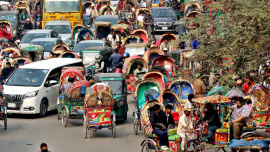
The predicament of the Global South

The term “Global South” has acquired renewed urgency in recent times. The catalysts behind this resurgence are not hard to identify: a menacing “clash of civilisations 2.0” between the developed North and the developing South; trade wars; the militarisation of nations; new regional strategic self-reliance pacts (for example, the Mecca Pact); and, most significantly, raging academic debates over knowledge disparities. It is now common for academics, politicians, and thought leaders in both the South and the North to ask how the “South”—long perceived as an inferior Other of the North—should respond to the North’s political, economic, and epistemological hegemony.
In this contentious pursuit, the South finds itself in a predicament: how does it theorise a position that would give it the advantage necessary to achieve equality? Let us analyse this predicament.
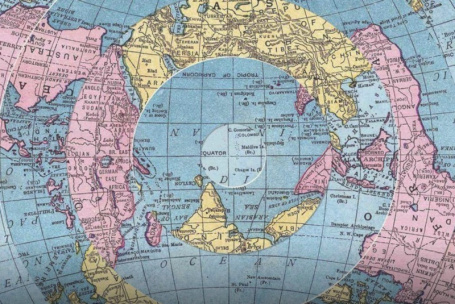
But what is the Global South in the first place? The idea first emerged as an accusation, as a provocation, rather than exclusively as a geographic description.
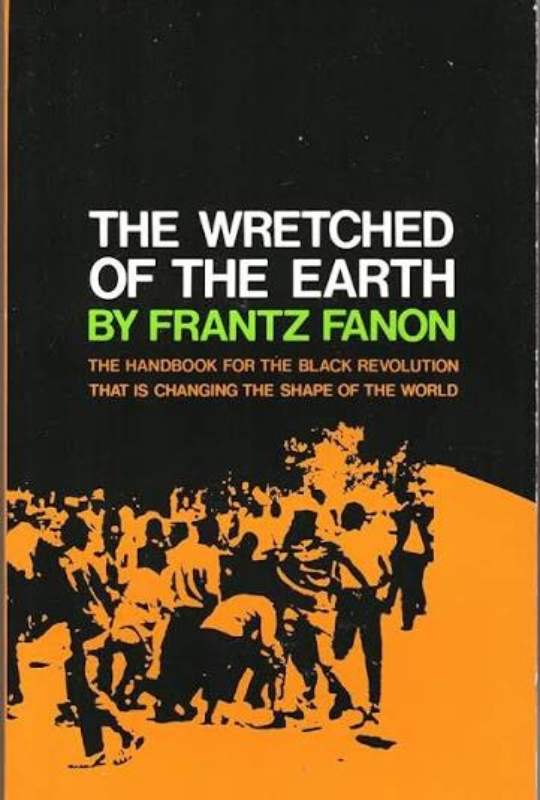
The earliest documented use of “Global South” is generally attributed to the American political activist Carl Oglesby. During the heyday of the Cold War, in his 1969 essay “After Vietnam: What?”, he referred to “the North’s dominance over the global South”. This anti-imperialist essay provoked politicians and academics alike to ponder the political meanings of an asymmetric historical relationship between the world’s industrialised powers and the formerly colonised world. Earlier, in his book Asia and Western Dominance (1953), the Indian historian K. M. Panikkar asked us to understand modern Asian history as the history of Western domination over Asia. Then, in The Wretched of the Earth (1961), the philosopher and anti-colonial theorist Frantz Fanon discussed this domination not through a North-South binary but through a coloniser-colonised one. He brought to the fore the violence colonial powers inflicted to subjugate the colonised, both militarily and psychologically. The project of colonialism, Fanon argued, enabled the North to own the South, to control it, to extract resources from it, and to “reprogramme” the minds of the colonised.

The North’s—or the West’s—self-serving framing of the South, or the Orient, received its most powerful articulation in Edward Said’s groundbreaking book Orientalism (1978). Said’s most provocative argument was that the West essentially defined itself as an ideological antithesis of the East, constructing the latter as an Other, incompatible with rational Enlightenment thinking. The commonly held account of the Other runs as follows.
As the world transformed into a complex geography of interconnections and encounters in the nineteenth and twentieth centuries—through colonial occupation, scientific expeditions, trade networks, tourism, and academic investigation—Eurocentric knowledge communities documented, viewed, and normalised the “Orient” as the West’s structural opposite, based on an ontology of difference. This difference, in turn, justified colonisation, civilising missions, and other forms of political and economic domination over peoples in territories beyond Europe.
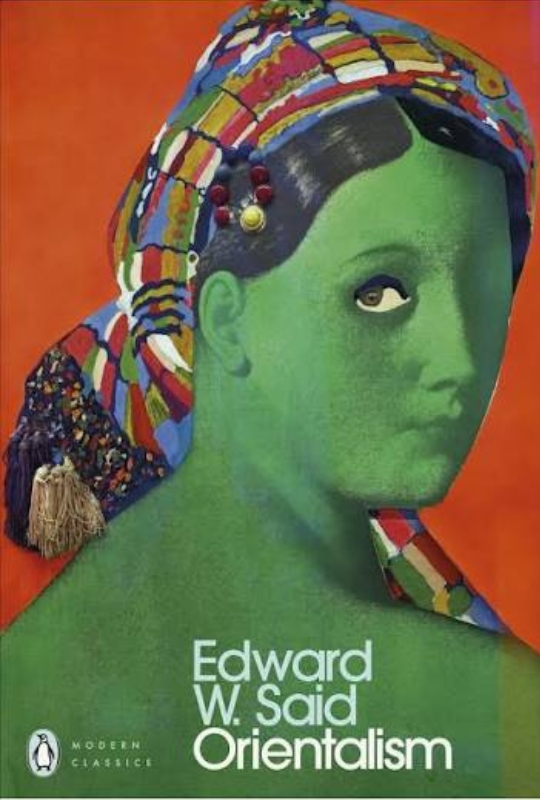
Said’s argument became an academic orthodoxy by the 1990s, supported by the French philosopher Michel Foucault’s concept of discourse as a systemic means of producing knowledge that can, in turn, enable ideological domination. Reading Orientalism became mandatory in many courses across the social sciences and humanities, particularly in the United States. If one wished to understand the South’s Othering through the domination of knowledge as the very basis of political, military, and economic power, one had to read Said’s magnum opus.
Up to this point, we are well aware of the argument.
After half a century of debates on the Other—the dominated South—a question must now be asked, robustly and self-critically: what are the “indigenous” political consciousnesses within the South itself? In other words, what has the South been thinking or theorising about emancipation from the North’s hegemonic control of the world?

Not so easy. Let me share my thoughts.
First, a tragic flaw common among people in the South, which by no means constitutes a monolithic region of identical ethnicities, faiths, and beliefs, is that they think of the South merely as a geographical location, separate and different from the North. They remain unaware that the idea of the South began as an accusation, as a critical practice of explaining how the North dominates the world through military, economic, institutional, and epistemic power.
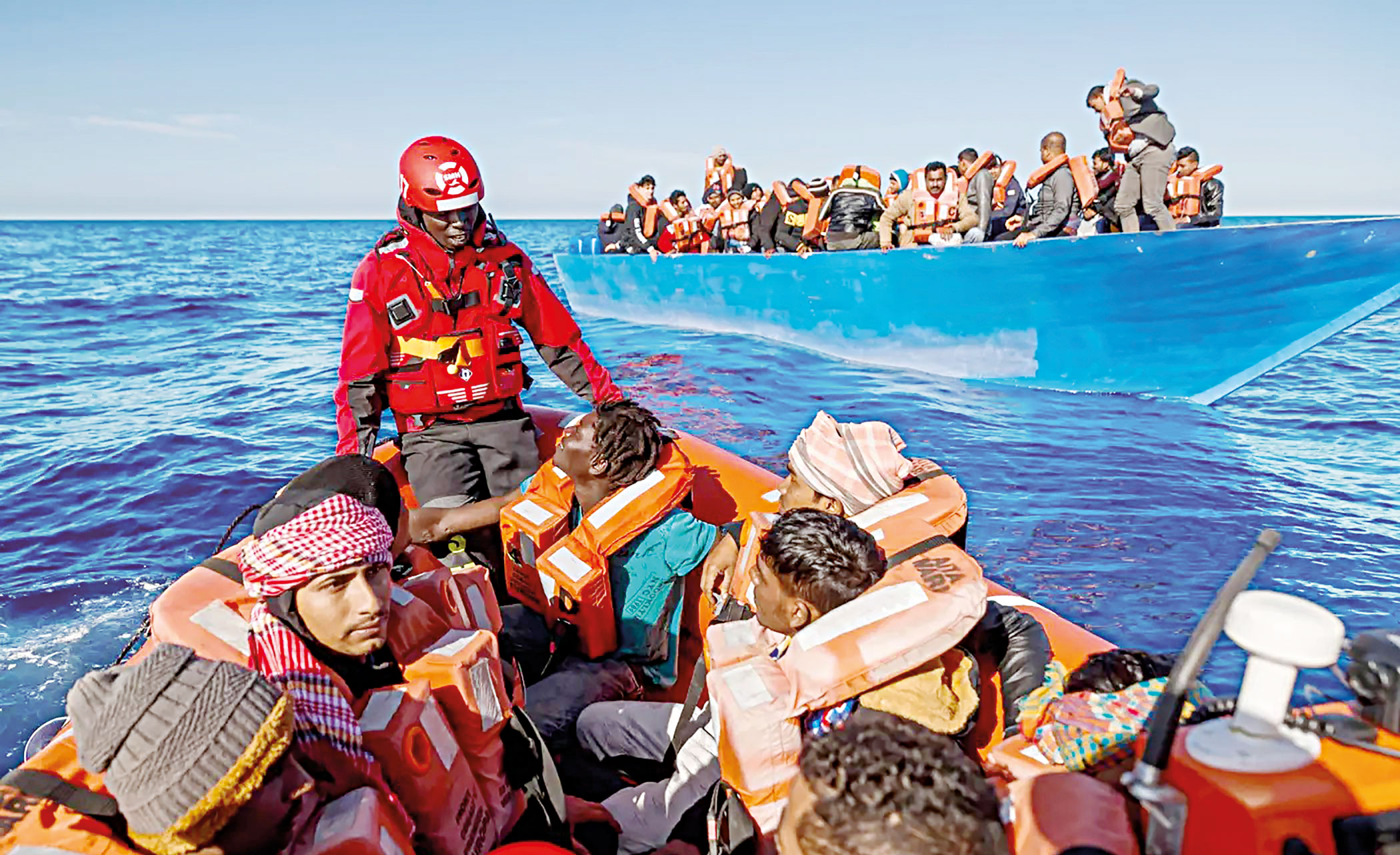
The inability to think of the South as both a geography and a political idea misguides many in the South into reducing the North-South debate to a false we-versus-them binary: we must create our own knowledge; we have to build our own systems; we have to mount our swadeshi movement, and so forth. What gets muted in such reactive self-positioning is the shared history of humanity, the cross-pollination of ideas between peoples and regions, and the modern-era Silk Roads that have produced an interdependent world.
Thus, the opposite of the South is not the North; it is the injustice produced by colonialism in the past and by the exploitative systems of neoliberalism in the present.
Thus, the opposite of the South is not the North; it is the injustice produced by colonialism in the past and by the exploitative systems of neoliberalism in the present. A South that understands how these systems work and responds with strategies suited to an interconnected world is the opposite of a docile South. Replacing or rejecting the North should not be the policy or strategy of the South.
When the ruling class, politicians, bureaucrats, and academics in the South self-Orientalise by assuming that the South ought to become a worthy imitation of the North, they fall into the epistemic mind-game that entrapped the South in the first place.
Second, the ghost of what has been called a Eurocentric worldview—that Europe is the source of civilisation—continues to haunt the minds of the South’s elites. When the ruling class, politicians, bureaucrats, and academics in the South self-Orientalise by assuming that the South ought to become a worthy imitation of the North, they fall into the epistemic mind-game that entrapped the South in the first place.
Thus, the reasoning goes: unless you are trained in the West, you are not fully qualified or even trustworthy. The standardisation of tastes, expectations, qualifications, and worldviews across the world today handcuffs the idea of the South to the North in a lopsided power relationship. In this arrangement, “native informants” from the South—to use Edward Said’s term—serve as gatekeepers for the North, sustaining its hegemony through mass and elite consent.
Third, the South bristles with self-righteous outrage—that it has been wronged by the North, in the past and in the present—while ignoring self-help and self-empowerment as policies.
Finally, the greatest failure in the South, in my view, is the inability to develop a research culture grounded in the lived experiences of individual countries rather than in perceived macro-trends of the Global South. Consider Bangladesh, a country that has made enormous social and economic progress since the 1970s, when its “bottomless basket” epithet was well known globally.
A number of achievements have shaped the global perception of Bangladesh as an Asian “economic tiger”: BRAC’s social empowerment of women and the downtrodden; resilient management of natural disasters, a perennial source of the country’s misery; rural electrification and agricultural modernisation; a mass entrepreneurial culture; poverty-mitigation strategies; and a robust private sector.
But, alas, the country’s vibrant lived experience has rarely been elevated systematically to an epistemic level. Few books present Bangladesh’s journey through peer-reviewed research, data analysis, rigorous reasoning, and self-criticism. To transform lived experience into knowledge, the country needs a well-resourced research culture that shuns trite arguments, secondary data, hagiography, and predictability. It needs the capacity to subject its lived experience to forensic analysis and turn it into peer-reviewed texts and textbooks—texts through which future generations can empower themselves, and through which Bangladesh can advance the idea of the South as a critical practice.
Adnan Zillur Morshed, PhD, is a professor and public thinker. He can be reached at morshed@cua.edu
Send your articles for Slow Reads to slowreads@thedailystar.net. Check out our submission guidelines for details.
How we are killing Dhaka

Can Bangladesh afford not to invest in Bhola’s gas?
Bangladesh’s renewable policy: Still too little but not too late
Prabhat Patnaik speaks / Why the Global South must rethink export-led growth
Bhotekoshi flood: Another warning from the Himalayas. Are we listening?

Renewing the Ganges Water Sharing Treaty: What should Bangladesh do?

What it really costs to live in Dhaka
Why Nepal’s devastating floods should no longer surprise us
What kind of doctors does Bangladesh need?