On Black Water and the Bengali Fear of Seafaring

First a disclaimer: this piece does not include any monstrous crocodile that will eat you up the moment you get into its terrain. It is about our national psyche that harbours fear against going out to sea and thinking of our deltaic islands as the limit of our political existence. While we ritually celebrate the coastal mangrove forest or the sunset by the sea, we hardly talk about crossing the sea. We cringe in fear looking at those Rohingyas coming in on coconut shell like boats, appearing on our sandy shoreline. Conversely, we reel in horror hearing about our compatriots found in the jungles of Thailand or Malaysia, exposing the underbelly of our economy. Still, we hardly talk about the sea or its potential unless there is a depression swirling there. As a riverine country, the sea (Bay of Bengal to be precise) has always been the end of our plot—not the starting point.
This was aptly put by Rear Admiral Khurshed Alam of the Foreign Ministry after the settlement of the maritime boundary between Bangladesh and Myanmar. He quipped, "for us the Bay of Bengal has never more than a honeymoon site", regretting our failure to cash in from the blue economy. Indeed, in our popular imagination, Bay of Bengal remains a sea-sand-sun snap. Is there something deep inside our national psyche that stops us from going to the sea?
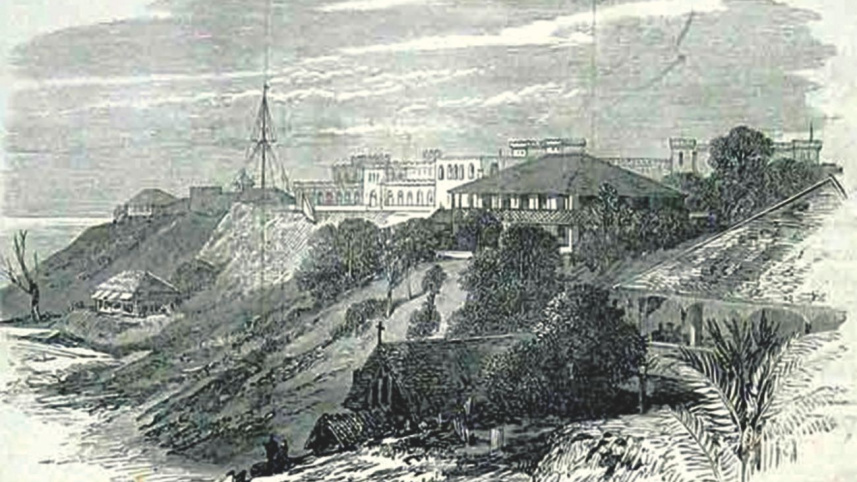
I guess the first time I read anything involving the crossing of the Bay of Bengal was in Sunil Gangopadhyay's thriller Sabuj Dwiper Raja. The macho adventurer Kakababu was my yacht of imagination to delve into the once forbidden territory of Andaman Islands. At the age of twelve, Sontu became my alter ego for going into the island to get hold of a mysterious meteor emitting energy and protecting it from falling in the wrong hands. The fear surrounding the place was increased manifold by the memory of the colonial jailhouse. The islands evoked the trauma of the prisoners who were forced to cross the black water of the Bay of Bengal and were put in the Cellular Jail in Port Blair, Andaman and Nicobar Islands in British India.
For a long time, the locals from the Bay of Bengal littoral, especially the zone that curves into Bengal, had issues with crossing the ocean. Orthodox Hindus considered it to be a grave sin with the potential consequence of hampering one's religiosity. The sea was referred to as kalapani, black water, which is quite the opposite of the holy water of the Ganges, for instance. Coming in touch with the dark water posited the threat of encountering other cultures. The British punishment of kalapani—a banishment for the mutineers in the Andaman and Nicobar islands—was very strategic, if not symbolic. It was meant to break the existential spine of the people as kalapani meant both a physical and a spiritual exile. What could prompt the priests of the deltaic people to restrict their devotees from crossing the ocean? Why did they devise religious sanctions to insulate the population while their bay was busy hosting the Arab traders, Chinese merchants, Portuguese pirates, Dutch settlers, and French and British colonisers? What about the Muslim rulers who subsequently came to India?
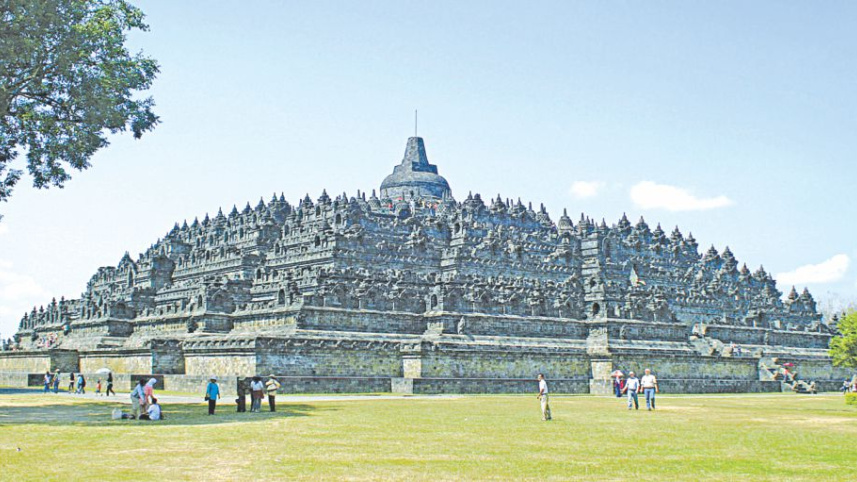
Seafaring culture is prominent among the Muslims, and their piloting skills were noticed by the Europeans. Many of them were recruited by the Western mariners. Amitava Ghosh's Sea of Poppies tactfully broaches the issue. Among the traditional Hindus, in contrast, kalapani remained a taboo until the early twentieth century. Tagore in his "Letters from Java" mentioned the Brahminal imposition that stopped Indians from going to the sea. Tagore's grandfather Prince Dwarkanath Tagore was one of the pioneers to break such a stigma against ocean voyage for his voyage to England. He too had go through penances after his return, but that is another story.
In order to understand why Orthodox Hinduism levied sanctions on seafaring, we need to refer to the holy scriptures. Lakshmi Subramanian summed it up beautifully in one of his essays. He wrote, "the Bauddhayana Dharma Sutra forbade orthodox Brahmins to engage in sea travel and prescribed severe penances and penalties for transgressions. … Manu in his Smriti … declared that a Brahmin who had gone to sea was unworthy of entertainment at a sraddha."

One of the key figures of the Bengal renaissance, Akshay Kumar Dutt, tried to find a seafaring tradition in his book Prachin Hinduder Samudrajatra O Banijyabistar (The seafaring trend and trade among the early Hindus). Rila Mukherjee (2013) in her study of the material culture dictated by the Indian Ocean has shown how the Javanese serpentine folk deity that originated in South Asia got transposed into a royal cult figure under the Javanese sovereignty (p. 45). It was not only stories that travelled; storytellers travelled too. Ibn Battuta travelled to the Indonesia archipelago from Bengal on a boat. However, from the mid-nineteenth century seafaring had been avoided both by the Hindus and the Muslims to the extent of having being virtually banned. According to Ghulam Murshid (2013), a former faculty member at SOAS, kalapani was considered as a type of exile which was no less than death (p. 37). The idea gained currency after the sepoys who revolted in Chittagong in 1857 were exiled to the Andaman Islands.
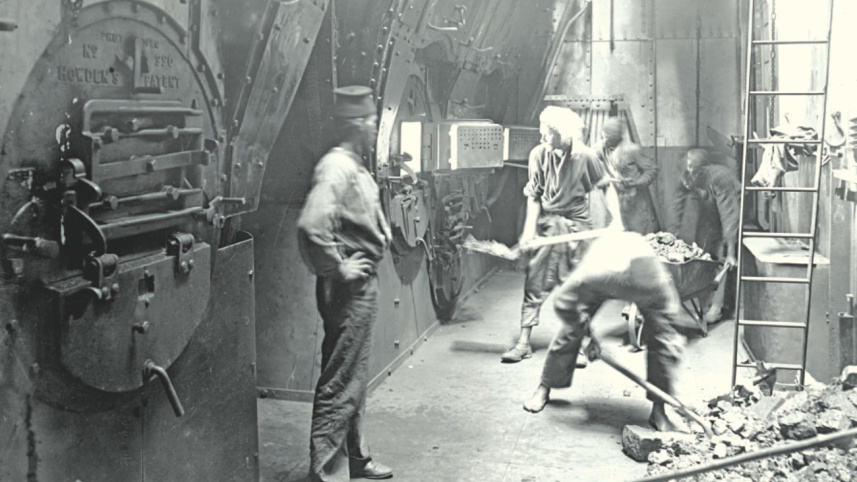
The problem seemed to be unique to the upper-caste Hindus. Interestingly, the upper-class aristocratic Muslims maintained similar ambivalence towards sea ventures. Lakshmi Subramanian (1999) characterises the Mughal Indian attitude towards the sea as "benign indifference to maritime matters" (p. 39). She quotes Sultan Bahadur Shah and a comment on Aurangzeb's fleet by an English captain to argue that the Mughals never actually considered seafaring as a prestigious trade worthy of royal attention. She goes on to show how such indifference allowed the European maritime nations to get hold of the oceanic routes and establish institutional piracy. The low caste Hindu traders and fishermen were least bothered by the fear of losing caste and creed due to kalapani. For them the real threats came from the Western pirates. Subramanian cites certain anecdotal texts to claim that both Hindus and Muslims viewed the Portuguese as sheer "calamity" (p.78). One book from the period, Tuhfat al Mujahadin, observed that Allah was upset with them for undervaluing Him. Therefore, He had "set on them the people of Purtkal [i.e. Portugal] who were Christians" (p.78). Because of this Portuguese menace, including excessive tax tantamount to extortions, the Muslims could not even go to Mecca for Hajj. The horror of piracy is available in many folk annals and ballads of Bengal. It is safe to conclude that in addition to the stigma of losing religion due to kalapani, piracy and taxation seem to be the other hindrances that halted the seafaring tradition in the Indian Ocean in the medieval period. Somehow the fear has lingered on. We have always thought of the sea where the Other resides. Maybe we need to be adventurous like Kakababu and Sontu—and break the spell of fear.
Maybe it is time to think of the water beyond our southern border as blue—and not black. Using these colours as modifiers for economy, we are presented with black economy and blue economy. The black ocean that we need to cross is actually on our mind. It will help us overcome the black economy too. Only then, the ocean will appear blue, with all its endless blue potential.
Shamsad Mortuza is the Pro VC, and the Head of the Department of English and Humanities at University of Liberal Arts Bangladesh.
Send your articles for Slow Reads to slowreads@thedailystar.net. Check out our submission guidelines for details.

The young radicals who challenged 19th-century Bengal

More men are cooking. But is patriarchy leaving the kitchen?
Everyday secularism and the Bangladesh we rarely talk about
Reading Sarat Chandra at 150, with empathy

Who really owned Britain’s royal jewels?

The 25,000-year history of betel nut chewing
The world map we know is distorted. Why does it matter?
Bengal and the coming of Islam: A story of soil and spirit
Xuanzang’s travels to Bengal and beyond : The man, the pilgrim and the Monkey King