Professor Anisur Rahman: The economist who put people at the centre

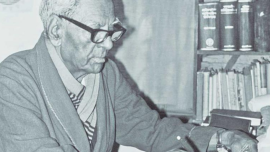
Professor Anisur Rahman, the legendary teacher, economist and social thinker, was known to me in three distinct capacities. First, he was my teacher in the Department of Economics at the University of Dhaka in the early 1970s. Second, I later became his colleague in the same department at the same university. Third, I came to know him through his intellectual contributions as an economist. Through these three relationships, I had the privilege of knowing him for more than half a century—in both Dhaka and New York. My understanding of him as a teacher, economist and social thinker was therefore deep and intimate. It was shaped not only by his writings and lectures but, to a great extent, by the many conversations I had with him over the years when he used to visit New York.
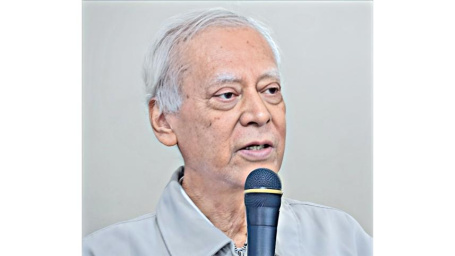
What kind of teacher was Professor Anisur Rahman? In a word, extraordinary and unparalleled—not only in the depth of his knowledge but also in his style of presentation, his delivery and his meticulous choice of words. I have encountered many teachers of economics at universities at home and abroad, but only a handful, in my opinion, could be considered his equal. He was truly an exceptional teacher.
Let me recall one incident. When we were students at the master’s level, he taught us Capital Theory, one of the most intensely debated subjects in economics. At that time, the famous Cambridge–Cambridge controversy was at its peak—the economists of Cambridge, England, were engaged in a fierce debate with their counterparts in Cambridge, Massachusetts.
Professor Rahman taught us the entire course on Capital Theory based largely on an essay by the Greek economist Pierangelo Garegnani included in Penguin's Capital Theory.
Professor Rahman taught us the entire course on Capital Theory based largely on an essay by the Greek economist Pierangelo Garegnani included in Penguin's Capital Theory. Even after fifty years, I have not recovered from my astonishment at the brilliance of those lectures—I believe the same is true of my fellow economics students. What is even more remarkable is that about fifteen years ago, when I reminded him of this in New York, he could not recall any of it—neither the article nor the fact that he had based his teaching on it.
He taught with great care, pausing from time to time, as though every word had been carefully chosen and was the product of deep reflection. His manner of speaking was elegant, gentle and unassuming. He always taught with the weakest student in mind, making a conscious effort to ensure that every student could follow the lesson. As a result, he possessed a rare gift for explaining even the most complex ideas with exceptional clarity and simplicity.
I say with great humility that throughout my own teaching career, I have tried to follow this incomparable example set by Professor Anisur Rahman. Whether I have succeeded is for my students to judge.
Professor Rahman constantly sought to introduce new and creative themes into the curriculum. At the MA level at the University of Dhaka, he introduced a course on Socialist Economics. Those of my classmates who took the course—including my friend, writer and researcher Mohiuddin Ahmed—can testify to the extraordinary care with which he developed the syllabus together with his students. They had unrestricted access to his office, and he even made his personal typewriter freely available to them.
Although he was deeply interested in the practical applications of economics, he firmly believed that without the continuous expansion of its theoretical frontiers, the discipline would inevitably stagnate. This conviction, among other considerations, inspired him to establish the Department of Theoretical Economics at the University of Dhaka. Many may not remember that he had also served as the founding head of the Department of Economics at the University of Islamabad during the Pakistan period. Professor Wahiduddin Mahmud, a former adviser to both the interim and caretaker governments of Bangladesh, and former Foreign Minister Anisul Islam Mahmud were among the department's first postgraduate students.
As a teacher and head of the Department of Economics at the University of Dhaka, Professor Anisur Rahman introduced several ground-breaking reforms. He understood that if students' intellectual curiosity was to be awakened, the effort had to begin in their very first year at university. Guided by this belief, he began teaching Microeconomics to first-year students himself. Professor M. M. Akash probably belonged to that class. On the very first day, Professor Rahman made an unusual announcement: there would be no prescribed textbook for his course.
At that time, there was an unhealthy degree of distance and deference between economics teachers and students. To break down those barriers, Professor Rahman would often take his students to the Teacher-Student Centre for meals and informal conversations.
I vividly remember my first meeting with him in 1972. At that time, he was a member of the Planning Commission. We heard that two members of the Planning Commission wished to discuss Bangladesh's First Five-Year Plan with a few university students. It was during a lunch meeting at the Teacher-Student Centre that I first met Professor Anisur Rahman and Professor Musharraf Hossain. If memory serves me correctly, my close friend and fellow student Abdullah Shibli was with me on that occasion.
In the context of the excessive reverence that once characterised the relationship between teachers and students, Professor Anisur Rahman also shattered the old maxim that ‘a teacher can never make a mistake’. On one occasion, while drawing a diagram related to an economic theory in class, he made an error. Later, at the end of a Bangla play at Curzon Hall, some students pointed out the mistake in his diagram. Without the slightest hesitation, he immediately acknowledged that he had been wrong.
As Head of the Department, Professor Anisur Rahman sought to fundamentally reform the curriculum and teaching methods of economics. At the time, I was a young lecturer in the department. He established a committee on ‘Effective Curriculum and Teaching Methods’ to review and reform the economics syllabus and appointed me as its chair. After considerable effort, we prepared a comprehensive set of reform proposals. Although some changes were eventually adopted, the more fundamental reforms were not implemented. Many years later, during one of our conversations, he spoke to me about his disappointment over this. He also told me that his later thinking on education was profoundly shaped by the insights and experiences he had gained during his years as a teacher.
During the 1960s, Professor Anisur Rahman emerged as one of the leading dissenting voices on Pakistan's economy. In the late 1960s, as Pakistan's Fourth Five-Year Plan was being prepared, it was customary for a group of distinguished economists from both East and West Pakistan to produce an independent assessment of the country's economy.
During the 1960s, Professor Anisur Rahman emerged as one of the leading dissenting voices on Pakistan's economy. In the late 1960s, as Pakistan's Fourth Five-Year Plan was being prepared, it was customary for a group of distinguished economists from both East and West Pakistan to produce an independent assessment of the country's economy. On that occasion, however, the economists of East Pakistan decided to prepare a separate report of their own. Professor Anisur Rahman was one of the principal members of that team.
He was one of the foremost advocates of the theory of regional inequality and the concept of the ‘two economies’ of East and West Pakistan. Like many of the country's leading economists, he also played a significant role in formulating the Six-Point Programme. During that period, he wrote extensively on the economic disparities between the two wings of Pakistan and on the ‘two-economy’ thesis in Forum, the influential weekly magazine edited by Professor Rehman Sobhan and Hamida Hossain. His contribution to the autonomy movement of the 1960s was both distinguished and enduring.
During Bangladesh's Liberation War in 1971, Professor Anisur Rahman played an important role. Together with Professor Rehman Sobhan, he crossed the border into India and joined the Provisional Government of Bangladesh. Through his diverse contributions in support of the liberation struggle, he helped advance Bangladesh's cause during the war.
After independence, Professor Anisur Rahman became a member of Bangladesh's first Planning Commission, with the rank of a state minister. He accepted the appointment rather reluctantly, for he had truly wished to remain in academia. However, his peers argued that his expertise and wisdom in economic planning were indispensable, and he was persuaded—almost compelled—to join the Planning Commission. Ultimately, he accepted the position, perhaps believing that it would give him the opportunity to formulate a genuinely socialist Five-Year Plan for Bangladesh.
Yet his experience at the Planning Commission confronted him with three major dilemmas. First, although socialism had been adopted as one of the fundamental principles of the new Bangladeshi state, he found that, in practice, the state apparatus had fostered a vague and confused understanding of socialism. With considerable dismay, Professor Rahman observed that concepts such as ‘scientific socialism’ and ‘Mujibism’ were being invoked in various ways that created ambiguity and confusion regarding the country's socialist transformation. This deeply troubled him.
Second, in pursuit of a socialist social order, he proposed a number of policy initiatives as a member of the Planning Commission, including measures for austerity, the creation of a rural volunteer corps, land reform and reducing dependence on foreign aid. Some of these proposals were rejected outright, while others were met with silence. As a result, he became increasingly disappointed and began to question the commitment and sincerity of the government's highest leadership towards socialism.
Third, he gradually came to realise that the goals of socialism could not be achieved within the framework of parliamentary democracy as it then existed. He concluded that both the political leadership and the administrative structure lacked the conviction, understanding and commitment necessary for socialist transformation. Under such circumstances, meaningful socialist planning was impossible.
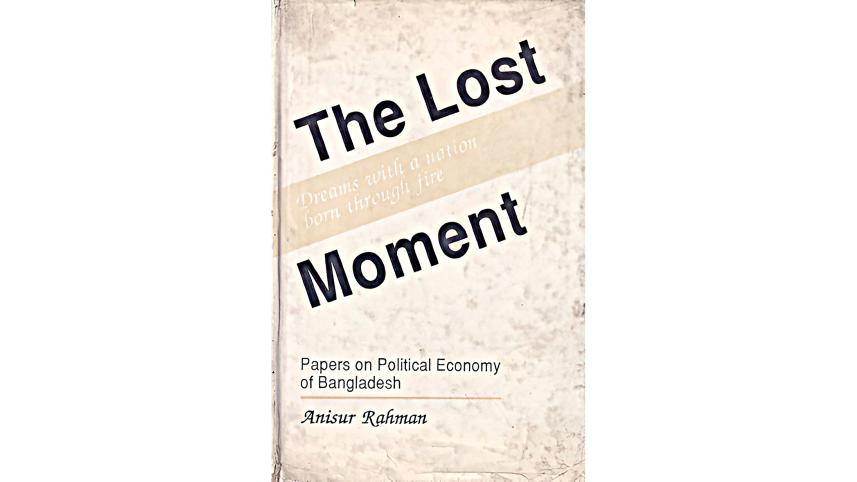
At the International Economic Conference held in Dhaka in early 1973, Professor Anisur Rahman presented a paper entitled Priorities and Methods of Socialist Development in Bangladesh. In that paper, he discussed with remarkable candour the obstacles to socialist development in Bangladesh and proposed a number of directions for overcoming them.
Professor Anisur Rahman deeply believed that the immense energy unleashed by the Liberation War should be harnessed for the task of nation-building. With this vision, he planned to organise university and college students into brigades that would work in rural areas to promote village development. These brigades were intended to contribute to education and agricultural development. Pilot projects were undertaken in the villages of Jirabo, near Savar, and Enayetpur, where students from the University of Dhaka actively participated. His initiative received both praise and criticism and also created a degree of unease within the Planning Commission itself. Eventually, Professor Anisur Rahman returned to the University of Dhaka to resume his teaching career.
After the political changes of 1975, Professor Anisur Rahman left Bangladesh and joined the International Labour Organization (ILO). There, his innovative research and pioneering work on participatory approaches to poverty alleviation attracted worldwide attention. Alioune Sall, who worked with Professor Anisur Rahman at the ILO in the 1970s and later became a colleague of mine at UNDP in the 1990s, spoke very highly of Professor Rahman's innovative thinking in the field of participatory development. In later years, I witnessed the application of these distinctive methods in several African countries.
Professor Rahman was critical of conventional methods of measuring poverty as well as traditional poverty reduction policies. He was an outspoken critic of the very concept of the ‘poverty line’. On one occasion, he remarked to me, ‘It is like separating animals in a cattle pen: if you are on one side of the rope, you are poor; if you are on the other side, you are not.’ He was equally critical of the Human Development Index (HDI). We had many long discussions and debates on these issues. On many occasions, we failed to reach agreement. Yet I have always remained deeply humbled by the power of his intellect, the breadth of his scholarship and the depth of his wisdom.
His lifelong association with Rabindra Sangeet reflected far more than a love of music; it sprang from his profound appreciation of truth, beauty and life itself. This sensibility was evident in both his choice of songs and his style of singing. Whenever we listened to his renditions of Amar Je Din Bhese Gechhe Chokher Jole (‘The Days That Drifted Away in Tears’) or Bajao Amare Bajao (‘Play Upon Me’), we could immediately sense it.
His lifelong association with Rabindra Sangeet reflected far more than a love of music; it sprang from his profound appreciation of truth, beauty and life itself. This sensibility was evident in both his choice of songs and his style of singing. Whenever we listened to his renditions of Amar Je Din Bhese Gechhe Chokher Jole (‘The Days That Drifted Away in Tears’) or Bajao Amare Bajao (‘Play Upon Me’), we could immediately sense it. His commitment to purity, authenticity and depth of understanding was unmistakably reflected in his singing. These qualities were inseparable from Professor Anisur Rahman's broader intellectual and philosophical outlook.
In his intellectual outlook, Professor Anisur Rahman placed greater emphasis on collective human endeavour than on the individual, on society rather than the state, and on empowering people rather than merely addressing their deprivation. Instead of adhering to conventional modes of thinking, he consistently embraced original and unconventional ideas. Compassion for humanity and a reflective intellect grounded in deep moral awareness guided both his thought and his work throughout his life. I cannot help but feel that Jibanananda Das's words capture him perfectly: ‘The world gets such a person only once; not for the second time.’
Dr Selim Jahan is the former Director of the Human Development Report Office at the United Nations Development Programme and lead author of the Human Development Report.
Send your articles for Slow Reads to slowreads@thedailystar.net. Check out our submission guidelines for details.
APO 433: Dhaka’s forgotten post office of World War II
Dadabhai Naoroji: The man who exposed the economics of British colonialism

Untold stories of 1971 through private letters
The extraordinary journey of Atish Dipankar Srigyan

Forgotten story of Jeanette Van Tassel, the American woman who flew over Dhaka in 1892
Beyond 1947 / A personal essay
Abul Mansur Ahmad / A global quest in search of a nation

Chand Bibi and the forgotten history of Muslim women’s political resistance
Women’s voices in Nazrul’s Dhumketu