How Bangladesh's SEACO plan could strengthen trade across the Muslim world

On June 22, 2026 in Putrajaya, Prime Minister Tarique Rahman and his Malaysian counterpart, Anwar Ibrahim, watched their officials exchange a modest-looking document: a memorandum setting out the terms of reference for a Bangladesh–Malaysia free trade agreement. The joint statement issued that afternoon also recorded Malaysian backing for Bangladesh’s bid for ASEAN Sectoral Dialogue Partner status and for its eventual accession to the Regional Comprehensive Economic Partnership.
Most of the coverage read this as bilateral housekeeping — manpower, energy, semiconductors and a trade balance still running roughly four to one in Malaysia’s favour. It was more than that. Whether or not anyone in the room framed it this way, Bangladesh had just laid the first brick of a regional structure that Bangladeshis proposed thirty-four years ago and then never got around to building.
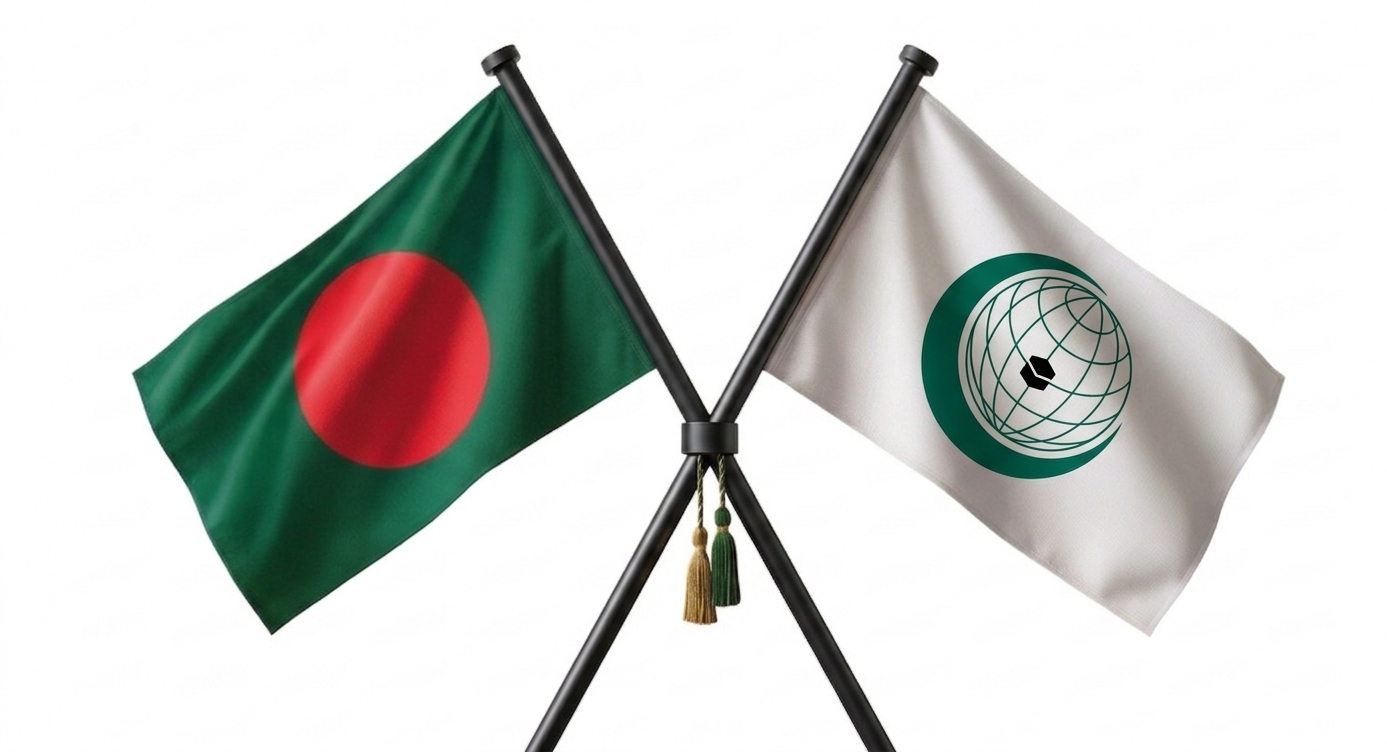
That structure has a name. It is called SEACO — South East Asian Cooperation — and it is, in my view, the most practical idea for Muslim-world economic integration that this country has ever produced. It has also been sitting on a shelf for most of my working life.
Begin with the problem SEACO was designed to solve. The Organisation of Islamic Cooperation has 57 member states, roughly a quarter of the world's population, most of its proven energy reserves and several of its most important shipping lanes. It has also spent two decades trying to raise trade among its own members. The target adopted under the Ten-Year Programme of Action was 25 per cent of members' total trade. The most recent SESRIC accounting puts intra-OIC exports at about US$491 billion — just under a fifth of the group's total exports. That falls short of the target and is not meaningfully better than a decade ago.
Begin with the problem SEACO was designed to solve. The Organisation of Islamic Cooperation has 57 member states, roughly a quarter of the world's population, most of its proven energy reserves and several of its most important shipping lanes. It has also spent two decades trying to raise trade among its own members. The target adopted under the Ten-Year Programme of Action was 25 per cent of members' total trade. The most recent SESRIC accounting puts intra-OIC exports at about US$491 billion — just under a fifth of the group's total exports. That falls short of the target and is not meaningfully better than a decade ago.
The standard explanation is a shortage of political will. I think that is the wrong diagnosis. The OIC has produced no shortage of will: declarations, framework agreements, a preferential trade system negotiated over twenty years, and an entire standing committee in Istanbul devoted to economic cooperation. What it has lacked is a workable method. Fifty-seven countries across four continents, spanning incomes from Niger to Qatar, with incompatible tariff schedules and foreign policies that periodically point in opposite directions, cannot be moved in convoy. Every attempt to move all of them at once has ended up moving none of them.
Compare how integration has actually happened elsewhere. The European Coal and Steel Community began with six countries and two commodities. ASEAN began with five. The Gulf Cooperation Council has six members. Mercosur started with four. Not one of them began by convening a continent. Each started with a small group that had something real to trade with one another, proved the mechanism worked and widened from there.
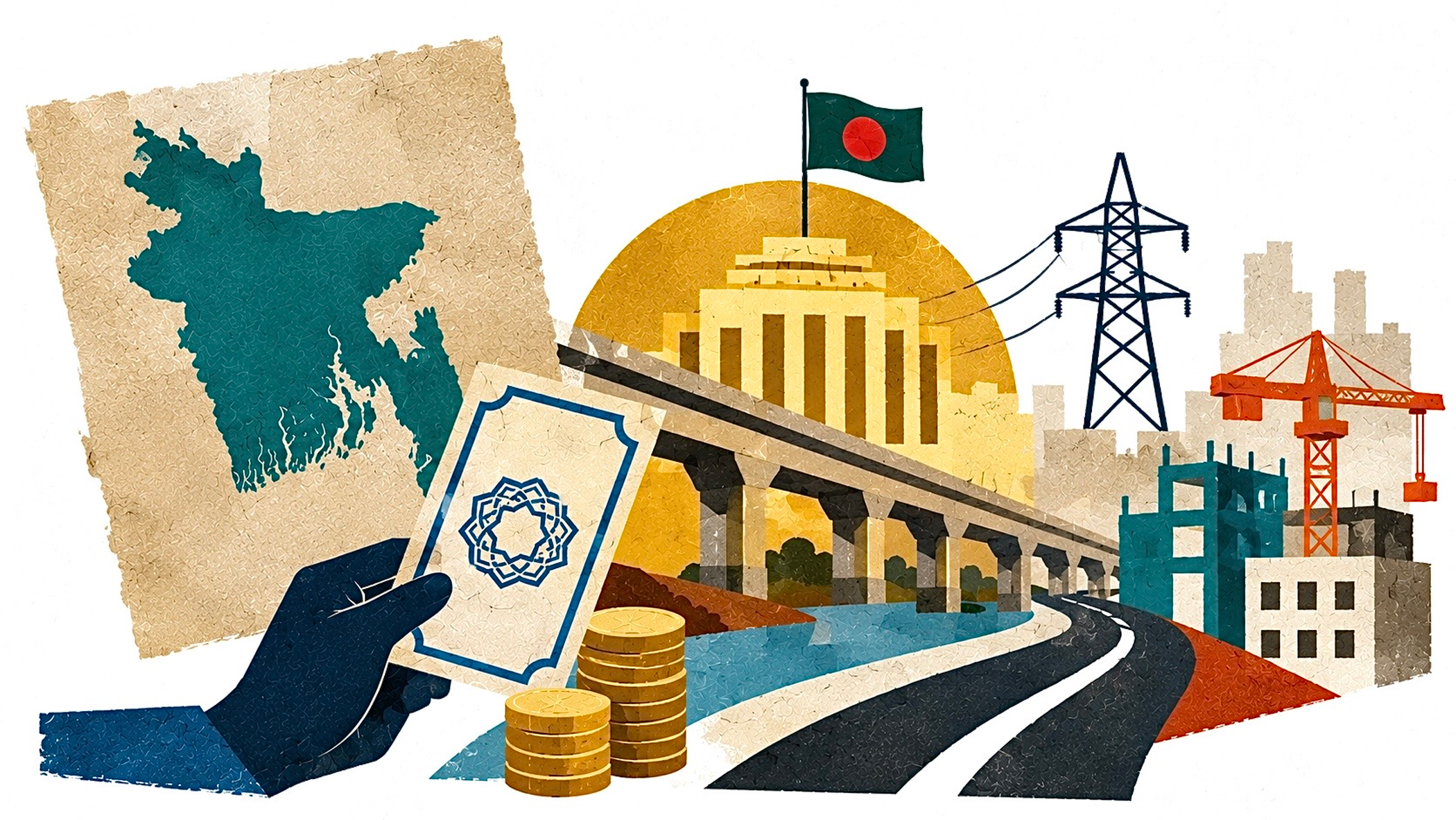
SEACO applies precisely that logic within the OIC. It proposes a working platform among five member states — Bangladesh, Brunei Darussalam, Indonesia, Malaysia and the Maldives — strung along a single maritime corridor running from the Bay of Bengal through the Andaman Sea and the Strait of Malacca into the South China Sea. On the SEACO Foundation's own reckoning, the five together, counted with the Muslim communities immediately adjacent to them in southern Thailand, Mindanao and India, represent a consumer market comfortably above 400 million people — close to a third of the Ummah.
Size, though, is the weaker half of the argument. The stronger half is that these five economies are highly diverse. I have spent a good part of my career testing, empirically, whether preferential arrangements among developing countries create trade or merely divert it, and the gravity-model work I did on SAARC found what most of that literature finds: when neighbours export the same goods at the same stage of development, an agreement yields signing ceremonies and very little commerce. SEACO points in the opposite direction, and that is its strength. Bangladesh brings labour, garments, pharmaceuticals and a young workforce; Indonesia, scale, resources and industrial depth; Malaysia, advanced manufacturing, logistics and the world's most developed halal and Islamic finance ecosystem; Brunei, energy and capital; and the Maldives, tourism and blue-economy expertise. These are inputs into one another's value chains, not five competing bids for the same buyer.
The history matters here because it tells Dhaka what it already owns.
The idea was first tabled at the INDO–IsDB seminar in Bandung in December 1992, chaired by Dr B J Habibie — then Indonesia's Minister for Research and Technology and later its third president — with the President of the Islamic Development Bank as co-chair. Habibie's judgment was blunt and has aged well: coordinating 57 countries from Dhaka to Rabat is inherently unmanageable, and regional groupings are the way forward. Earlier that same year, the Chittagong Chamber of Commerce and Industry had put forward a South East Asian trade arrangement to Malaysia's visiting Foreign Minister, Abdullah Badawi. Bangladesh's foreign minister wrote to his four counterparts in 1994. The IsDB president wrote back in support in 1996, and again in 2009.
The OIC itself has recognised SEACO. The Ninth Islamic Summit in Doha in 2000 listed it alongside ECO, ECOWAS and CEMAC as one of the regional initiatives through which economic integration should proceed step by step, with the Islamic Common Market as the destination rather than the starting point. That framing — building blocks first, common market later — is the single most useful sentence the OIC has written on the subject, and Bangladesh wrote much of it.

Then the trail goes quiet in the way these things do. In January 2004, at a Bangladesh–Malaysia Chamber reception in Dhaka, the commerce minister of the day called the SEACO proposal brilliant and promised to carry it forward, while adding, correctly, that only political will at the top could turn it into anything. That minister was Amir Khosru Mahmud Chowdhury, and he is today Bangladesh's Minister of Finance and Planning. In 2012, Tun Musa Hitam, then Chairman of the World Islamic Economic Forum, raised SEACO with Sheikh Hasina at a SEACO–WIEF roundtable in Dhaka and received a sympathetic hearing. In July 2019, Habibie received a full set of SEACO documents at his home in Jakarta and undertook to raise them with the Indonesian president and the Malaysian deputy prime minister; he died two months later. In August 2022, Tan Sri Dr Syed Hamid Albar told the SEACO Foundation's board what it needed to hear: the private sector cannot deliver this alone, and Bangladesh must carry it into the OIC system, the Council of Foreign Ministers and COMCEC.
Two things stand out in that record. The first is that SEACO has survived for thirty-four years largely because a handful of people refused to let it die — Salahuddin Kasem Khan, who has chaired the SEACO Task Force and Foundation through five Bangladeshi governments, foremost among them. The second, and the one that matters for policy, is that SEACO has never belonged to one party. President Ziaur Rahman argued the philosophical case for an Islamic Common Market at the Taif Summit in 1981; a BNP commerce minister endorsed the mechanism in 2004; an Awami League prime minister received it warmly in 2012; and the concept notes were revised again under the interim administration. In a country where almost nothing survives a change of government, that is an unusually durable asset — and it will be squandered the moment SEACO is presented as any one party's political property.
Be honest about the obstacles, because the case does not need overselling. The five countries differ sharply in regulatory capacity and levels of development. Direct shipping links are poor. Standards are fragmented. Political enthusiasm rarely survives an election. Any serious design therefore needs variable geometry — allowing two or three members to move ahead without waiting for all five — and it needs measurable outcomes published annually, so that the initiative can be judged rather than merely announced.
So what should the next twelve months actually contain?
Not a treaty. Comprehensive agreements negotiated before anyone has demonstrated a benefit are how good regional ideas die. What is needed first is a light coordinating secretariat in Dhaka, national task forces in each capital, a shared supplier and trade database, and a standing channel between the five commerce ministries and their chambers of commerce.
Then pick one flagship project and complete it. The obvious candidate is the mutual recognition of halal certification. All five countries certify halal; none fully recognises the others' certificates; and the cost of duplicated testing and delays falls on exactly the exporters this bloc exists to help. Malaysia's JAKIM and Indonesia's BPJPH are the two most credible halal authorities in the world, and Bangladesh has the manufacturing capacity. A mutual recognition arrangement covering food, pharmaceuticals and cosmetics would deliver a visible commercial gain within two years — the only kind of gain that keeps a regional initiative alive.
Trade facilitation should run in parallel, and it should come before tariffs. Bangladeshi exporters lose more to slow customs procedures, duplicated paperwork, weak shipping links and limited access to trade finance than they do to duties. Interoperable electronic certificates of origin, a regional single-window pilot, coordinated procedures at Chittagong, Port Klang and Tanjung Priok, and a dedicated Bay of Bengal feeder service would move more cargo than a free trade agreement that nobody has ratified.
Finance decides whether any of this survives contact with a budget cycle. The Islamic Development Bank Group, the International Islamic Trade Finance Corporation and ICIEC already have the necessary instruments — what is missing is a prepared pipeline of bankable regional projects for them to consider. This is the same failure I have written about in relation to Bangladesh's sukuk programme and its thin capital market: plenty of appetite, plenty of liquidity, and no institution built to turn either into a functioning market. Regional cooperation fails in exactly the same way and for exactly the same reason.
Be honest about the obstacles, because the case does not need overselling. The five countries differ sharply in regulatory capacity and levels of development. Direct shipping links are poor. Standards are fragmented. Political enthusiasm rarely survives an election. Any serious design therefore needs variable geometry — allowing two or three members to move ahead without waiting for all five — and it needs measurable outcomes published annually, so that the initiative can be judged rather than merely announced.
There is also a real tension worth naming. Bangladesh is simultaneously pursuing ASEAN Dialogue Partner status, RCEP accession and a bilateral FTA with Malaysia. A trade bureaucracy with finite capacity can negotiate only so much at once, and SEACO could easily be the initiative that gets dropped. That would be a mistake, because the three agendas are really one and the same. The Malaysia FTA is the template for a SEACO FTA. ASEAN Dialogue Partner status is the diplomatic bridge SEACO needs. And SEACO is the OIC-facing framework that allows Dhaka to carry the whole package into the Council of Foreign Ministers and COMCEC, where Bangladesh has standing on this issue that no other member state possesses.
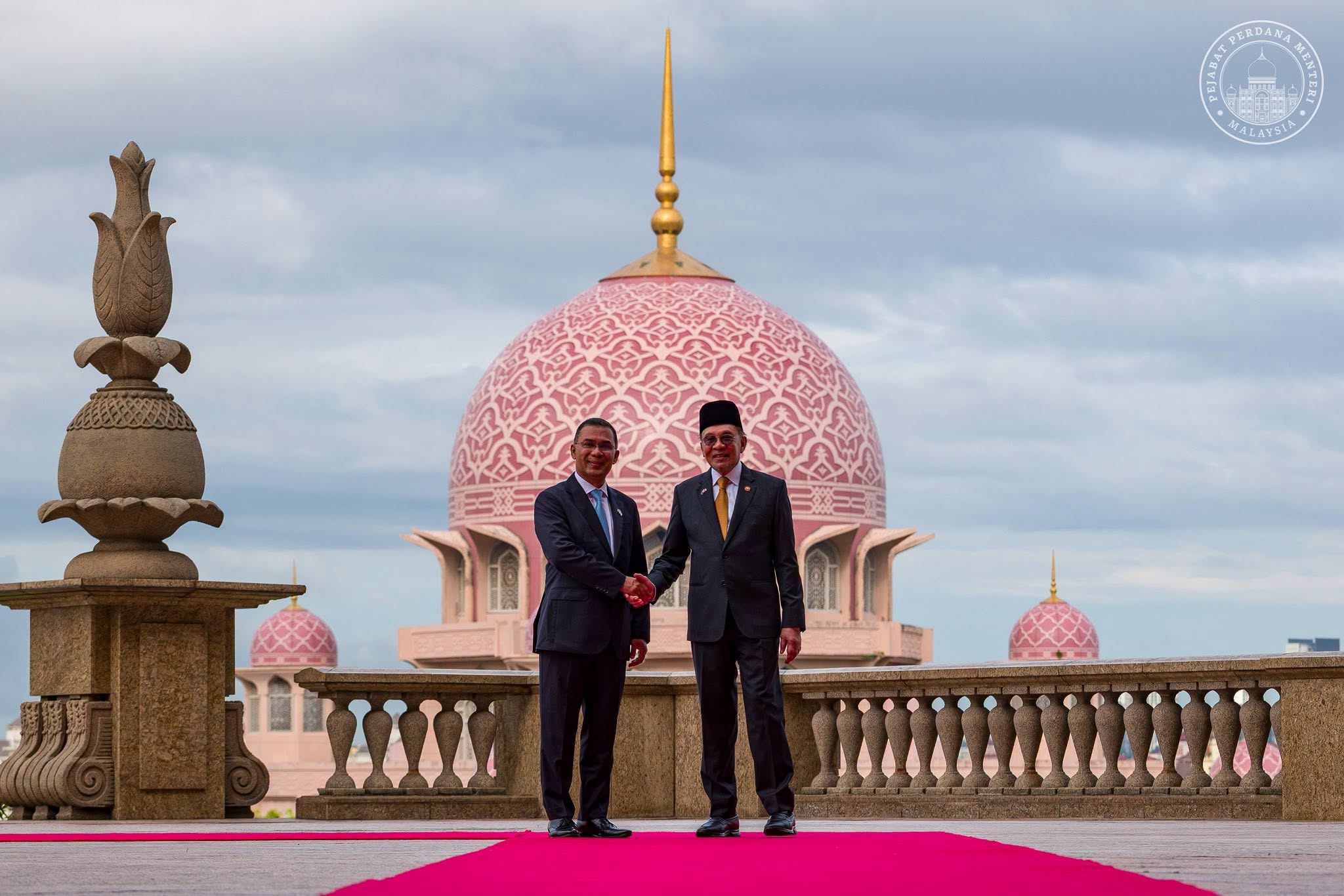
The signals from the new government are encouraging. The prime minister has made Malaysia his first bilateral destination. The finance minister has personally endorsed this concept before. The State Minister for Foreign Affairs, Shama Obayed, has been telling diplomats and honorary consuls that Bangladesh intends to broaden its economic engagement beyond its traditional partners. The Islamic University of Technology, the OIC's own technical university in Gazipur, has signed the first memorandum establishing the SEACO Universities Network. The pieces are on the table.
Bangladesh has spent thirty-four years supplying the idea, the drafting, the geography and the persistence, and has received almost nothing in return. The choice now is not between a 57-country common market and doing nothing. It is between issuing another round of declarations and building one small bloc that works. SEACO is small enough to negotiate, complementary enough to generate real trade, and positioned on a corridor that the rest of the world is already sailing through. The document signed in Putrajaya in June was the first brick. Somebody in Dhaka now has to decide whether it becomes a wall.
Dr M Kabir Hassan is Professor of Finance and the Moffett Chair at LSU New Orleans in the United States. He is a Senior Fulbright Scholar, recipient of the 2016 IsDB Prize in Islamic Banking and Finance, a member of the AAOIFI Ethics and Governance Board, and Chairman of its Education Board.
Send your articles for Slow Reads to slowreads@thedailystar.net. Check out our submission guidelines for details.
Diplomacy in a turbulent world: How Bangladesh should navigate bilateral ties and regional platforms
What is the UN still good for?
Can the 81st UNGA restore hope in a world of crises?
What Malaysia’s Rohingya repatriation plan means for Bangladesh
Why Bangladesh must reconsider its trade agreement with the US
The Indo-Pacific at a crossroads: What it means for Bangladesh
Could the Teesta redraw the map of India-Bangladesh diplomacy?
Iran’s China moment? From isolation to regional hegemony
Makkah Pact: The geopolitics beyond Islamic solidarity