What did we ask about Mariam while she was still alive?

Mariam is dead.
After that sentence, the labels that followed her over the past two months seem very small. “Second wife.” “Moral misconduct.” “Viral video.” “Nikahnama.” They once carried the whole controversy. Now they read like fragments from a conversation that spent a great deal of time talking about Mariam without necessarily knowing very much about her.
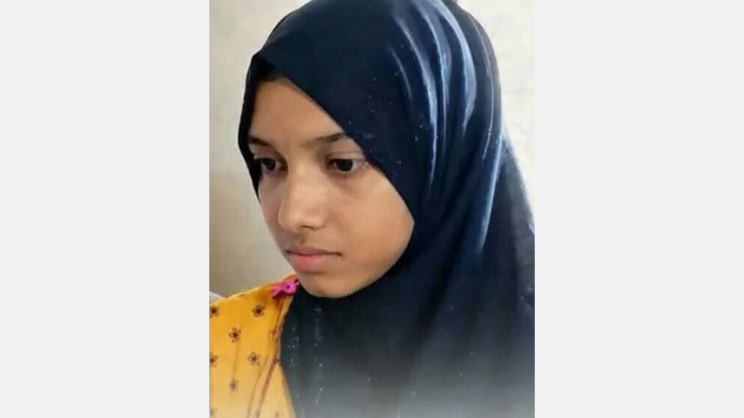
The 19-year-old was found hanging in a flat at NAM Bhaban, the residential complex for members of parliament, in Dhaka on Sunday evening. Satkhira-4 MP Gazi Nazrul Islam was present in the flat when her body was recovered, according to police, and he and his first wife were taken to the police station for questioning.
Mariam’s father has since filed a case accusing Nazrul, his first wife and Mariam’s maternal uncle of abetting her death. At this stage, those are allegations, not findings of guilt. However disturbing the circumstances may appear, Facebook, partisan loyalty and public anger cannot determine how Mariam died. That belongs to the investigation, the forensic evidence, the post-mortem findings, digital material, witness testimony and, ultimately, due process.
There is another question, though, that does not depend on knowing the cause of her death. I find myself going back to the weeks when Mariam was alive and already at the centre of a national controversy. What exactly were we trying to find out then?
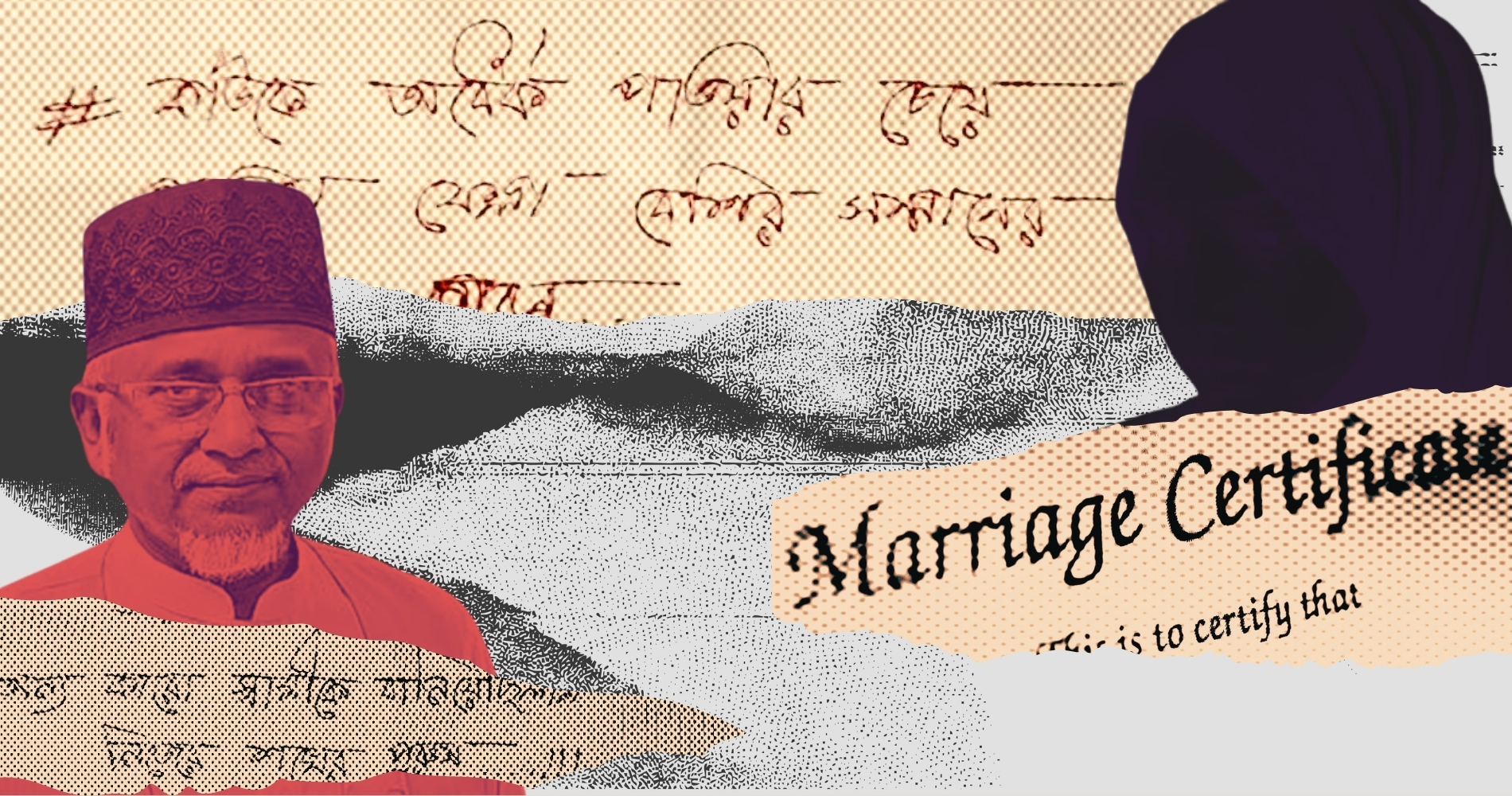
When intimate videos involving a powerful, much older, married member of parliament and a young woman who had only recently completed her SSC examination became public, much of the discussion eventually settled around one fact. Nazrul said Mariam was his second wife and that they had married on June 17. The existence of a marriage mattered, of course. But it also seemed to calm questions that had never really been answered.
A nikahnama can tell us that a marriage took place. It cannot tell us how two people arrived there, what each person depended upon, whether one person had unusual influence over the other, or how free either of them felt to walk away. In an ordinary relationship, those questions may remain private. Once public office, employment access and a striking inequality of power enter the picture, they become harder to dismiss as mere curiosity.
What adulthood does and does not tell us
A factual distinction matters here. Mariam should not be described as a child bride on the information currently available. A résumé reported by The Daily Star listed her date of birth as May 22, 2008. Nazrul said they married on June 17, 2026. If both dates are correct, she had just turned 18.
I think it is important to say this plainly because feminist arguments lose something when we make women younger, weaker or less capable than the facts allow. An 18-year-old woman has the right to choose whom she loves and whom she marries. Denying that agency does not become progressive simply because the intention is to protect her.
At the same time, turning 18 does not flatten every inequality around a person. Money, experience, political influence, employment prospects and social connections do not reset on a birthday. One person in this relationship was a young woman who had recently completed her SSC examination. The other was an established politician and member of parliament with networks, authority and access to opportunities that an ordinary young person would not possess.
None of this tells us that Mariam was exploited. A large age difference is not evidence of a crime, and a powerful person can have a consensual relationship with someone who has much less power. What the imbalance does is make certain questions reasonable. Was Mariam economically dependent on anyone involved? Was employment or another opportunity part of the relationship? Could Nazrul affect her future in ways she could not affect his? If she had wanted to say no, leave or contradict the public version of events, what would that have cost her?
I do not see those questions as a denial of consent. They are part of understanding what consent looks like outside a legal definition. People make choices inside real lives, and real lives contain dependence, affection, ambition, fear, family expectations and unequal access to resources. Recognising a woman’s agency should not require us to pretend those things disappear.
The questions already sitting in the public record
Some details reported before Mariam’s death made this worth examining. It is reported that a résumé bearing Nazrul’s recommendation and dated June 22, five days after the claimed marriage, listed Mariam’s marital status as “unmarried”. Above the MP’s signature was a handwritten note reading “Strongly recommended.”
I do not know what that document ultimately means, and it would be wrong to make it carry more weight than the evidence allows. But it naturally raises questions about what Mariam was being recommended for, how she came to know Nazrul, whether access to an opportunity played any role in their relationship, and why a document dated after the claimed marriage described her as unmarried.
There was also the attempted murder case filed in July by Mariam’s maternal uncle, Obaidur Rahman, who had worked as Nazrul’s driver. According to the case documents, he alleged that he was assaulted after objecting to Nazrul’s relationship with his niece. Nazrul later secured anticipatory bail. That allegation remains unproven.
Taken separately, none of these facts establishes exploitation. I would be uncomfortable with an article that simply arranged allegations in a row and allowed suspicion to do the rest. My concern is different. There was enough uncertainty around Mariam’s circumstances that marriage should never have been allowed to settle the whole conversation.
What marriage can make socially disappear
This is where the story reaches beyond one politician and one young woman. Across much of South Asia, ideas of family honour still place a disproportionate burden on women’s sexuality. A woman’s intimate life can become something her family, community, religious authorities and even political organisations feel entitled to interpret. When sexual controversy becomes public, marriage offers a familiar way of making the relationship socially legible again.
We know this pattern well. A relationship creates scandal, and people ask whether the couple will marry. A woman is deceived, and the proposed remedy becomes marriage to the man who deceived her. A pregnancy threatens family reputation, and marriage is expected to restore order. The circumstances differ, sometimes enormously, but the underlying social instinct is recognisable. Once a woman can be placed inside the category of wife, the anxiety around her sexuality becomes easier to manage.
That does not mean marriage is inherently oppressive, or that every woman who marries after controversy has been coerced. It means marriage can do social work that has very little to do with answering the original question. A relationship may now have a recognised name, but we still do not know whether power was misused before it acquired that name.
This is the part of Mariam’s story that troubles me most. Questions about conduct can quietly turn into questions about status. Instead of asking what a powerful person may have done, the conversation asks whether the woman is now a wife. Once she is, scrutiny can begin to feel unnecessary. The woman has moved into a socially acceptable category, and the unresolved history of how she got there recedes from view.
Bangladesh’s law itself recognises, in one specific context, that adulthood does not make trust and inducement irrelevant. Section 9B of the Prevention of Oppression Against Women and Children Act provides punishment where a person, without physical force, induces a woman over 16 to engage in sexual intercourse through a promise of marriage while a relationship of trust exists. Nothing currently in the public record establishes that this provision applies to Mariam’s relationship with Nazrul, and I am not suggesting that it does. What interests me is the principle already present in the law: crossing an age threshold does not make every question about trust, dependency and inducement disappear.
The same should be true of marriage. Becoming someone’s wife does not erase a woman’s bodily autonomy or settle every question about what happened before the wedding. If a relationship was freely entered into and free from exploitation, that should stand on its own facts. A marriage certificate should not have to perform that proof.
When private relationships involve public power
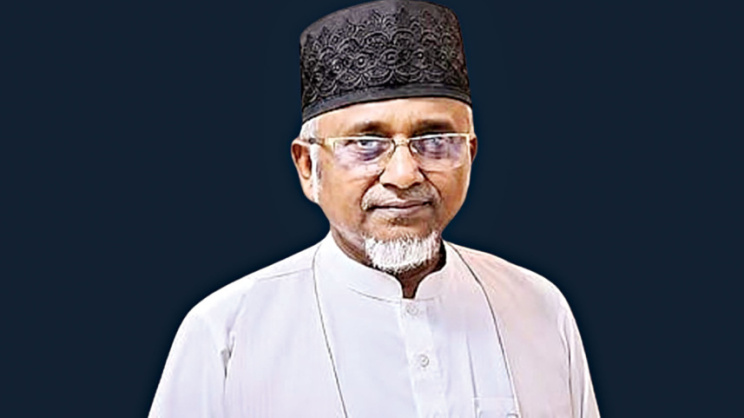
The political response added another layer. On July 22, Bangladesh Jamaat-e-Islami expelled Nazrul after an internal investigation found what the party described as “moral misconduct”. It said he was expelled under Article 62 of its constitution and later notified the Speaker and the Election Commission.
There is value in a political party taking allegations concerning one of its members seriously enough to investigate and impose discipline. But the language of morality can also narrow the frame. A party can decide whether a member has breached its rules. That does not tell us whether the criminal law has been broken, and it does not tell us whether another person involved in the controversy was vulnerable or needed independent support.
For an MP, the distinction is especially important. Political office does not stay neatly inside parliament. It brings contacts, recommendations, visibility, access and the ability to open doors. Most of the time, those resources are legitimate parts of public life. But when a private relationship involves someone who can potentially benefit from those resources, we need to be able to ask whether public authority has entered the relationship without immediately turning the question into an accusation.
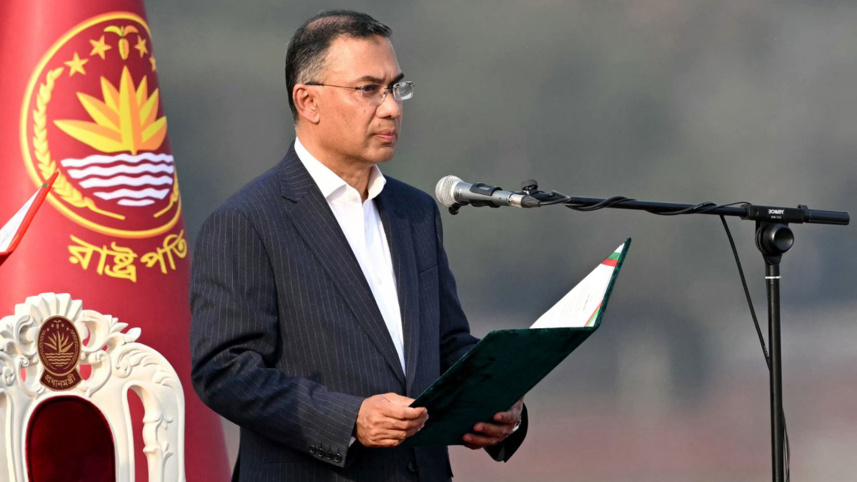
This is why “moral misconduct” never felt sufficient to me as the final description of the problem. Morality asks whether a relationship offends a norm. I am more interested in whether power shaped the relationship, because that is where a private matter can acquire a public dimension.
Who was asking whether Mariam was safe?
There is also an institutional problem here that Bangladesh does not discuss enough. In Britain, where I live and work, the language of safeguarding is familiar. It does not require waiting until somebody can prove that a crime has occurred. Sometimes it begins with a much less dramatic concern that a person may be vulnerable, dependent or at risk. Bangladesh does not have an identical adult safeguarding structure, so I do not want to import the British framework and pretend the institutions are interchangeable.
Still, the basic question travels. When a legally adult young woman is caught in a public controversy involving a powerful office-holder, possible access to opportunities and allegations from people around her, who makes sure she has somewhere independent to speak?
That does not necessarily mean the police. It might mean independent legal advice, psychosocial support, a women’s rights organisation, or simply a trusted service able to meet her privately. The point is not to decide what an adult woman should do. It is to make sure that the only people explaining her choices are not the same people whose interests are tied to those choices.
Looking back now, I find this much harder to dismiss than I did when the controversy first emerged. There were viral videos, competing stories, a claimed marriage, an attempted murder allegation and a party investigation. Mariam was being discussed everywhere. I have seen far less evidence that anyone outside those competing relationships was asking her, privately and independently, whether she was all right.
Where was Mariam in the story about Mariam?
First she became “the woman in the viral video”. Then she became “the second wife”. Now she is “the body found hanging”. Somewhere between those descriptions, the person herself becomes difficult to see.
What did Mariam want? How did she understand the relationship? When the controversy became public, whom did she trust? Could she speak freely without worrying about family interests, political interests or the interests of the man at the centre of the story? We do not know.
There is something painfully familiar in that absence. Women can become extraordinarily visible when their sexuality, clothing, marriage or morality is under discussion and still remain almost invisible as people with their own account of what is happening. Everyone acquires a version of the woman. The woman’s own version is often the hardest one to find.
Even criticism can repeat the pattern. Some commentary has already moved towards blaming members of Mariam’s family. If evidence eventually establishes wrongdoing by a family member, that belongs in the investigation. Until then, transferring blame from one person to another does not tell us very much.
What does tell us something is the distribution of power around her. Who had political authority and money? Who could provide access to opportunities? Who had networks capable of managing a public scandal? Who could speak to the media and shape the story? And who had the most to lose if the relationships around her broke down? These questions do not tell us who is guilty. They tell us what an investigation into power should not overlook.
Do not lose her again
Mariam’s death now creates another temptation. Political opponents can turn it into immediate proof of everything they already believe about Nazrul or his former party. Supporters can dismiss scrutiny as partisan exploitation before investigators have established what happened. Neither response requires us to spend very much time with Mariam.
Her father’s case accuses Nazrul, his first wife and Mariam’s maternal uncle of abetting her death. Those allegations must be investigated. If evidence implicates any of them, political identity should provide no shelter. If the allegations are not substantiated, that matters too. I do not think feminism is served by deciding the verdict in advance simply because the imbalance of power in the relationship makes us uncomfortable.
The investigation may eventually tell us much more about what happened in the NAM Bhaban flat. There are questions that cannot responsibly be answered now, however strongly people may feel about them.
But one question belongs to an earlier time, when Mariam was still alive and the country was already discussing her life.
Did anyone, independently of the people and institutions around her, ask whether she was safe?
A nikahnama could never answer that question.
Dr Lubna Ferdowsi is a researcher and educator whose work engages with gender, society, culture, public policy and questions of citizenship.
Send your articles for Slow Reads to slowreads@thedailystar.net. Check out our submission guidelines for details.
Why Dhaka cannot simply ban the rickshaw

The elephants had to be rescued again. Where is the accountability?
‘Situation under control’, but at whose expense?
The untold side of Bangladesh's climate migration
Dhaka's unbearable heat: Who suffers the most?
Enforced disappearance in Bangladesh / Who investigates the state?

Gibbons, kingfishers and the changing world of Adampur Reserved Forest

More than refugees: How Rohingya youth are reclaiming their story
Behind every cup / The mental toll on women tea workers