From Shyamnagar to Kurigram: Women work, but where is the income?

Across coastal Shyamnagar and the chars of Kurigram, women collect water, fish, farm, tend animals and make goods for sale. But unpaid care work, seasonal employment, weak transport, unsafe markets and repeated climate shocks prevent that labour from translating into reliable income or savings.
“We are learning everything; we can do it. But once we make these things, where will we sell them?”
The question came during an informal conversation in Nayarhat, a char community in Kurigram. Residents spoke about quilts, caps, embroidered bedcovers and other products that local women and young people knew how to make. Some had received training. Some had made a few items. But no buyer returned, no regular orders followed, and no practical arrangement connected their work to a market. The products stayed at home.
That unfinished journey from skill to sale captures a wider problem. Women in climate-exposed communities are not waiting to be brought into work. They already work across the household, the field, the pond, livestock rearing and small-scale production. The problem is not that women are excluded from work. It is that they are excluded from the systems that turn work into lasting financial security.
Field accounts from coastal Shyamnagar in Satkhira and char communities in Kurigram reveal the same structural weakness across different landscapes: women’s labour is central to household survival, while the systems surrounding water, employment, transport and markets repeatedly diminish the returns from that labour.
A day already full
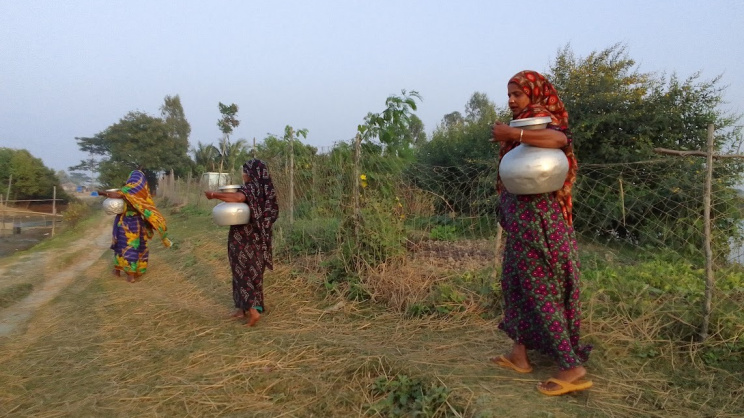
In Shyamnagar, part of the daily burden begins with securing drinking water. In 09 No Sora, families travel more than a mile to reach a pond they consider suitable as a source of drinking water. In Padma Pukur, an iron-free tubewell is more than two miles from many homes. Rainwater collected during the monsoon often lasts only three or four months. For the rest of the year, households rely on ponds, purchased water or whatever source is accessible.
The journey to collect water is not a single errand added to an otherwise empty day. It has to fit around cooking, washing, childcare, caring for older or sick relatives and tending livestock. Poorer households may have to choose between paying to transport water and carrying it themselves. Either way, securing water takes time or money from a day in which very little of either is spare.
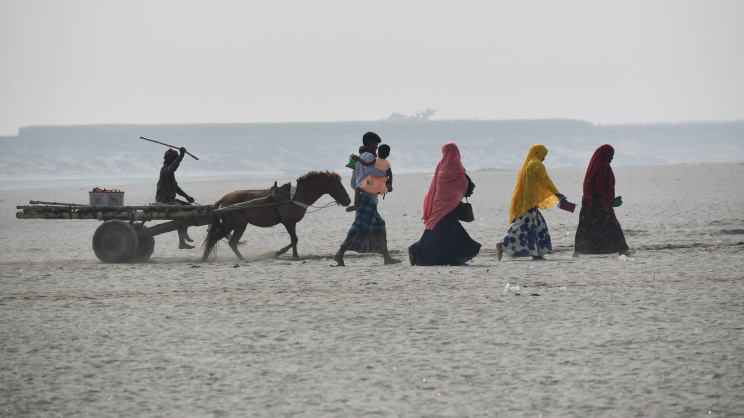
Women’s income-generating work is layered on top of this. In riverine parts of Shyamnagar, women are involved in fishing and other livelihood activities. Participants described women spending five or six hours in saline water while pulling nets and catching fish. The work may bring some income, but it also brings physical strain and health risks. When they return home, the cooking, cleaning and care work has not disappeared.
Paid and unpaid work do not replace one another. They accumulate. A woman may contribute to fishing, agriculture, livestock rearing or forest-linked work and still remain responsible for the tasks that keep the household functioning. Her labour may be visible throughout the day, while much of its value is immediately consumed in keeping the family fed, cared for and able to carry on.
Time, in this setting, is an economic resource. Time spent securing water cannot also be used for paid work, rest, travelling to a market or learning a skill. A livelihood programme that ignores water and care burdens may simply add another activity to a woman’s day without creating the conditions necessary for it to become sustainable.
The missing route from work to income
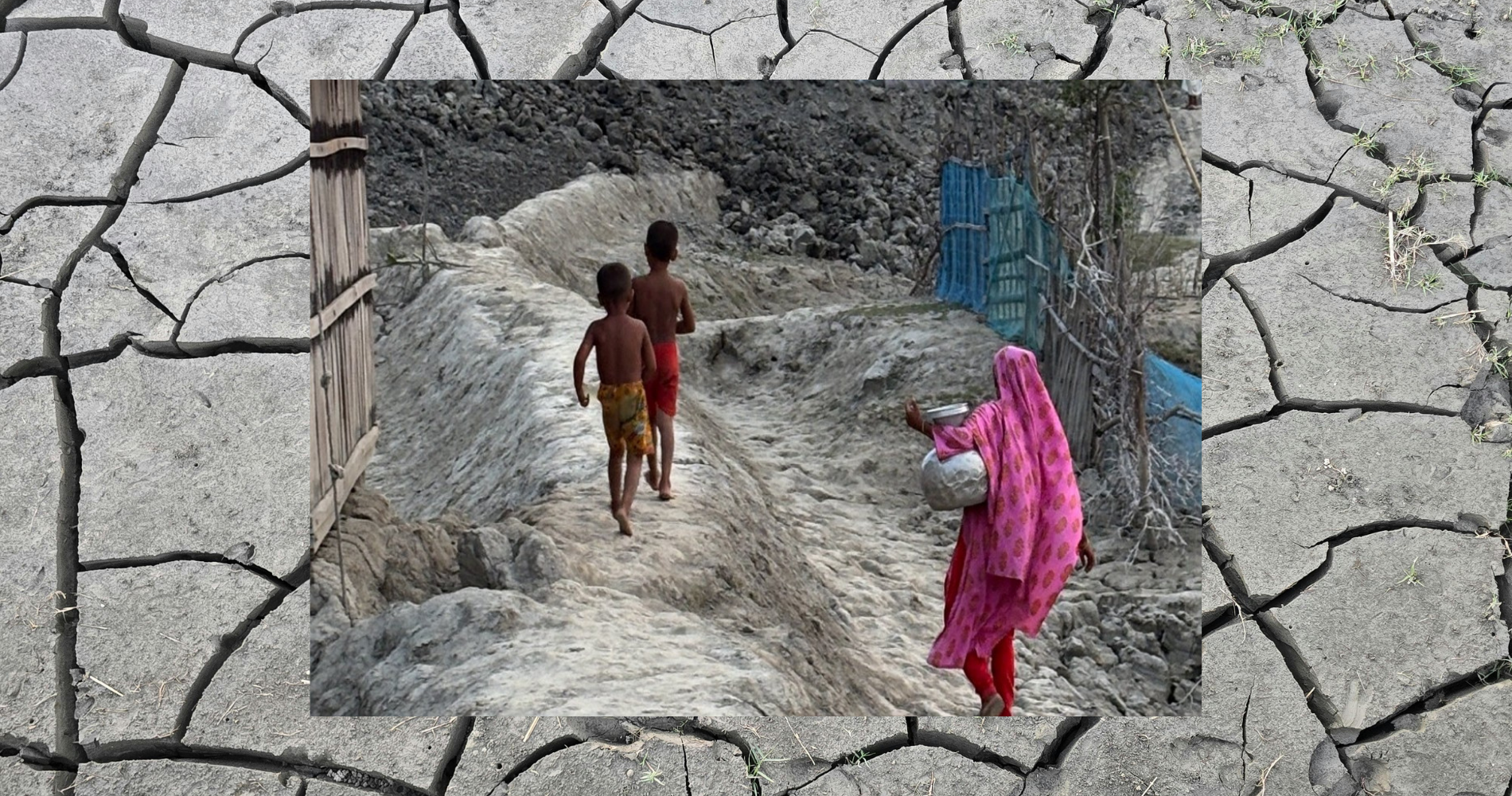
In the chars of Kurigram, the economic cycle is shaped by river erosion, floods, uncertain agricultural seasons, and limited local employment. Families lose land, crops and homes, then spend what they have on rebuilding. Work is seasonal, and many young people leave in search of employment. In this setting, advice about saving can sound detached from the realities of how people actually live.
“They tell us to save money,” one char resident said during a focus group discussion. “But I cannot survive now; how will I save? If I could earn, then I could save.”
The point was not that savings are unnecessary. It was that savings cannot be separated from regular income. A household unable to meet its current needs cannot build an emergency fund through instruction alone. For women, the difficulty is even greater because much of their contribution is unpaid, while income linked to agricultural work, fishing, livestock rearing, or handicrafts is irregular and quickly absorbed by food, medicine, cultivation costs, and debt.
Development support sometimes provides a sewing machine, livestock, or another useful asset. Such support can ease a specific hardship, but an asset is not the same as a functioning livelihood. A sewing machine does not create orders. Livestock does not guarantee access to a fair buyer. A short course does not provide raw materials, transport, sustained demand, or protection from loss. Without the rest of the chain in place, support can add responsibility without producing a dependable return.
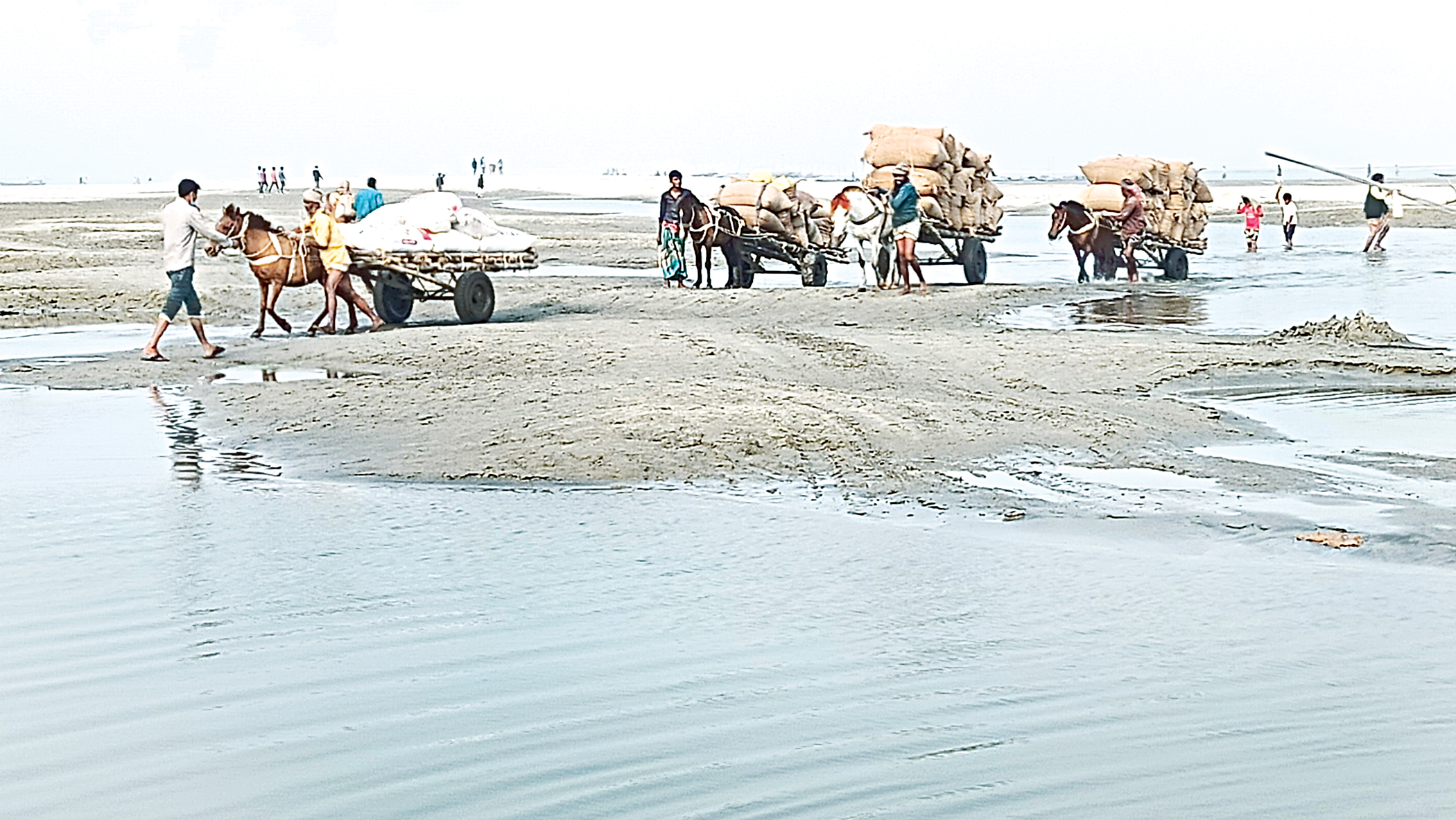
That weakness becomes clearest at the point of sale. Transport from char communities is poor, costly, and uncertain. Sellers may have little time to bargain because they must return by boat or face additional transport costs. At Jatrapur market, one participant described taking a goat valued at Tk 5,000 and being offered Tk 2,500. The participant said that refusing the offer could lead to confrontation. Residents also alleged that market charges were collected above the displayed rate.
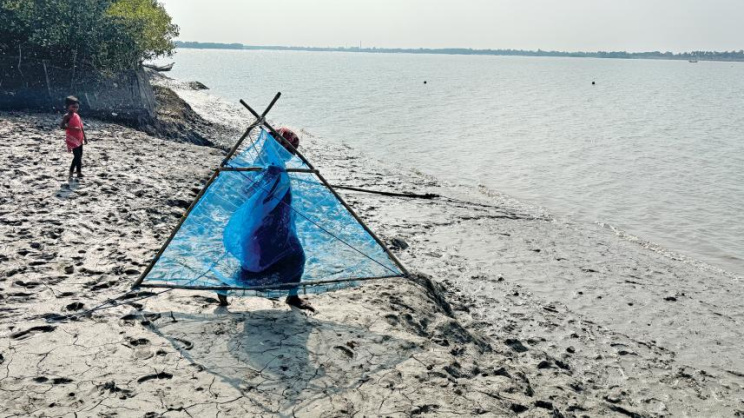
This is a problem for char producers generally, but it creates an additional barrier for women whose work is often done inside or close to the home. Producing a quilt, rearing a goat, or helping to grow a crop is only one part of turning labour into income. Someone must transport the product, negotiate the price, pay the fees, and bring the proceeds home. When that chain is unsafe, expensive, or dominated by more powerful actors, the producer’s work loses value before it can be converted into cash.
Women also face restrictions before they even reach the market. Participants in Shyamnagar described female volunteers and workers being questioned or taunted simply for leaving home to work: “The girl is grown now; why should she go outside? Why should she work?” Such scrutiny turns mobility into a social risk. Training may build a skill while leaving untouched the barriers that prevent women from travelling, meeting buyers, or building commercial relationships.
The distinction is simple but often missed: training can produce a skill; only a functioning route to buyers can turn that skill into income.
When survival leaves no security
Flooding shows how quickly women’s responsibilities expand when ordinary systems fail. In Kurigram, participants described water rising suddenly into their homes. Several families shared boats, cooked together in a single pot, and remained surrounded by water for days. Families had to decide how to protect children, livestock, food, and the few belongings they could save.
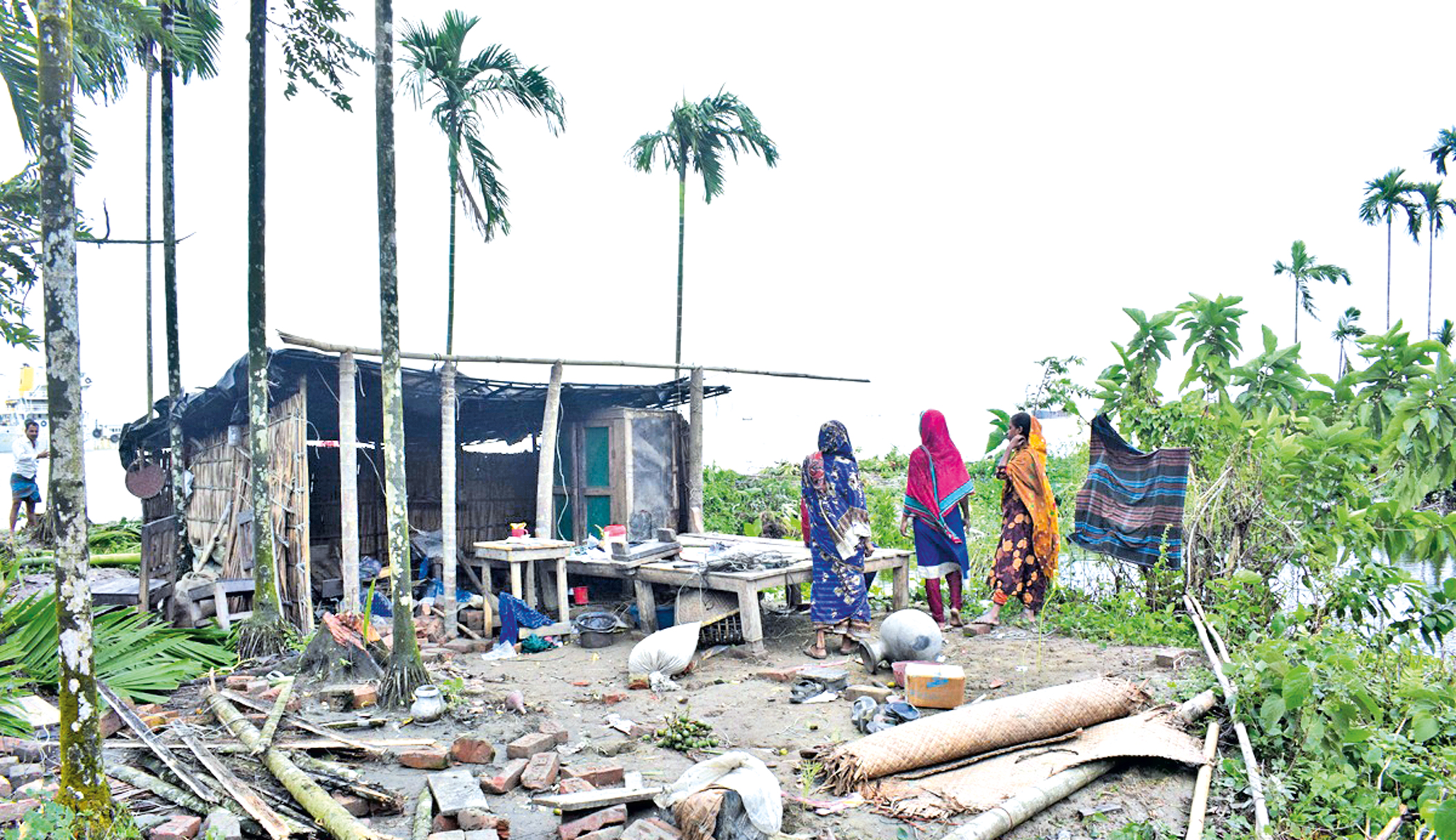
Household survival in those moments depends on work that is easy to overlook: storing dry food when possible, finding a place to cook, caring for children, protecting animals, keeping belongings above water and securing drinking water when sources are damaged or contaminated. These tasks are not secondary to disaster response. They are at the heart of it, and much of this work falls within responsibilities already carried by women.
Yet taking on more responsibility during a flood does not leave a family with more resources when the water recedes. The same household must repair the home, replace lost goods, repay debt and restart production. Relatives and neighbours may help people through the immediate crisis, but informal support cannot replace income that was never regular or savings that could never be built.
This is why resilience should not be measured only by whether a household survived the last flood. Survival may depend on women stretching their labour further, postponing treatment, caring for more people and starting again with fewer assets. Calling that resilience without asking what it costs can obscure the insecurity that made such extraordinary effort necessary.
A better approach to women’s economic inclusion would begin with the work they already do. Safe drinking water must be close and affordable enough to reduce the time and recurring expense involved in collecting it. Before a training programme begins, there must also be a credible answer to the question raised in Nayarhat: who will buy what women produce, how will the goods reach that buyer, and how will the producer be paid?
That also means providing safer transport, transparent market fees and protection from coercive pricing. Collective selling, local collection points and reliable buyer agreements can give small producers greater room to negotiate.
For women, any such arrangement must also account for mobility restrictions and the care responsibilities that make travel difficult.
Success should be measured by more than the number of women trained or the number of assets distributed. The more important questions are whether their work produces regular income, whether some of that income can become savings, and whether those savings remain available when illness, flooding, or a failed season strikes.
Women do not need another task added to an already crowded day. They need the work they are already doing to leave something behind: income they can count on, savings that survive a bad month, and a market that does not erase the value of their effort before it becomes money.
Author’s note: This article draws on field observations, focus group discussions, and informal conversations from Shyamnagar in Satkhira and char communities in Kurigram. Individuals are not named because the source materials did not consistently record consent for public attribution.
Md. Shahidul Alam is a research and development professional whose work focuses on climate change, displacement, livelihoods, gender, governance, and inclusive development.
Send your articles for Slow Reads to slowreads@thedailystar.net. Check out our submission guidelines for details.
Behind every cup / The mental toll on women tea workers
Waiting for April: The other side of migration in the Sundarbans
Where have Bangladesh’s hilsa gone?

Lead poisoning in Bangladesh: A crisis ignored for too long
Who recycles Bangladesh’s garment waste?
Bangladesh running out of options on Rohingya crisis: Is there a way out?
Construction of the Sugandha-Kalatoli beach road / A grave threat to Cox’s Bazar’s sand dunes

Why have Nihar Koli and Samrat been sent back to their alleged abusers?
The reality of vocational training for Bangladeshi women