A grave threat to Cox’s Bazar’s sand dunes




Cox’s Bazar is known around the world for its long, uninterrupted sandy beach. But a beach is not an inert object; it is a living, dynamic coastal earth system that has survived for millennia through a delicate balance of tectonic shifts, river sedimentation, waves, tides, wind and longshore currents. When Francis Buchanan visited the region in 1798, he found a narrow shore where powerful spring tides reached the foot of the coastal hills and freshwater streams (chharas) flowed into the sea every 800 metres, anchored by native Salt Cedar (Nona Jhau). Over the past two centuries, through natural sediment deposition from the massive Ganges-Brahmaputra-Meghna delta system, the coastline west of Kalatoli has advanced by about one kilometre. Yet today, this invaluable natural heritage is being systematically dismantled under the guise of "infrastructure development" and "shore protection".
The construction of a 1.2-kilometre-long, 28-metre-wide (82-foot), four-lane highway and concrete "town protection embankment" directly on the active sand dunes of Sugandha Beach represents a catastrophic trifecta of planning failure, ecological blindness and flagrant violations of rules and regulations. Financed by a BDT 63.50 crore loan from the Japan International Cooperation Agency (JICA), this project threatens to permanently scar our coastline while risking public funds on an unstable and unscientific engineering design. If implemented, this project will destroy our natural buffer against cyclones, paving the way for ecological and economic ruin.
The viability illusion: A disastrous design on shifting sands
Proponents of the project, led by the Cox’s Bazar Municipality, justify this massive concrete intervention as a "town protection embankment" necessary to safeguard the city from ocean swells. This argument is quite problematic, as urban planners and ecologists have pointed out that Cox’s Bazar is not being inundated by marine intrusion. Rather, waterlogging is caused by rainwater and runoff from the hills being unable to drain into the sea because of existing structural barriers. Building a massive concrete wall parallel to the ocean will not save the town. Instead, it will cut off the city’s natural drainage system and worsen the situation by confining water that flows down from the hills towards the ocean.
Furthermore, the design of this four-lane highway raises serious concerns. Local expertise was reportedly overlooked, while several experts who raised concerns about the road’s alignment on active sand dunes were sidelined or removed from the project in order to conform to JICA’s specifications.
The road is being constructed a mere 40 to 50 feet from the high-tide line, leaving it directly exposed to the brutal forces of the Bay of Bengal. There are examples of past projects designed in a similar fashion that have failed miserably. In Sabrang, a BDT 2,000 crore eco-tourism road built over a filled-in canal collapsed during high tides in 2025.
Financially, the project is a ticking time bomb. The road is being constructed a mere 40 to 50 feet from the high-tide line, leaving it directly exposed to the brutal forces of the Bay of Bengal. There are examples of past projects designed in a similar fashion that have failed miserably. In Sabrang, a BDT 2,000 crore eco-tourism road built over a filled-in canal collapsed during high tides in 2025. Similarly, previous beachfront roads near the Modern Hatchery failed to withstand the sea and were washed away, leaving behind only concrete ruins. If this road is destroyed by the first major cyclone, the BDT 63.50 crore spent on Phase 1 and the estimated BDT 100 crore earmarked for Phase 2, which extends further south to the Bell Hatchery, could be washed into the sea, leaving the Bangladeshi public to foot the bill for JICA's loan.
What makes this financial risk even harder to justify is the availability of a viable, cheaper and ecologically less damaging alternative. An existing road behind Kalatoli could have been widened using recently cancelled government land plots that have reverted to the state as khas land. Why, then, was this practical alternative overlooked in favour of an expensive and high-risk concrete intrusion onto an active beach?
Committing ecocide by dismantling nature's defence shield
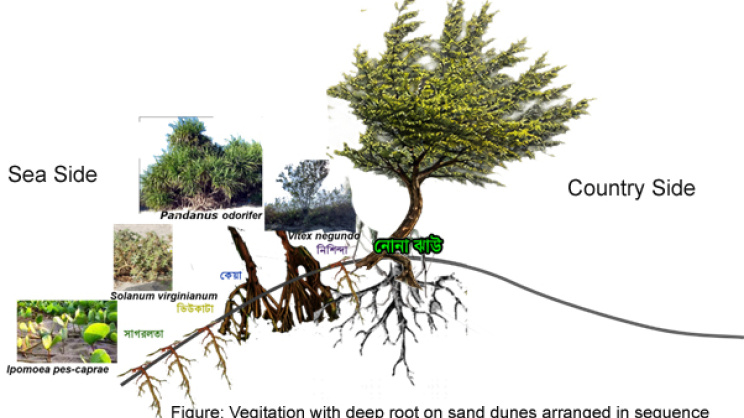
The most heartbreaking aspect of this construction is the active destruction of the sand dunes (deils) and native vegetation. These dunes are not static piles of dirt; they are the coastline’s natural armour. During cyclones and monsoon surges, these dunes absorb wave energy and hold the beach together, serving as a dynamic, self-healing buffer. Heavy excavators have already flattened 10 to 12 massive sand dunes, each 8 to 10 feet high, at Sugandha Beach. Deep-rooted native flora such as Sagorlota (Beach Morning Glory), which act as natural anchors stabilising the loose sand, are being uprooted and buried under heavy layers of soil and concrete.
Historically, when we replaced deep-rooted native vegetation with shallow-rooted exotic species such as the Australian Jhau (Casuarina), we saw dune compaction and accelerated erosion because their shallow, fibrous roots failed to bind the deeper sand layers. This new project takes the damage even further by replacing a living coastal ecosystem with rigid concrete infrastructure.
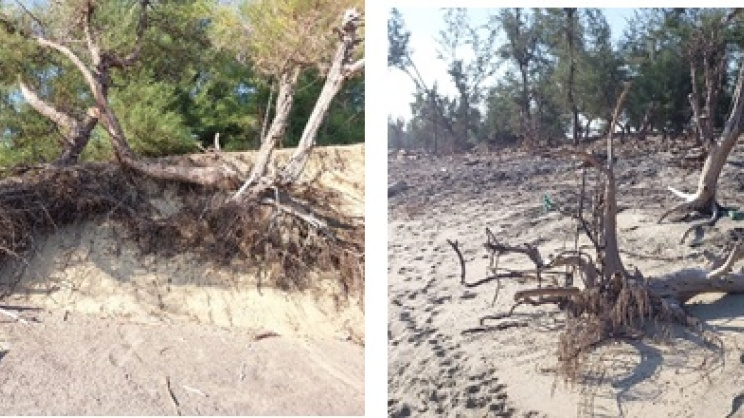
The immediate casualties are the beach's delicate fauna. The flattened dunes were thriving habitats for the iconic red ghost crabs and critical nesting grounds for the endangered Olive Ridley turtles. By burying the dunes, we are effectively burying these species out of existence in Cox's Bazar.
Moreover, a beach is a dynamic, shifting system. To survive, it must remain connected. Freshwater must flow from the hills to the sea, and sand must be allowed to move freely with the winds and tides. Severing this connection with a 28-metre-wide concrete highway, along with parking lots, steps and ramps, will choke the beach. Instead of the peaceful, organic beach experience that draws 70 to 80 lakh tourists annually, visitors will find a chaotic, vehicle-choked concrete strip and a busy highway intersection where they must dodge traffic just to reach the water.
This is a tragic departure from international best practices. Countries such as the United States, the Netherlands and New Zealand spend millions of dollars to naturally rebuild sand dunes using beach nourishment and vegetation to combat climate change, sea-level rise and coastal erosion. In Sri Lanka, strict regulatory zones dictate exactly how close infrastructure can be built to the shore in order to preserve this natural shield. In Cox's Bazar, we are doing the exact opposite by using a foreign loan to flatten our natural protection.
Sabrang vs Samity Para: Stark lessons in coastal resilience
To understand the problems of the Sugandha-Kalatoli project, we need only look at two contrasting examples on our own coastline: Sabrang and Samity Para. They offer a stark choice between two development models: one that fights against the coastal earth system and one that works within it.
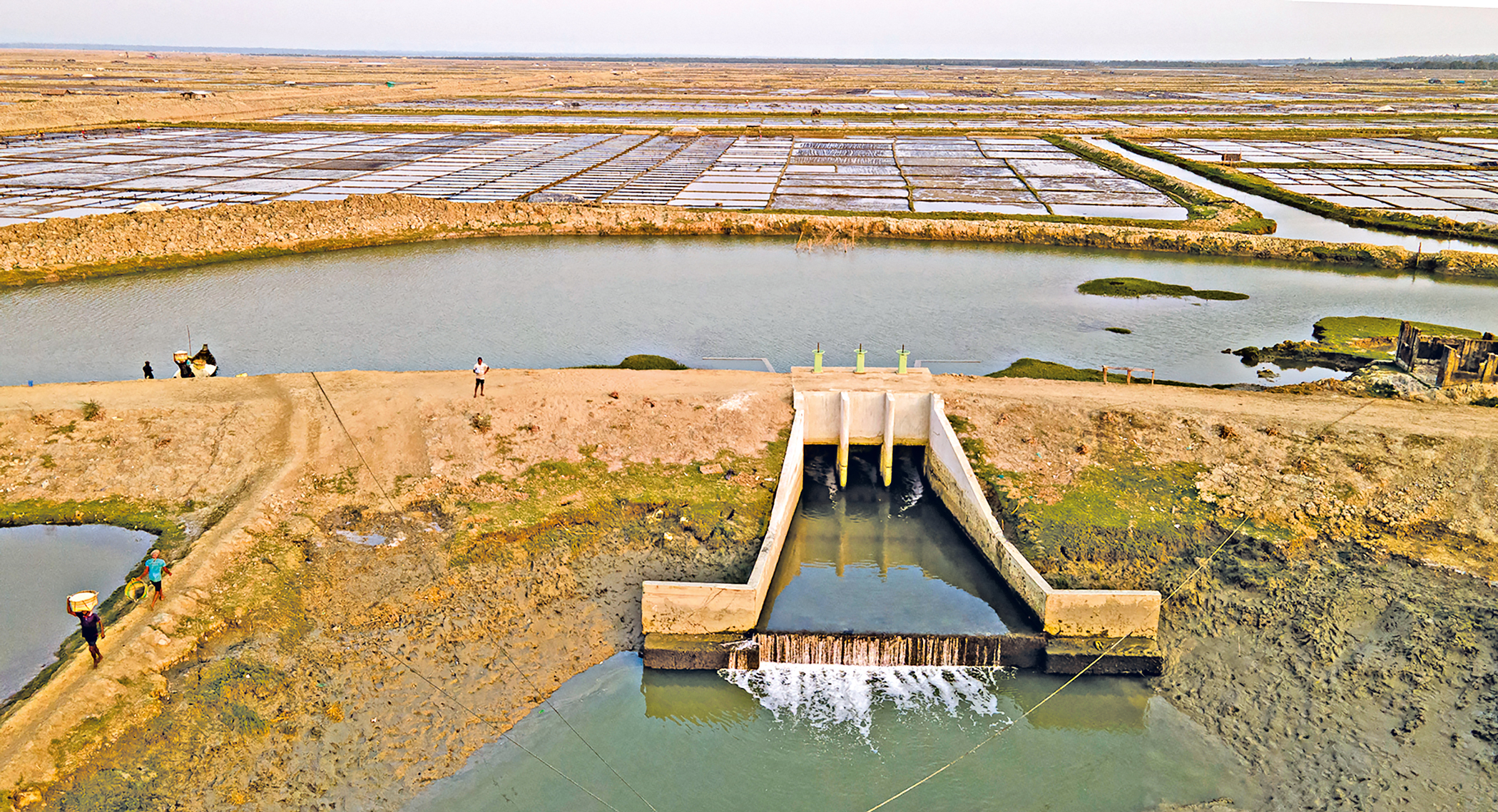
The Sabrang Eco Tourism Park offers a stark lesson in the consequences of development that works against nature. Located on the constantly shifting estuarine system of the Naf River, Sabrang’s natural resilience was historically sustained by tides, waves and complex sediment flows. However, from 2017 to 2023, developers engaged in large-scale sand filling, burying vital tidal channels and wetlands to construct high-cost tourism infrastructure. By 2024, public spending on the project had reached a staggering Tk 2,000 crore. The natural sediment and water pathways were severed, choking the ecosystem.
The reckoning was swift. During the high tides of 2025, a newly constructed road within the Sabrang Eco Tourism Park collapsed, physically caving in and revealing the hollow, waterlogged former canal buried beneath. This collapse exposed a profound truth: concrete cannot easily conquer a dynamic estuarine system. When infrastructure ignores natural processes, natural erosion is transformed into permanent, costly and dangerous land loss.
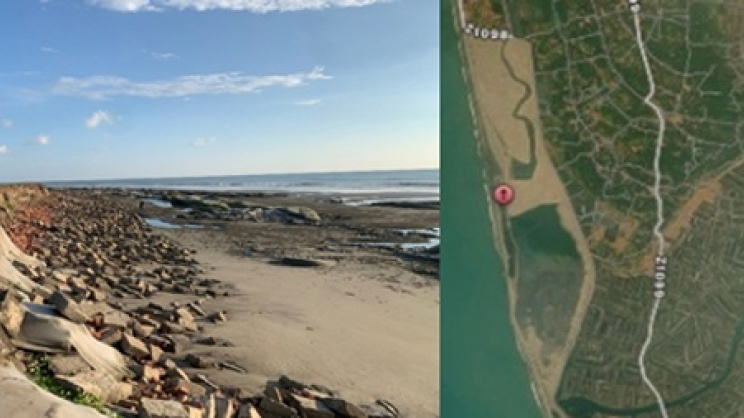
In contrast, Samity Para represents a blueprint for how human settlement and ecological integrity can coexist. Established on khas land to resettle families displaced by the devastating 1960 cyclone, Samity Para became a thriving, high-density community. Yet, while other parts of the coastline retreated under development pressure, the beach at Samity Para actually advanced. Landsat satellite analysis records a massive 1.94 million square metres of coastal accretion (beach growth) between 1990 and 2010, and another 0.89 million square metres between 2010 and 2025, advancing the shoreline by 1.2 kilometres seaward.
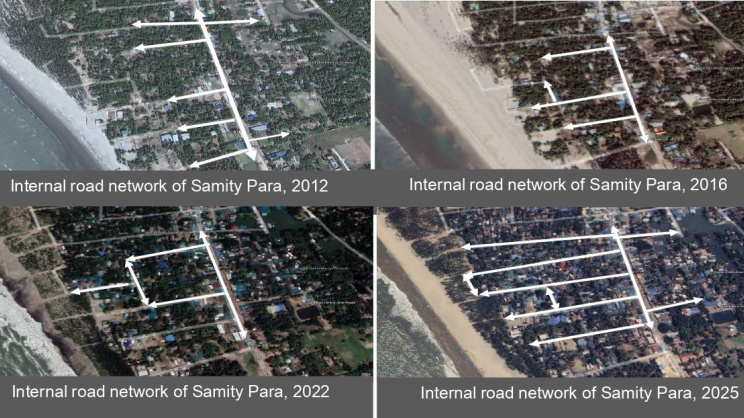
i. No permanent, rigid infrastructure has ever been built directly along the Samity Para beachfront.
ii. Hasan Pradhan Road, the area's original main road, developed on higher ground between the beel and the sea.
iii. Internal settlement roads extended from both sides of Hasan Pradhan Road towards the beel and the sea, following the natural slope of the land.
iv. After 2012, some new roads were developed parallel to the beach, forming a grid-like pattern by 2016.
v. As the settlement expanded towards the beach, this grid-pattern road network became more extensive by 2022.
vi. By 2025, settlement density had increased along the expanding road network.
Why did Samity Para succeed where Sabrang failed? The answer lies in its morphology. The traditional and organic road network of Samity Para was aligned east to west, parallel to the natural water flows and contours of the land. Its drainage systems were kept open and relatively efficient, allowing freshwater from the hills and sediment-filled tides to flow without interruption. Because the vital pathways of water and sediment were left connected, the beach retained its natural, self-healing capacity to adjust, capture sediment and grow seaward.
The comparison is clear. Sabrang attempted to reorganise and block the natural system with a rigid, perpendicular Tk 2,000 crore barrier, resulting in catastrophic failure. Samity Para worked within the system's natural pathways, allowing the beach to grow and protect the community for free. By building a massive, rigid, four-lane concrete highway parallel to the ocean at Sugandha, we are choosing the disastrous Sabrang model over the resilient Samity Para blueprint.
A lawless assault on protected land
Perhaps the most alarming dimension of this project is the flagrant violation of Bangladesh’s environmental and constitutional laws by the very authorities sworn to uphold them.
In 1999, recognising the severe threats to this unique ecosystem, the government declared 10,465 hectares of the Cox’s Bazar-Teknaf coastline an Ecologically Critical Area (ECA). Under the Bangladesh Environment Conservation Act and ECA rules, any activity that alters the natural state of the soil, water or land, or destroys the habitats of flora and fauna, is strictly prohibited. Building a massive four-lane concrete highway on an active sand dune is, by definition, an illegal activity.
Yet, the project is proceeding without an Environmental Clearance Certificate from the Department of Environment (DoE). While the municipality claims that it has clearance, the DoE has clarified that it approved only a nine-metre-wide maintenance plan for an existing road. To use a minor maintenance permit to bulldoze a 28-metre-wide highway through a protected beach is a deceptive and unlawful act carried out in bad faith.
Furthermore, this construction is in direct contempt of the judiciary. On December 9, 2019, the High Court issued a directive ordering the eviction of all illegal structures from the 120-kilometre beach. Crucially, the court banned any infrastructure construction within 300 metres of the high-tide line in municipal areas. Additionally, the government’s own 2013 Cox’s Bazar Master Plan designates the first 300 metres from the intertidal zone as a strict "No Development Zone". The current construction is taking place a mere 40 to 50 feet (around 12-15 metres) from the water, making it an open and defiant violation of both the High Court’s ruling and the master plan.
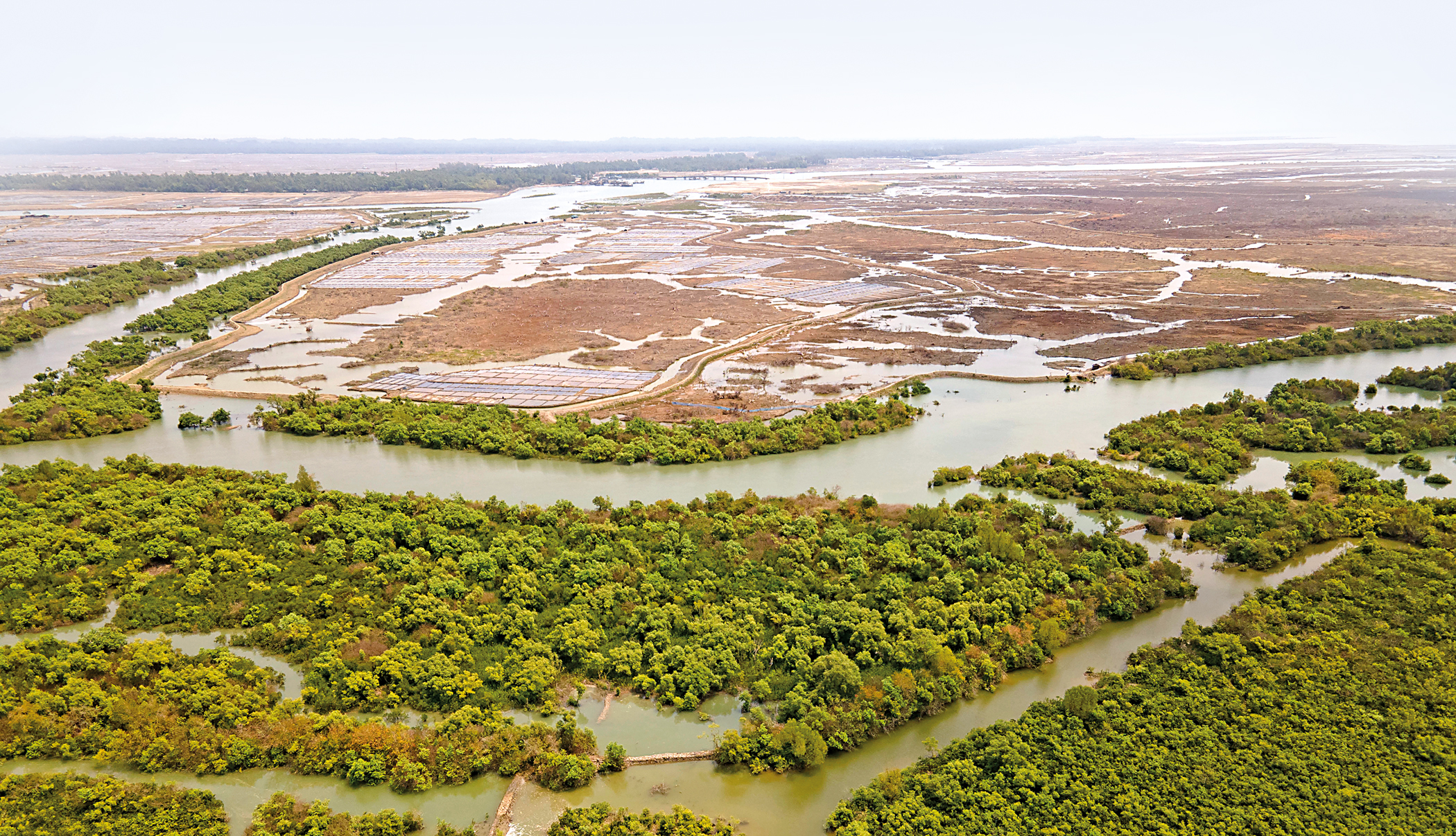
LGED has a history of planning infrastructure projects that have raised serious concerns about compliance with environmental regulations. In the past, its plans for road construction through the unique and ecologically sensitive Shilkhali Garjan Forest in Teknaf threatened the forest and prompted strong opposition from environmental groups and activists. Today, we see the same dangerous playbook being deployed on the world's longest sandy beach. Rather than protecting the coastline, these agencies are planning to destroy the coastal lifeline through this new four-lane highway project, prioritising physical concrete infrastructure over ecological survival.
By allowing such projects to proceed, Bangladesh is also actively violating its international commitments. As a proud signatory to the landmark Convention on Biological Diversity (CBD, 1992) and the Paris Agreement (2015), Bangladesh has pledged to the global community to conserve its unique habitats, halt biodiversity loss and implement nature-based, climate-resilient solutions. These international protocols are not mere decorative signatures; they are binding frameworks that dictate how we must pursue development. Based on these international protocols, we must think about how we can align our infrastructure development with ecological norms rather than destroying the natural defences of our fragile coastline.
A call for sanity and restoration
Development and environmental protection are often framed as binary opposites. But true development cannot take place by destroying the very earth system upon which our lives, safety and economy depend. If we destroy the sand dunes, the sea will reclaim the land, tourists will stop coming and public funds will be washed away in the next storm.
The tragedy is that we have no comprehensive management plan for the world’s largest sea beach. Instead of managing this invaluable, dynamic ecosystem through a unified, scientific framework, responsibility for it has been divided among multiple government bodies, while corporate tourism and mega-construction projects continue to disregard the seashore’s delicate ecology and rich biodiversity.
The tragedy is that we have no comprehensive management plan for the world’s largest sea beach. Instead of managing this invaluable, dynamic ecosystem through a unified, scientific framework, responsibility for it has been divided among multiple government bodies, while corporate tourism and mega-construction projects continue to disregard the seashore’s delicate ecology and rich biodiversity. From massive hotel structures built in active flood zones to this new four-lane highway, the pursuit of short-term commercial gain continues to come at the expense of our coastline.
But the state cannot simply stand by and watch this destruction. Under the Constitution of Bangladesh and our laws, the state is bound to secure the life and integrity of the seashore ecosystem for the new generation. Article 18A of the Constitution explicitly mandates that the state shall protect and improve the environment and preserve and safeguard biodiversity, wetlands, forests and wildlife for present and future citizens. This is not a policy option; it is a strict constitutional duty. Intergenerational equity demands that we preserve this coastline rather than leave future generations with an eroded and lifeless stretch of concrete.
Construction of the Sugandha-Kalatoli beach road must be halted immediately, the flattened sand dunes restored, and native Sagorlota and other coastal vegetation replanted
We must stop sacrificing the natural landscape for concrete development. Construction of the Sugandha-Kalatoli beach road must be halted immediately, the flattened sand dunes restored, and native Sagorlota and other coastal vegetation replanted. We owe it to future generations to protect Cox’s Bazar as a living natural wonder rather than allow development to turn it into an ecologically degraded coastline.
Dr Adil Mohammed Khan is Executive Director of the Institute for Planning and Development (IPD) and a Professor in the Department of Urban and Regional Planning at Jahangirnagar University.
Amirul Rajiv and Naim Ul Hasan are environmental activists and coordinators of the Bangladesh Tree Protection Movement.
Khondker Neaz Rahman is an urban and regional planner.
Pavel Partha is an ecology and biodiversity conservation researcher and Director of the Bangladesh Resource Centre for Indigenous Knowledge (BARCIK).
Dr Shayer Ghafur is a Professor in the Department of Architecture at BUET, where he teaches Southern Urbanism.
Sumaiyah Rahman is an architect.
Send your articles for Slow Reads to slowreads@thedailystar.net. Check out our submission guidelines for details.

Why have Nihar Koli and Samrat been sent back to their alleged abusers?

The reality of vocational training for Bangladeshi women

Can we save young Bangladeshis from deadly Mediterranean crossings?

Breastfeeding in Bangladesh: What is holding mothers back?

Fidel Castro at 100 / Why Fidel Castro’s legacy still haunts Washington
Thirst in the Sundarbans: The water crisis facing Munda women

Which female-dominated jobs are actually the most exposed to AI?

What remains of Bangladesh's fading ethnic traditions

Good intentions are not enough: Why Bangladesh should rethink orphanages