The moral hierarchy of blood
Human societies have never treated all blood with the same instinct. We preserve the bloodied banners of martyrs. We speak of blood shed for a nation as a kind of currency, redeemable for honour. Sacrificial blood, across traditions, seals a covenant rather than staining one.
The blood a healthy female body produces on a monthly, unremarkable schedule, however, is treated, across an extraordinary range of unrelated cultures, as something to be separated, concealed and waited out. Even women’s blood does not carry a single verdict. The imagined blood on a wedding sheet can be demanded as proof of chastity. Blood lost in childbirth can be folded into the sanctity of motherhood. Menstrual blood—cyclical, private and unattached to either sexual innocence or maternal sacrifice—is assigned a different moral life.
The blood itself has no opinion on any of this. It cannot announce whether it belongs to a soldier, a bride or a girl on an ordinary Tuesday. Menstrual blood is no more capable than the blood of a soldier, a sacrifice or a bride of announcing what it means. What changes is the social order into which it appears. Blood becomes honourable when it can be placed in the service of a god, a nation, a lineage or an approved form of womanhood. Menstrual blood serves no hero and commemorates no wound. It belongs first to the body producing it. Perhaps this is part of what makes it so culturally unruly.
The language of ritual impurity must also be handled carefully. Impurity is not necessarily identical to dirt, sin or moral inferiority.
Blood that changes meaning
Anthropologist Alma Gottlieb used fieldwork among the Beng of Côte d’Ivoire to challenge a recurring assumption in the study of menstruation: that menstrual restrictions necessarily express the general pollution or subordination of women. Among the Beng, she found a more particular symbolic order. Menstrual blood was understood as a sign of human fertility, and initiated or married menstruating women were prohibited from entering the forest and fields. The restriction did not arise from a belief that their bodies contaminated everything they touched. Menstruating women could attend weddings, funerals and political meetings, dance and assist at births; sex during menstruation carried no spiritual sanction.

To understand the forest prohibition, Gottlieb placed it within Beng ideas about the Earth. Human fertility, represented by menstrual blood, and the fertility of the forest and fields were imagined as parallel but distinct forces that had to be kept apart. Other forms of conduct involving men as well as women—such as having sex in the forest, or entering it without first washing after sex—could also pollute the Earth. In this account, the danger lay not in a woman’s body as a general contaminant but in bringing one form of fertility into the domain of another.
Gottlieb’s larger warning was methodological. Anthropologists can import an expectation of female pollution into practices whose meanings are more specific, ambivalent or even positive. A restriction may still govern a woman’s movement, but its local logic cannot be inferred from the restriction alone. The verdict on menstrual blood is not always “the woman is unclean”. Sometimes it is a stranger, more structural claim about where a sign of human fertility may appear and what it may touch.
The consequences of ritual impurity
The language of ritual impurity must also be handled carefully. Impurity is not necessarily identical to dirt, sin or moral inferiority. In Leviticus, for example, contact with corpses and seminal emissions can also create states of ritual impurity. Similarly, during menstruation, a woman enters a state referred to as niddah, and whatever she sits or lies on can transmit ritual impurity to others. Later rabbinic law developed these rules further, requiring separation between spouses, the counting of seven blood-free days before sexual relations could resume, and immersion in a mikveh before intimacy returned. In some communities, additional customs have restricted menstruating women from entering a synagogue or participating in certain prayers.
The blood a healthy female body produces on a monthly, unremarkable schedule, however, is treated, across an extraordinary range of unrelated cultures, as something to be separated, concealed and waited out.
Comparable restrictions can be found in other religious traditions, although their theological foundations and practices differ considerably. In Islam, mainstream traditional jurisprudence exempts menstruating women from the five daily prayers and generally prohibits sexual intercourse during menstruation, while jurists have differed over matters such as touching or reciting the Quran.
Many Hindu communities have also observed menstrual restrictions, including keeping menstruating women away from temples, kitchens or particular ritual spaces, although the specific rules vary considerably by caste, region, community and family.
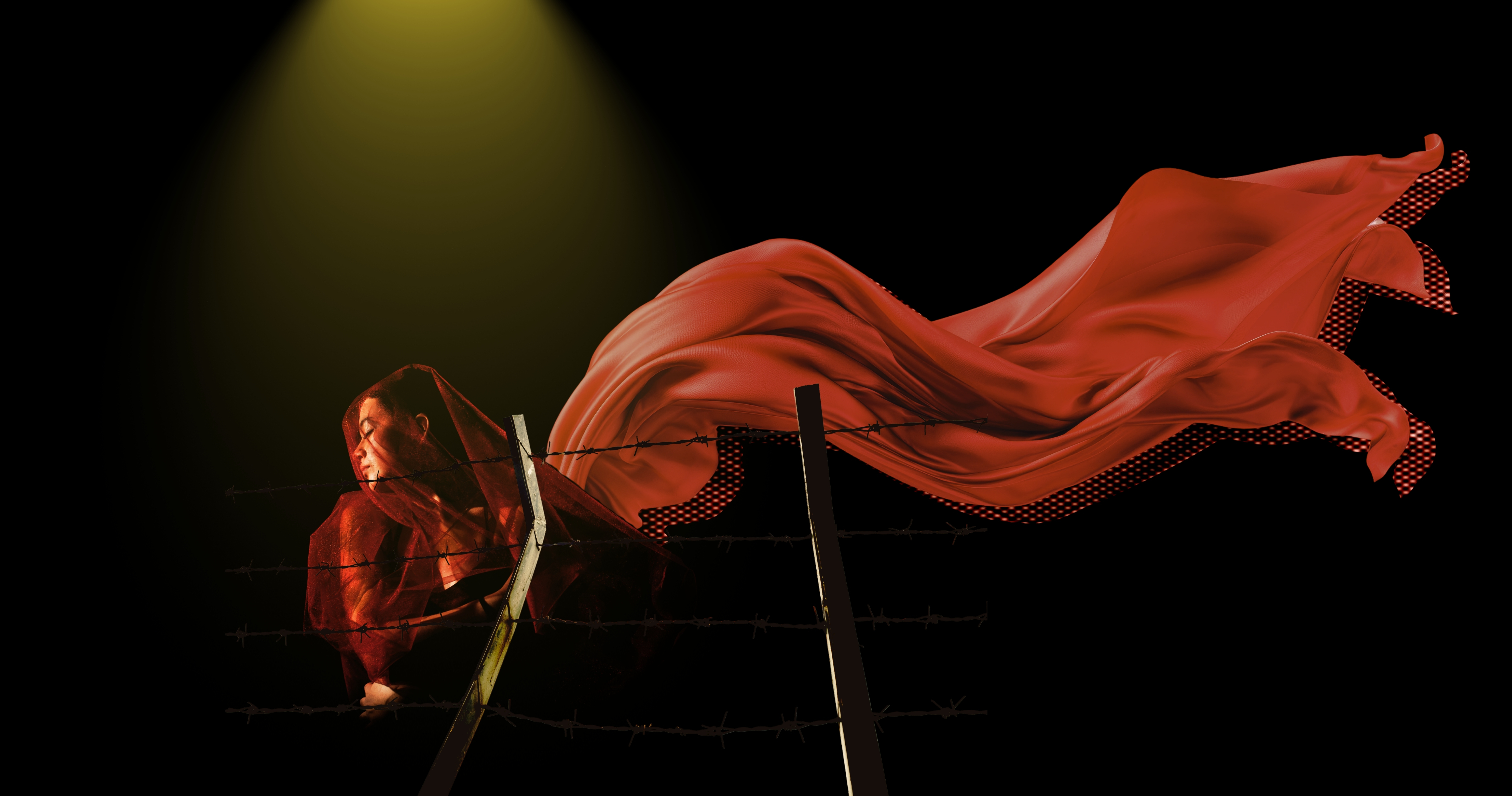
There is no single doctrine behind all of this, whether Jewish, Muslim or Hindu, and the differences between these traditions matter. Yet across them one can still observe a recurring transfer of interpretative authority: someone else—a text, a ritual specialist, a religious authority or a family elder—gets to decide what a woman’s blood means, and she inherits the consequences of that decision. And while scripture, doctrine and tradition may emphasise that menstruation is not the consequence of sin or moral wrongdoing on the part of the woman, and that her condition is temporary, her life is still reorganised around it.
First blood and celebration
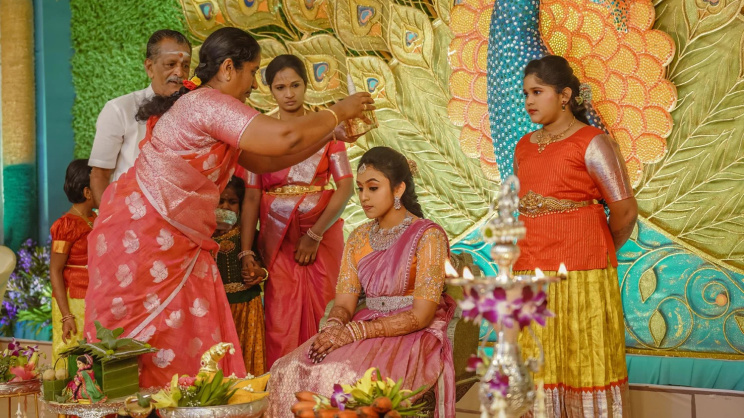
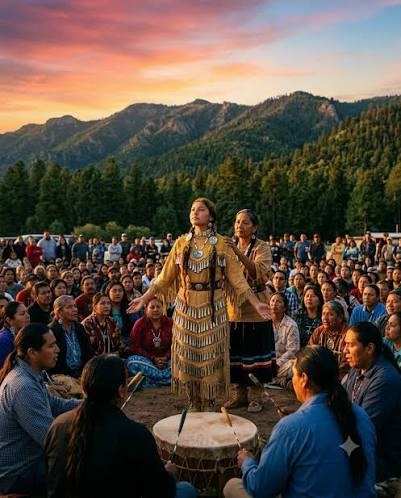
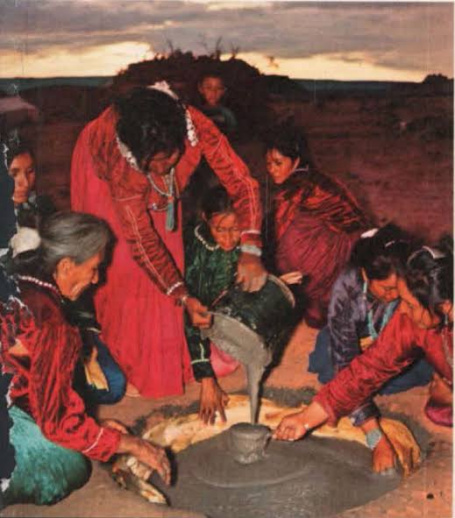
There are plenty of examples where, instead of being met with shame, a girl’s first blood is met with the opposite instinct: celebration. In North American Indigenous traditions, such as the Mescalero Apache Sunrise Ceremony, or Na’ii’ees, a girl spends four days dancing, running and receiving blessings, identifying throughout with White Painted Woman and her power. The Navajo Kinaaldá follows a similar pattern: over four days, the girl is associated with Changing Woman, running towards the dawn each morning and joining her community in preparing and sharing a ceremonial corn cake. Closer to home, in parts of Tamil Nadu and Andhra Pradesh, Ritu Kala Samskaram marks a girl’s first period with a ceremonial turmeric bath, a new half-sari gifted by her mother’s family and a gathering of relatives bearing gifts and blessings.
And in some traditions, it is not only a menstruating girl who is celebrated, but a menstruating goddess. In Odisha, for example, during Raja Parba, Bhudevi—the Earth herself—is understood to menstruate for three days, and the agricultural calendar pauses in recognition: fieldwork stops, domestic routines change, and women and girls become central to the festival, dressing in new clothes, eating festive food and swinging from ropes tied to trees. In Assam, the annual monsoon festival of Ambubachi celebrates the yearly menstruation of the goddess Kamakhya. Her sanctum remains closed for three days before reopening after rituals associated with the end of this period, drawing one of the largest religious gatherings in the region. In each case, menstruation is not simply something to be managed or hidden. It is treated as sacred, a bodily process through which ideas of divine and human fertility become intertwined.
But is celebration freedom?
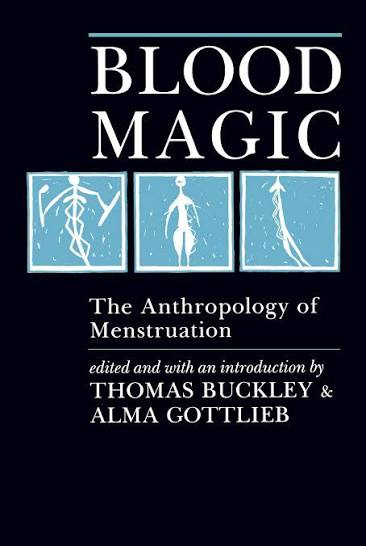
But celebration isn’t automatically the opposite of control. A ceremony can honour a girl’s power and still decide what that power is allowed to mean—instructing her, moulding her and asking her to become a form the tradition already has prepared for her. In Blood Magic, the comparative volume Gottlieb later co-edited with anthropologist Thomas Buckley, menstruation carries radically different meanings across cultures and contexts: pollution in some, fertility or life force in others, and sometimes an ambivalent power that can both endanger and protect. Seclusion can mean exclusion. It can also mean protection, concentrated power, or all three tangled together for the same woman at different points in her life. Positive and negative are not opposites here so much as two settings on the same dial—both of them turned by someone standing outside the body in question. The argument was not to establish one meaning as truer than another, but to drive home the point that no universal idea of a “menstrual taboo” could adequately explain them all.
The real question a ritual like this raises isn’t simply whether it praises her or shames her. It is how much she actually gets to say about what her own body is made to represent. One tradition declares a girl unfit for sacred space for a week. Another makes her a vessel of sacred power for four days. One hides her. Another gathers a crowd around her. Both are writing on the same body, in the same ink: an outside authority deciding what a recurring biological fact is allowed to mean.
What outlives the verdict
What gets lost in that process, quietly, is not just autonomy. It is trust—a woman’s trust in her own body as a reliable source of information about itself. An authority that has spent a lifetime ruling on what her blood means rarely stops at blood. The same habit of checking the rule before checking the feeling can spread quietly to everything else the body produces on its own: arousal, desire, the ordinary pleasure of simply being inside a body that isn’t currently being read by anyone else. This happens in much the same way an orna’s instruction does: cumulatively, through years of learning to consult an external rule before an internal sensation, until a body trained to treat its own blood as evidence and its own wanting as risk stops asking what it feels and starts asking what it is permitted to feel. The two questions are not the same, though after enough repetition they can sound identical from the inside.

By the time a girl has become “she”, she has usually also learned, without anyone stating it directly, which of her own sensations she is allowed to trust. The people who taught her this are rarely in the room by the time the lesson has taken hold. What remains is not their voice, but a habit that feels, by then, entirely her own.
Blood doesn’t arrive with its meaning attached. It doesn’t know whether it belongs to a martyr, a mother, a bride or a girl who has just noticed something new happening in her body. Someone always teaches her which blood gets displayed, which gets sanctified and which gets hidden. Until, eventually, she is hiding the evidence before she has had a chance to decide for herself what there was to hide.
The verdict was never in the blood. It was always in whoever got to rule on it.
Syeda Shagufe Hossain is a feminist writer, gender justice practitioner and movement-builder. This is the second in an eight-part series exploring how faith, ritual and culture shape women’s bodies and lives.
Send your articles for SlowReads to slowreads@thedailystar.net. Check out our submission guidelines for details.

The curious case of Bangladeshi ‘tension’

What can a teacher give that AI cannot?
What phuchka and jhalmuri can teach us about the science of taste

Remembering Yayoi Kusama: My encounters with the master of infinity
Dress and morality : The politics of what women wear

Is being single at 35 a failure?

Travelling through books / One more page please, Mama
BTV does not need a new look to have a new future

Why is there so much anxiety about women’s bodies?