


Renshaw call-up signals Australia’s desperation

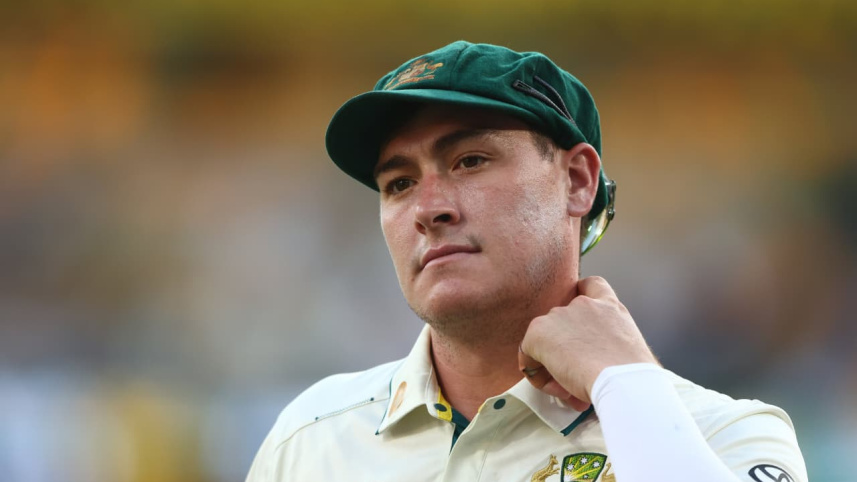
Australia rarely make changes to their squad in the middle of a series unless injuries force their hand, regardless of the result of the opening match.
However, the hosts made an unusual move on Tuesday, bringing batter Matthew Renshaw into their 13-member squad in place of opener Jake Weatherald for the second Test against Bangladesh, which begins in Mackay on August 22.

Renshaw’s call-up was not entirely unexpected, particularly after Australia were comprehensively outplayed by the Tigers in Darwin, where the visitors secured a nine-wicket victory inside four days in one of the biggest Test upsets in Australian cricket.
Australia’s performance in the Darwin Test drew heavy criticism from the country’s media and former cricketers. The hosts’ team selection and decision to bat first after winning the toss also came under scrutiny.
Weatherald, though, did little to ease those concerns. The left-hander made 23 and nought in his hometown Test, edging behind in the first innings before chopping on in the second.
There have also been questions over Marnus Labuschagne’s form. He is averaging 25.23 across his last 42 Test innings and has not scored an international century in nearly three years. Even captain Pat Cummins has faced scrutiny following Australia’s disappointing performance.
But Renshaw’s inclusion is not solely a reaction to Weatherald’s failure.
The 30-year-old has valuable experience at Mackay’s Great Barrier Reef Arena, which is set to host its first Test. Renshaw has scored two first-class centuries at the venue, making him a logical option for conditions that remain something of an unknown for Australia.
While there has been speculation that the pitch could resemble the Gabba and offer plenty of pace and bounce, comparisons are difficult given the geographical and climatic differences between the two locations. Mackay is around 950 kilometres north of Brisbane and lies in the tropics. It is also roughly 970 kilometres south of Darwin, leading to suggestions that the conditions could be closer to those in the Top End than to a typical Queensland wicket.
Renshaw, who has played 14 Tests and last featured in the format in 2023, was also in strong Sheffield Shield form last summer, scoring 499 runs in 10 innings at an average of 49.90, including three centuries.
Another factor that could work in Renshaw’s favour is his improving off-spin, particularly in Australia’s recent white-ball assignments in Pakistan and Bangladesh. His bowling has developed to the point where he could potentially offer a useful second-spin option, giving Australia greater flexibility in team selection.
His inclusion also highlights a problem Australia have faced since David Warner’s retirement in early 2024. Usman Khawaja has had a revolving door of opening partners, with Steve Smith, Travis Head, Nathan McSweeney, Sam Konstas, Marnus Labuschagne and Weatherald all taking turns at the top.
Head remains an option after his successful stint as an opener during the Ashes, meaning Renshaw’s arrival does not necessarily guarantee a straight swap with Weatherald.
Whatever the final combination, Renshaw’s call-up is a clear indication that Australia are under pressure following their Darwin defeat. Losing the second Test would make the situation considerably more difficult and leave them facing the prospect of their first home series defeat since losing to India in 2020. Australia have gone unbeaten in their last seven home Test series since then.
A series defeat to Bangladesh, however, would carry a different weight from their loss to India and is a result the hosts will be desperate to avoid.
For a team accustomed to setting the terms in Test cricket, Australia now find themselves in an unfamiliar position: having to respond to Bangladesh rather than dictate the series.
 For all latest news, follow The Daily Star's Google News channel.
Comments