


Why was India-Japan wide call overturned? The rule explained
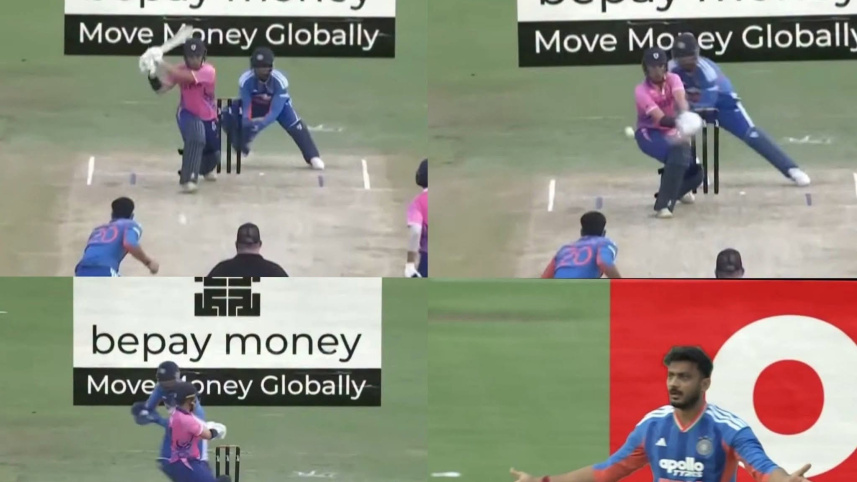
India’s two-run win over Japan in the one-off T20I in Sano on Tuesday had plenty of drama, but the biggest talking point came from two wide calls in the final over.
In a rain-reduced match of five overs per side, Japan needed eight runs from the final over to pull off a stunning upset.

After a dot ball and a single, umpire Chris Thurgate called a wide when left-hander Alexander Shirai-Patmore attempted a reverse hit against Axar Patel. He missed the ball, which went down what would normally have been his leg side.
The wide left Japan needing six runs from four balls. Thurgate then called another wide off the next delivery, prompting protests from India.
Axar and wicketkeeper Sanju Samson were unhappy with the call, while captain Shreyas Iyer went over to speak to leg umpire Chris Brown, an ICC Elite Panel umpire. Brown then asked Thurgate to change his decision.
Thurgate overturned the second wide, making it seven runs needed from three balls. India held on to win by two runs, defending the lowest total in T20 cricket.
But why was the second delivery not a wide?
The confusion came from the fact that Shirai-Patmore had changed his stance to play the reverse hit. Some thought this was a switch hit and that the timing of the change in stance could affect the wide call.
Under the current guidelines, however, it does not.
The rule applies to both reverse hits, where the batter keeps the same grip, and switch hits, where the batter changes grip. Once a batter attempts either shot, both sides of the wicket are treated as the off side.
It also does not matter when the batter changes stance. Even if the batter switches after the bowler has released the ball, both sides are still treated as the off side.
The ICC's guidelines state that, in such cases, a ball must pass at least 75 centimetres outside the outer stump to be called a wide.
The same applies if a batter only pretends to change stance and then returns to their normal position.
The reason is simple: changing stance brings deliveries on the leg side into the batter's hitting range. So, for wide calls, both sides are treated as the off side.
In Tuesday's match, the first delivery in question appeared to pass beyond the 75-centimetre mark, so it could be called a wide. The second was well inside that mark, which is why the second call was overturned.
So why wasn't the first wide overturned as well?
The first call may have caught everyone, including Brown, by surprise, leaving little time to react before the next ball was bowled. But allowing the first mistake to stand did not mean the same mistake had to be made again.
The decision restored the equation to seven runs from three balls, and India eventually held on for a two-run win.
 For all latest news, follow The Daily Star's Google News channel.
Comments