


Liverpool can give Bradley Barcola what PSG could not
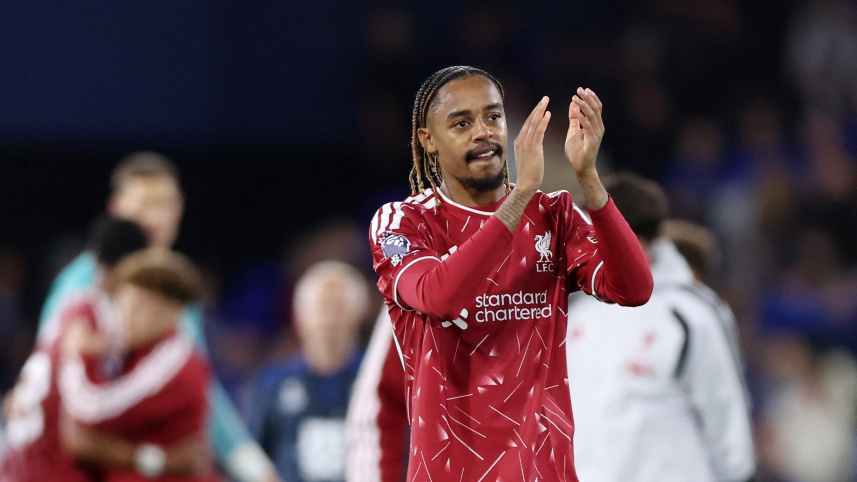
Bradley Barcola got his first taste of life at Liverpool on Friday night, coming off the bench in the second half of the 2-0 Premier League victory at Ipswich Town. It was only a cameo, but it marked the beginning of a very different chapter for the 24-year-old.
For three seasons at PSG, Barcola had to compete for minutes in an attack packed with world-class talent. At Liverpool, he arrives as a player expected to make a regular impact.

That distinction explains much of the logic behind the £123m deal.
Barcola was hardly a fringe player in Paris. He produced 21 goals and 21 assists in the 2024-25 season and established himself as a France international. But when the biggest nights arrived, his place was not always secure.
He started PSG's Champions League campaign through the last-16 second leg against Chelsea, only to find himself increasingly on the bench afterwards. He played in the last two Champions League finals, but only as a substitute.
The arrival of Khvicha Kvaratskhelia in January 2025 made things even more difficult.
At PSG, Barcola's problem was not a lack of quality. It was the sheer depth of options around him.
Liverpool's calculation is different.
They needed a winger capable of changing games, stretching defences and creating something when opponents refuse to open up. New manager Andoni Iraola has said he wants his wingers to be "gamechangers", and Barcola fits that description.
His acceleration, dribbling and ability to attack space give Liverpool a weapon that can work in two very different situations.
Against a deep defence, he can isolate a full-back and create an opening himself. Against a high line, he can turn a pass into a foot race.
That is what Liverpool are paying for. A different kind of opportunity
Barcola's development also explains why there may be more to come.
He came through Lyon's academy and was not initially developed as a winger. Amaury Barlet, one of his former youth coaches, remembers a player who was physically slight but had a natural instinct for scoring and attacking space.
"He was very thin. He hadn't yet grown," Barlet said.
Barcola learned to compensate by running beyond defenders. He could finish with either foot and was described as something of a "fox in the box" at youth level.
He made his Lyon first-team debut at 19 before PSG paid €45m for him.
The move to Paris accelerated his development, but it also placed him in an environment where every position was contested by an elite player.
Liverpool are offering something different: a bigger share of the responsibility.
The £123m fee means there will be enormous pressure, but it also reflects the belief that Barcola has not yet reached his ceiling.
 For all latest news, follow The Daily Star's Google News channel.
 His finishing and decision-making have occasionally been criticised, and those weaknesses will be magnified in England. Liverpool are betting that regular starts and greater responsibility can turn an explosive, sometimes inconsistent attacker into a more decisive one.
There is an intriguing personal element to the move, too.
As a teenager at Lyon, Barcola told Barlet that Liverpool was his dream. Now that dream has arrived, but so has a very different level of expectation.
At 15 or 16, Barcola wanted to play at Anfield. At 24, Liverpool have paid £123m because they expect him to influence matches.
His debut at Ipswich was only the first step.
The next challenge is turning the flashes of pace, invention and directness that made him so attractive into the consistency Liverpool's investment demands.
PSG gave Barcola a place among some of Europe's finest attackers. Liverpool have given him the opportunity to show exactly how far he can take his own game.
Comments