


Messi’s farewell, Ronaldo’s exile, Bangladesh’s ASEAN Cup woes: Events aplenty in football’s longest window
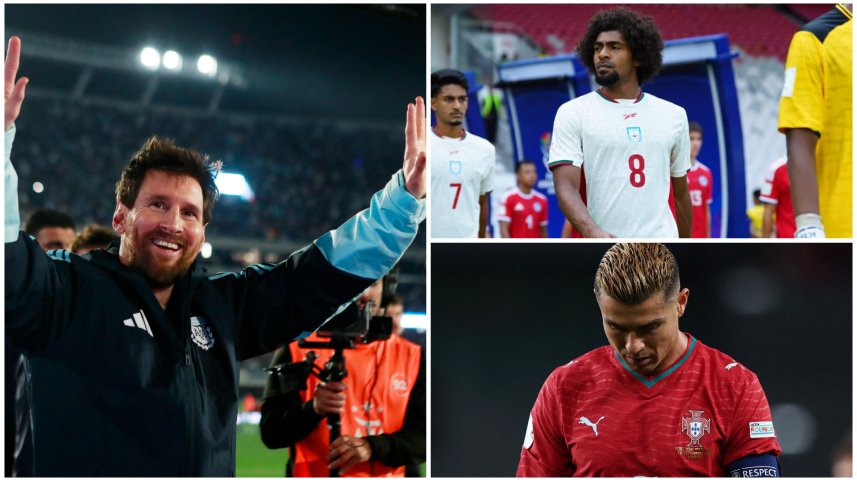
The curtain has officially fallen on the longest international break in FIFA history, a marathon three-week window that disrupted club calendars, stretched national-team squad depths to their limits, and delivered some of the most dramatic storylines the sport has seen.
From tearful goodbyes in Buenos Aires and tactical mutinies in Lisbon to historic South Asian showdowns and new superstars stepping into the spotlight, this international break offered no shortage of talking points.

Here is a breakdown of the biggest moments, heartbreaks and triumphs that defined the window:
Messi’s emotional international retirement
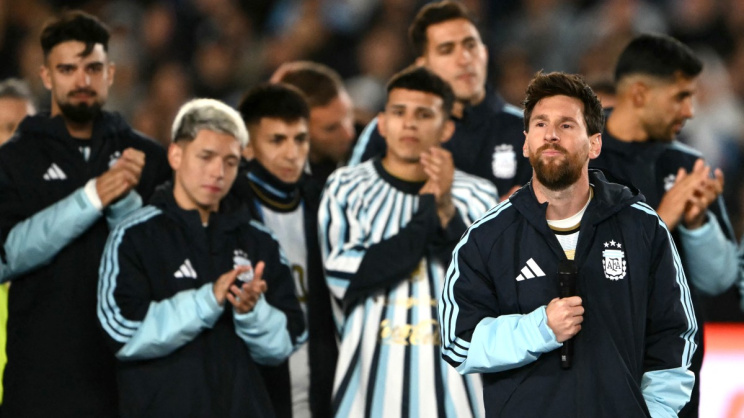
The emotional centre of gravity for the entire window belonged to Buenos Aires. Under the glowing lights of the Estadio Monumental, Lionel Messi played his final match in an Argentina shirt against Benin.
After 20 years, 208 appearances, 126 goals and 67 assists, two Copa America titles (2021 and 2024) and a World Cup triumph in 2022, arguably the greatest player in history officially closed his international chapter.
In his final match against Benin, Messi provided two assists and scored a goal to pen the final verse of an extraordinary international career.
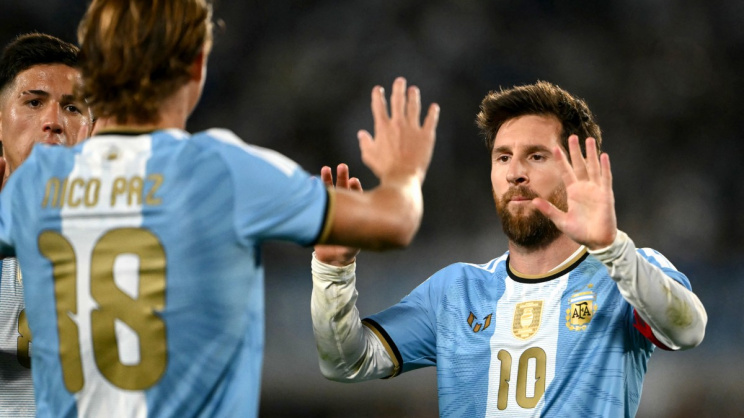
While the world bid farewell to Messi, the future offered a glimpse of hope. With the 39-year-old stepping away, 22-year-old Como playmaker Nico Paz announced himself as Argentina’s primary creative architect, registering four goal contributions across the window and scoring a magnificent 18-yard curler against Benin, assisted by Messi.
Naturally, Paz has been tipped to take the torch and is the leading candidate, alongside Alexis Mac Allister and Franco Mastantuono, for Messi’s No. 10 shirt and the burden of scoring and creating that comes with it.
Portugal drama
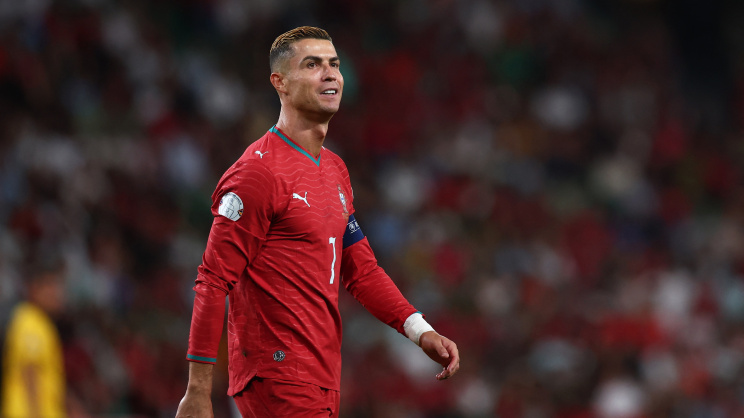
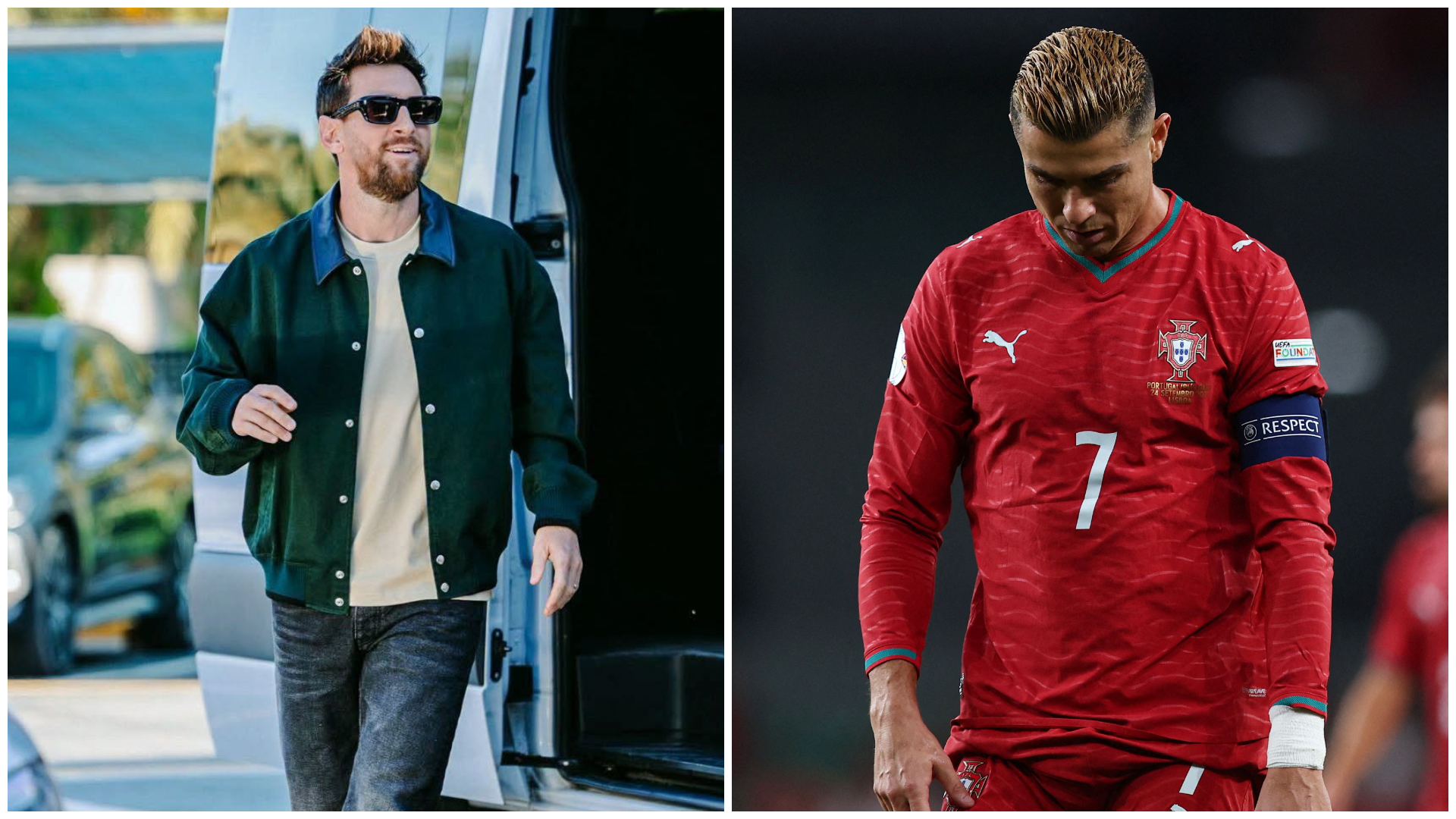
Cristiano Ronaldo’s behaviour dominated headlines around Portugal, but forward Goncalo Ramos made the most of his absence.
For the best part of four years, Ramos has inexplicably had to play second fiddle to a well-past-his-best Ronaldo in the Portugal national team, and it looked like that would remain the case when he started on the bench against Wales in Lisbon.
 For all latest news, follow The Daily Star's Google News channel.
 However, Ramos came on for Ronaldo in the final 23 minutes of Portugal’s 1-0 win and gave them far more energy up front, leading new boss Jorge Jesus to switch their roles for a trip to Norway.
Ramos scored a lovely dink as Portugal won that game 2-1, with Ronaldo ultimately left on the bench throughout. The 41-year-old subsequently left the camp after being irked by Jesus’ treatment of him, but the Portugal tactician only did what was best for the team – unlike his predecessor Roberto Martinez – and Ramos has since justified his promotion even more emphatically.
Jesus is also bringing the best out of Joao Felix, having made him Al-Nassr’s creative hub last season.
Felix has done a fine job of rebuilding his career at Al-Nassr. He deservedly beat Ronaldo to the Saudi Pro League Player of the Year award last term, racking up 33 goal contributions in as many games to inspire Al-Nassr to the title, with Jesus recognising the No. 10 as his best position.
Naturally, he has put Felix back in that role since swapping the Al-Nassr dugout for Portugal, and it has paid off. The 26-year-old found the net in each of the wins against Wales and Norway, while his link-up play was superb and his elusive movement made him very difficult to pin down.
After 120 minutes of action, Jesus gave Felix a rest against Denmark, but he still made a decisive impact from the bench, rounding off the scoring with a well-executed half-volley after a slick 22-pass Portugal sequence.
Felix was then back in the lineup for the return clash with Norway and delivered again with a clever assist for Ramos’ winner.
Zidane’s France: Olise’s masterclass and Mbappe’s injury
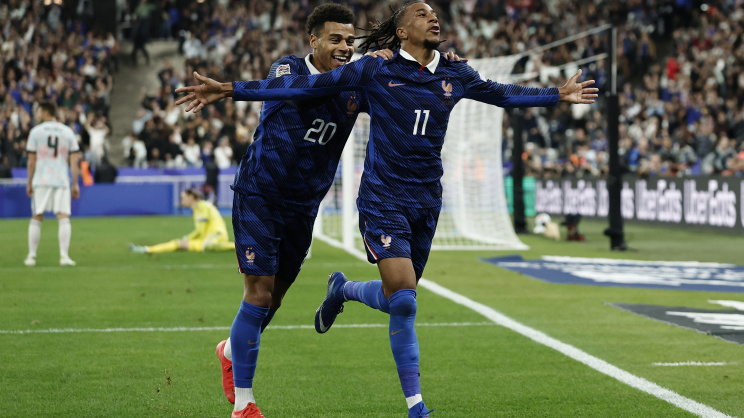
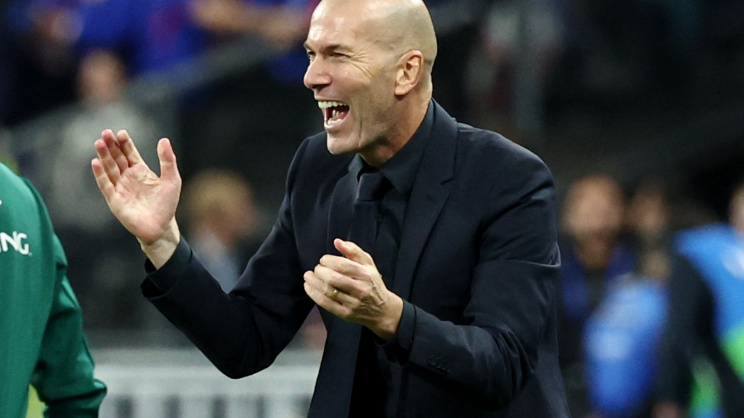
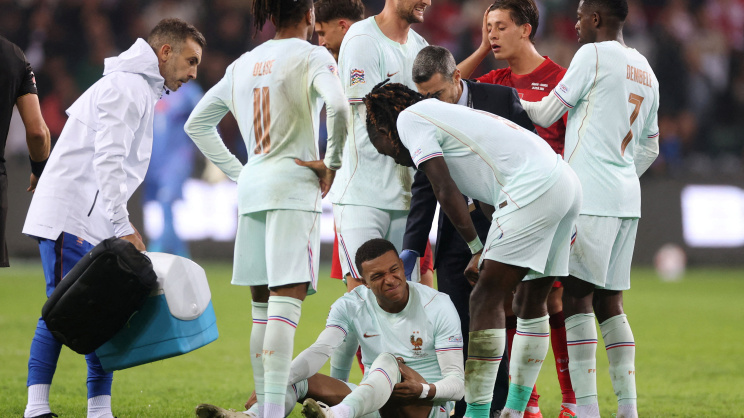
Under Zinedine Zidane’s new leadership, France were forced to adapt when captain Kylian Mbappe suffered an injury setback, limiting his impact following an early goal against Turkiye.
With Mbappe’s absence, Michael Olise stepped up, delivering a series of outstanding performances. Olise produced four goals across the Nations League matches -- including a stunning free-kick against Italy and a game-changing two-goal cameo off the bench against Belgium.
Mbappe may be the captain, but Olise gives France an X-factor, and he seems to be growing in stature with each passing game. That much was clear in France’s final assignment of the break, a return fixture against Belgium at the Stade de France.
With 17 goal contributions in 16 France appearances in 2026 and having become the first Frenchman ever to register 10 international assists in a single calendar year, the home crowd at the Stade de France left no doubt about his status, chanting, “Olise, Ballon d’Or!”
Kane breaks records under Tuchel
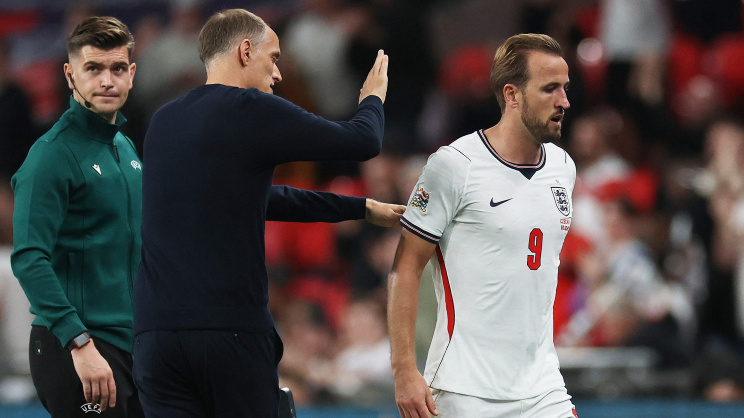
Thomas Tuchel’s fast, aggressive transformation of England hit top gear. Harry Kane started all four of England’s opening Nations League fixtures, moving level with Peter Shilton as the Three Lions’ most-capped player of all time with 125 caps.
He also added six goals to his national record tally to move to 91 – 38 clear of second-placed Wayne Rooney – and it surely will not be long before he reaches his century.
The 33-year-old showed no signs of slowing down over the last three weeks. After pouncing to score a pair of half-chances in the loss to Spain and away win at Czechia, Kane put Croatia to the sword with a magnificent display.
He opened the floodgates with an emphatic finish after being played in by Jude Bellingham, slid in England’s fifth, and unselfishly teed up Bukayo Saka to make it six. England then concluded the break by breezing past Czechia 3-0 at Wembley, which was an even greater showcase for Kane.
Just before the hour mark, the Bayern Munich frontman forced an own goal with a wicked flash across the penalty area, and he converted a similar ball from Morgan Rogers to ensure England went into half-time 2-0 up. Kane eventually sealed the win with a simple header after eluding his marker on a looping corner.
Yamal’s magic
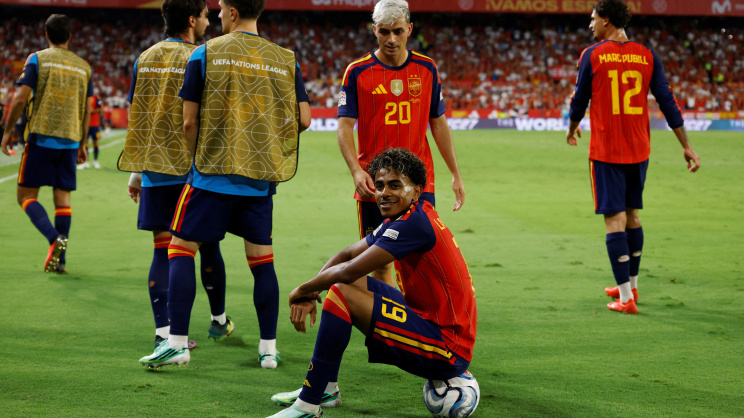
Lamine Yamal wasn’t fully fit at the 2026 World Cup, and although he played an important role in Spain’s success, we didn’t see the very best of him. The 19-year-old has looked back to his optimum condition at Barcelona, having opened the campaign with 14 goal involvements in eight appearances for LaLiga’s champions.
Back in peak physical condition following his World Cup campaign, Yamal ran riot for Spain. The Barcelona sensation scored four goals across the window – including a strike at Wembley against England, a masterclass against Croatia featuring two goals, one assist and 21 ball carries, and a trademark curling finish against Czechia.
When Yamal was at full throttle, La Roja seemed untouchable.
Haaland’s injury
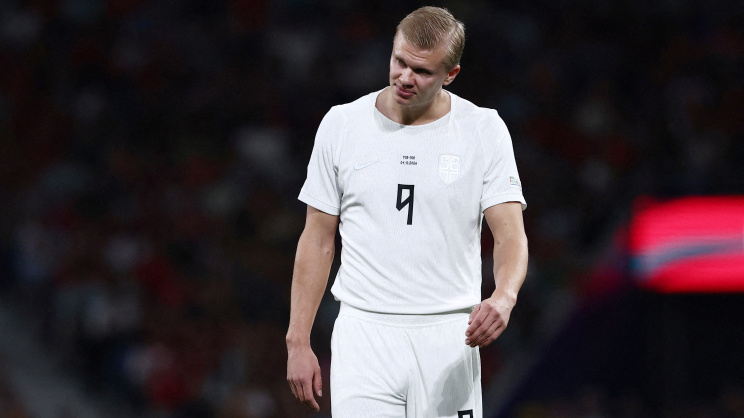
Erling Haaland picked up a frustrating muscle injury early in the break, severely limiting his movement and ultimately forcing him off the pitch during Norway’s high-stakes clashes against Portugal.
Without their talisman at 100 per cent, Norway’s Nations League campaign stumbled down the stretch.
India’s most happening international break
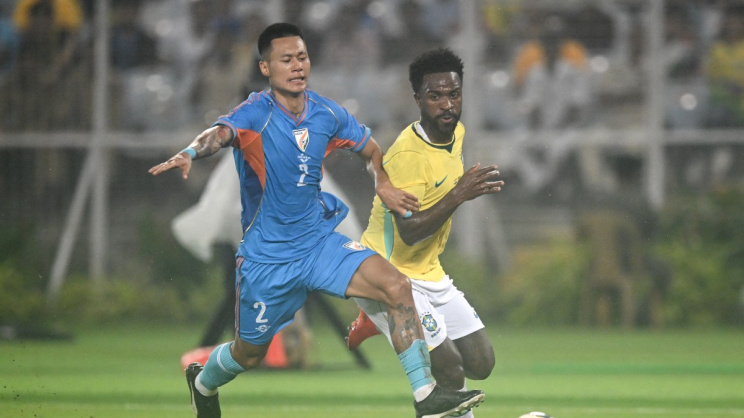
Simultaneously, in what was undoubtedly the most remarkable international window in Indian football history, the Blue Tigers shared the pitch with global royalty Brazil in Kolkata.
The three-match window offered plenty of encouragement for Khalid Jamil’s side, who faced three World Cup-calibre opponents in the space of a fortnight and gained valuable exposure against teams ranked significantly higher than them.
India began the window with a spirited 1-1 draw against Panama in Bengaluru before taking on two South American giants.
Highlighting the slate was a dream fixture on October 3, when five-time world champions Brazil arrived in Kolkata for a historic clash that sent regional excitement into overdrive. Despite a spirited display from India, Brazil secured a 4-0 victory with goals from Estevao Willian, Pedro and a second-half brace from Samuel Lino.
Three days later, on October 6, India welcomed two-time world champions Uruguay. In a high-tempo thriller, Anirudh Thapa brought the Kolkata crowd to its feet by scoring a dramatic 22nd-minute equaliser to make it 1-1, before Uruguay ultimately claimed a 6-1 win powered by Darwin Nunez and a Maximiliano Araujo double.
Despite the heavy scorelines, India’s blockbuster tests provided an unprecedented benchmark for Asian football, drawing massive global viewership and highlighting South Asia’s immense appetite for top-tier international fixtures.
Bangladesh’s ASEAN Cup reality check
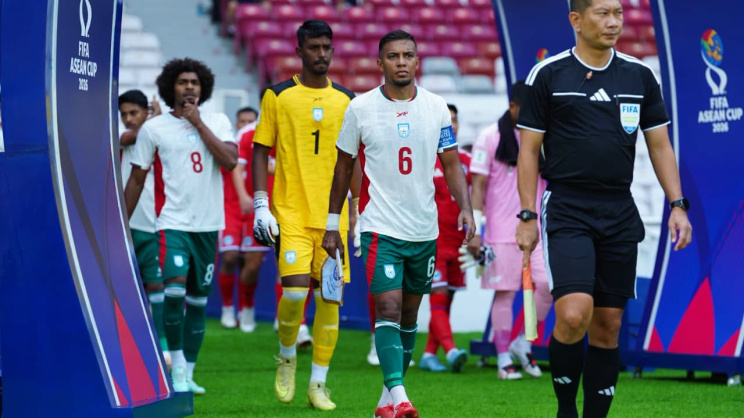
For Bangladesh, the three-week window exposed just how much work remains to be done.
Their ASEAN Cup campaign was marked by deficiencies in almost every department, with the men in red and green suffering three defeats, conceding 13 goals and scoring only twice.
The opening 3-0 defeat to Malaysia set the tone before Bangladesh produced their most competitive display of the tournament against Singapore. Yet even in the 1-0 defeat when they showed some resistance, they failed to create enough fruitful chances and squandered the few opportunities they did manage to produce.
The shortcomings became even more pronounced in the final game against hosts and eventual champions Indonesia, who overwhelmed Bangladesh 9-2 at the Gelora Bung Karno Stadium in Jakarta.
The gulf was evident in pace, intensity, technical quality and decision-making. Bangladesh’s players were repeatedly slower to recognise situations, make decisions and execute them against an Indonesia side that was faster and technically superior.
The presence of several overseas-based players, including Hamza Choudhury, Shamit Shome, Zidane Yousuf, Farhaan Ali Wahid, Shuki Itofusa, Tareq Kazi Raihan and Zayyan Ahmed, could not bridge that gap.
Head coach Thomas Dooley’s assessment after the Indonesia defeat echoed concerns that have followed Bangladesh football for years: the players simply do not get enough time playing and training at the intensity required to compete at a higher level.
The American-German coach pointed to the lack of competitive domestic football and regular high-intensity matches as a major reason for Bangladesh’s shortcomings, stressing that improvement cannot happen overnight.
The ASEAN Cup, therefore, offered less of a breakthrough than a harsh reminder of the structural deficiencies that continue to hold Bangladesh back.
There was some context to the 9-2 scoreline, with Indonesia needing a big victory to overtake Malaysia on goal difference and reach the final. That incentive meant they continued attacking long after the contest had effectively been settled.
But it did little to hide the larger problems exposed in Jakarta.
For Bangladesh, the immediate focus now shifts to the SAFF Championship in November, where the objective will be markedly different. As Dooley put it after the ASEAN Cup, the matches in Jakarta were for learning, but the tournament at home will be about winning.
Comments