


Somali referee denied World Cup 'proud' to oversee UEFA Super Cup
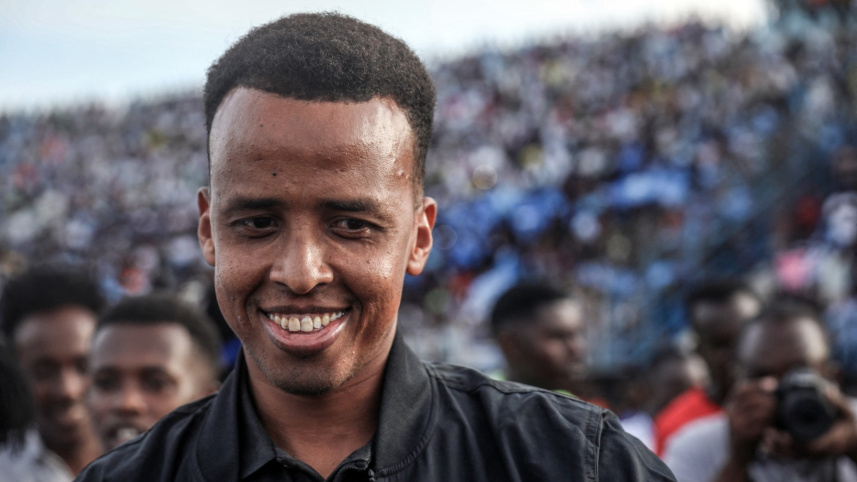
Somalian referee Omar Artan, who was denied the chance to referee at the World Cup after being refused entry to the United States, will take charge of the UEFA Super Cup between Paris Saint-Germain and Aston Villa on Wednesday.
Before the World Cup started in June, the 34-year-old referee unwittingly found himself in the media spotlight after being turned away on arrival at Miami International Airport, despite being part of the panel of referees selected by FIFA for the tournament.

"It was a very tough period," Artan said in an interview published on the UEFA website.
"A lot of people have sympathy for me, because when someone has been working a lot of years and is supposed to do something, and then can't do it, it's very challenging."
A US State Department official told AFP that the referee was "associated with suspected members of terrorist organizations", therefore "making the traveler ineligible for admission to the United States".
These allegations were rejected by the referee and caused outrage in Somalia, where Artan had been welcomed as a hero on his return.
"It is unfortunate what happened to the referee from Somalia," FIFA president Gianni Infantino said at the time, adding: "We don't control everything."
In response, UEFA, the governing body of European football, announced that Artan would referee the UEFA Super Cup, which pits Champions League winners PSG against the Europa League winners Aston Villa.
"I was lucky, but I have worked very hard to be here and I'm really proud," Artan told UEFA.
"As you can imagine, I grew up in a difficult situation, but it didn't prevent me from pursuing my dreams."
The first Somali to officiate at the Africa Cup of Nations in 2024, Artan is now set to referee his first match in Europe.
"Having adventures, making memories and learning new things is always great," he added. "When we got this call it was, for me and my family, really a very, very happy moment."
To justify its decision to appoint Artan as referee for the Super Cup, UEFA pointed to the agreement it signed at the end of April with the Confederation of African Football (CAF) to encourage cooperation between the two confederations.
But it is also a political gesture by UEFA, which is regularly critical of FIFA, and one that takes on even greater significance in light of the conflict that has pitted the European body against Infantino for the past two weeks, centring on the abandoned plan to open up the World Cup to private investors.
The plan's failure was largely due to the revolt led by UEFA, which continues to wield the threat of a boycott of FIFA tournaments -– including the World Cups -– in an attempt to force Infantino to step down.
 For all latest news, follow The Daily Star's Google News channel.
Comments