


20th Asian Games: The missing spirit of multisport
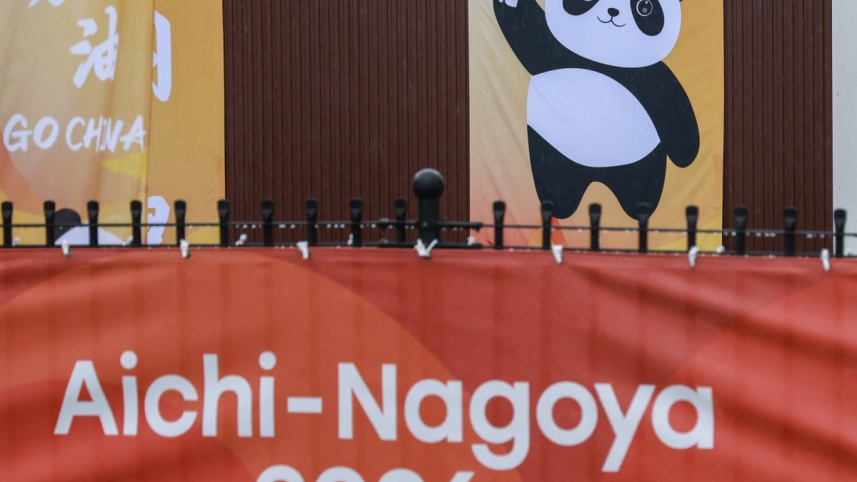
A multisport event is supposed to be about more than medals.
It is about bringing together athletes who would otherwise rarely cross paths -- badminton players sharing a dining table with swimmers, basketball players meeting wrestlers, and sprinters exchanging stories with archers. For a few weeks, competitors from across a continent are meant to live not as separate sporting communities, but as one.

That is why Indian badminton player H.S. Prannoy's description of the Asian Games in Aichi-Nagoya as "very sad" deserves attention.
Prannoy, who won a team bronze, said the event never really felt like an Asian Games. His disappointment was not simply about the size of a room or the quality of a bed. It was about something less tangible -- the atmosphere that distinguishes a multisport Games from a collection of separate competitions.
"The whole fun and point of a multisport event is that you get to meet the rest of the players," Prannoy said, recalling his experience at Hangzhou 2023.
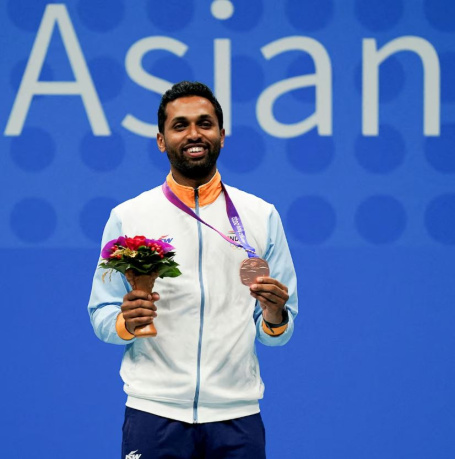
It never felt like we were playing in an Asian Games, to be honest. The whole fun and point of a multisport event is that you get to meet the rest of the players, there's an opportunity to mingle with them, to have a conversation with them. That's the whole point of a multisports Games... it was literally very sad to be in such a situation because when you look back at 2023 Hangzhou it was mind-blowing how China did it.
That perhaps gets to the heart of the issue.
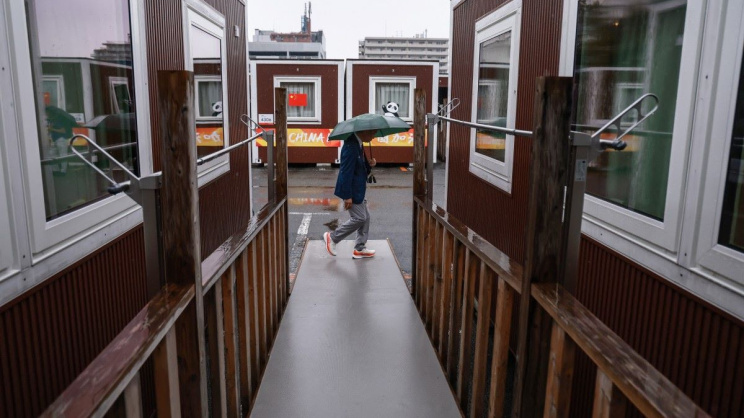
For the first time in recent Asian Games history, organisers in Japan decided against building a traditional athletes' village, largely as a cost-saving measure. More than 17,000 athletes and officials were instead accommodated in hotels, temporary wooden units and even a cruise ship.
There is nothing inherently wrong with trying to control the cost of staging a major sporting event. At a time when host cities are increasingly wary of expensive infrastructure and facilities that can become underused after an event, making use of existing accommodation can make financial sense.
But sport is not always measured in spreadsheets.
An athletes' village is more than a collection of bedrooms. It is a social space that creates opportunities for encounters that cannot be scheduled.
A medal winner from one country might meet an unknown athlete from another over breakfast. A footballer might discover a new sport by talking to a fencer. Competitors who face each other one day can become friends the next.
Those moments may not appear on the official competition schedule, but they are part of what athletes remember about a Games.
The concerns in Aichi-Nagoya, however, went beyond the absence of a traditional village. There were complaints about accommodation shortages, airport delays and transportation. Some teams also criticised the temporary wooden units, citing cramped conditions and beds that were too short for some athletes.
South Korean officials described the container-style accommodation as the "worst ever", while saying some beds were too small for members of their basketball team.
Games officials subsequently invited the media to inspect the units.
There are 200 huts, accommodating around 2,000 athletes over the duration of the Games, with three or four athletes staying in each unit. Each hut covers 35 square metres and has a ceiling height of 230 centimetres. The units have bare wooden walls, a kitchen sink but no cooking equipment, while beds are separated by curtains.
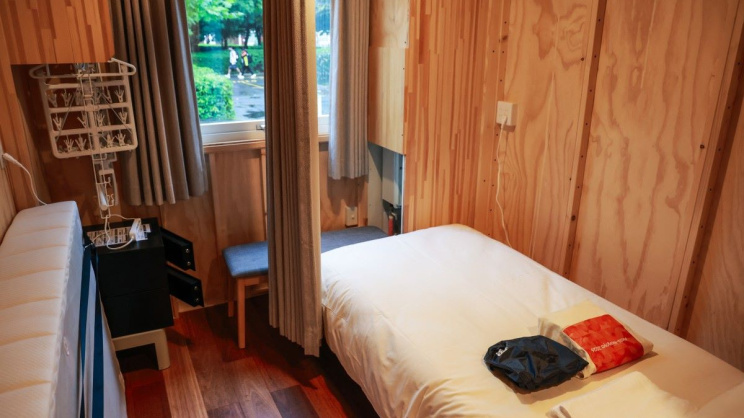
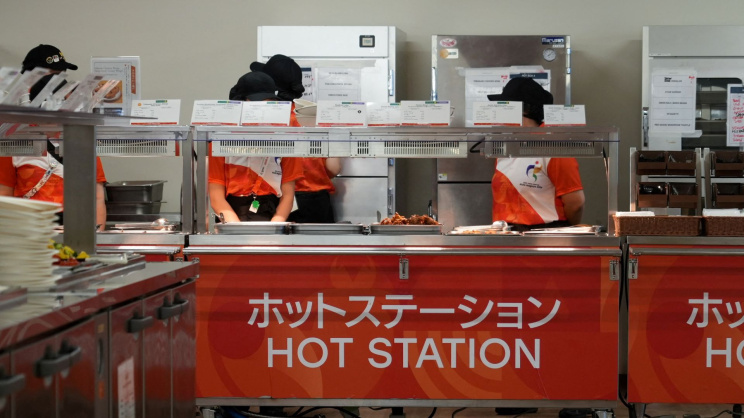
Athletes have access to communal dining, a shop, medical facilities, a fitness centre and designated spaces for interaction.
IOC president Kirsty Coventry described the units as "beautiful", while acknowledging that they were "a little tighter" than comparable accommodation at the Milan-Cortina Winter Olympics.
Organisers, meanwhile, acknowledged that they had encountered problems "beyond what we expected" and said they were working to address athletes' concerns.
 For all latest news, follow The Daily Star's Google News channel.
 Yuta Matsuo, deputy director of athletes' accommodation, said organisers believed they had responded appropriately and would continue to listen to athletes' needs and requests.
That response matters. Not every athlete needs luxury, and a major sporting event should not become a competition over hotel standards.
But accommodation is only part of the equation.
The larger question is whether athletes feel they are part of a shared experience.
That is what Prannoy's comparison with Hangzhou appears to capture. He remembered the 2023 Games as an experience that felt expansive and collective. In Aichi-Nagoya, he felt that sense had diminished.
A Games can have functioning venues, completed competitions and a full medal tally, yet still leave athletes feeling that something was missing.
Because the essence of a multisport event is not simply that many sports take place at the same time.
It is that the people competing in those sports are brought together.
The challenge for future hosts, therefore, is not necessarily to recreate the most expensive version of an athletes' village. It is to preserve what the village represents -- community, interaction and a shared sporting experience.
Otherwise, a multisport Games risks becoming little more than a series of championships held under the same banner.
The medals will still be won. The records will still be broken.
But the Games themselves may lose something that no medal ceremony can replace: the feeling of being part of something bigger than one's own sport.
Comments