


From Calchin to summit: The making of ‘spider’ Julian Alvarez

While many of his team-mates hurried off to private English lessons, tennis practice or simply back home to rest, Alvarez had only one thing on his mind.
He would ask his coach, Rafael, for a few balls and begin his routine: crosses from the left, finishes with his left foot; crosses from the right, finishes with his right; free-kicks, penalties, headers from every angle -- using both sides of the head and the forehead, plus sprints, dribbling and first touches on both feet.

Quietly, without fuss or fanfare, he worked. This was all before his tenth birthday.

Calchin, home to around 3,500 inhabitants in central Cordoba, Argentina, was where Julian Alvarez spent his childhood already behaving like a professional. There was no salary and no guarantee that football would one day become his career. Yet he trained, competed and thought as though he were already living that reality. That was Julian.
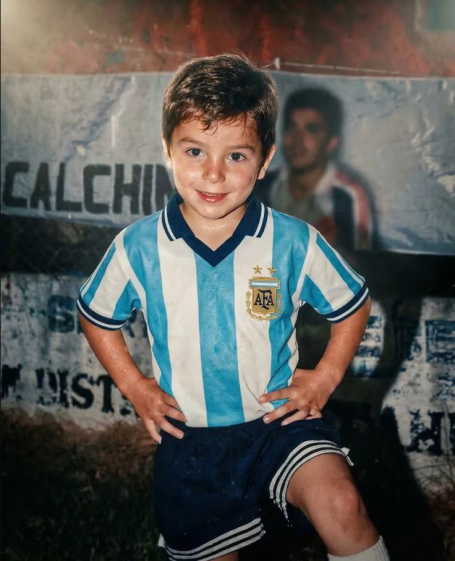
Raised on the communal pitches of his hometown, the Argentina international came from a hard-working family and a place where life was lived simply. The beautiful game absorbed him completely and, despite his shy, quiet nature, his answer at primary school never changed whenever teachers asked about his future: “A footballer.”
From the age of two, he would accompany his elder brothers, Agustin and Rafael, to Futuras Estrellitas football school. While others might have grown restless, complained about the weather, or asked for something to eat, Julian would find a ball bigger than himself and play.
He looked up to his brothers, copied them and wanted to follow in their footsteps. With his parents working, their grandmother Tita would often take them. Julian grew up in a modest, industrious household where nothing essential was missing. His mother, Mariana, was a nursery-school teacher, and his father, Gustavo, worked in the countryside before moving into transport.
“I remember looking at his grandmother one day and saying, ‘This boy is going to save us all’,” Rafael Varas told FIFA. “I said it jokingly, but it came from seeing a child who had every chance of making it.”
Varas coached Alvarez between the ages of four and 12, first at the football school and then at Club Atletico Calchin.
Today, Club Atletico Calchin is among those to have felt the positive impact of Alvarez’s rise. Training compensation from the forward’s moves to River Plate, Manchester City and Atletico Madrid has brought in vital funds. The club have installed a professional-standard grass pitch, automatic irrigation and other upgrades that would once have been far beyond its reach.
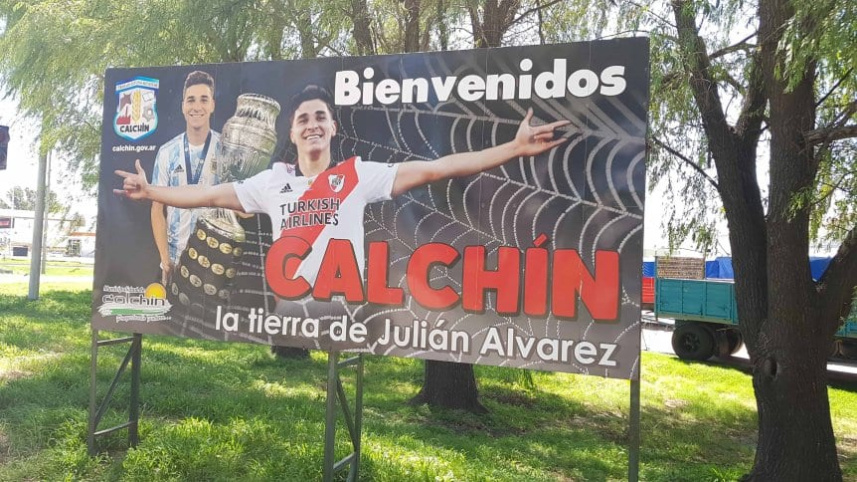
Now 26, Alvarez was never the kind of talent who needed time to be moulded or who suddenly blossomed at a certain age. From his maiden matches, he was a class apart, topping the scoring charts in every age group.
There was a match against Defensores de James Craik, when he was 11 or 12, in which he had scored all four goals in a 4-0 lead.
Still, he had one more moment to produce. Bursting into the area, he slipped past two defenders, took the ball round the goalkeeper and finished with a rabona.
“Family and friends from both sides applauded the goal. After the final whistle, all their players went across to shake his hand,” Varas recalled.
There were occasional conversations about sharing the ball and resisting the urge to rely too heavily on individual brilliance, but Alvarez already appeared to read the game with striking maturity and intelligence. He was always receptive and always willing to improve.
The hot prospect was on the radar of River Plate, Boca Juniors and Renato Cesarini, a Santa Fe club with a reputation for identifying talent. Yet for several years, the Alvarez family resisted the pull. Life in Calchin was about moving around by bicycle, being close to nature and growing up amid the calm and simplicity of the town.
“When I hear Calchin, I immediately think of my friends and my family. It means my childhood to me. That town gave me so much and I lived there until I was 15. They were beautiful years, with memories I always cherish,” Alvarez told FIFA.
“There were those who thought he had missed his chance, that he was already too old,” Varas recalled.
“But I always told his father that, if Julian wanted, he could leave at 18 and still become a footballer. Then, at one point, he made the decision himself. He said he was off to River to turn professional.”
 For all latest news, follow The Daily Star's Google News channel.
 Three years later, he made his first-team debut under Marcelo Gallardo in October 2018 and, after just over six months on the fringes, announced himself in emphatic fashion.
Calchin, built in large part by Spanish and Italian immigrant communities, once lived off soya and maize.
These days, the surrounding area is home to 45,000 hectares of alfalfa. Some tourists come through to visit the birthplace of Julian Alvarez; the youngest locals want to become him. He is the town’s proud standard-bearer, a symbol made even larger by Argentina’s FIFA World Cup 2022 victory.
Yet, much like Alvarez himself, the town appears to have remained largely unchanged.
“Spider! Spider! Spider!” The nickname first rang out during childhood games of tag, bulldog and hide-and-seek.
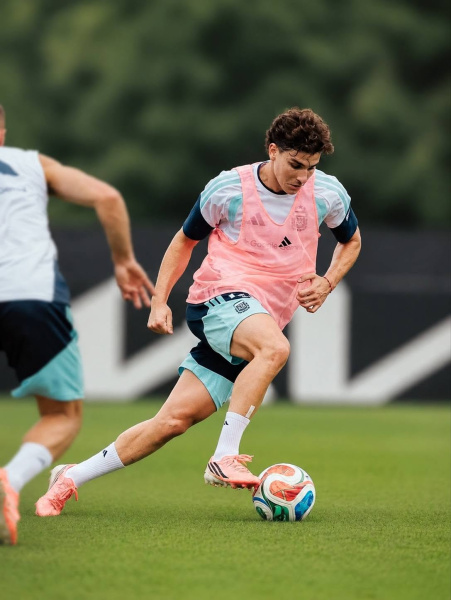
With his remarkable physicality, a young Julian seemed to cover every inch of ground, appearing everywhere at once as he caught opponents off guard or slipped away from them with ease. He seemed to have more arms and legs than everyone else. Like a spider. Later, the nickname naturally took on its superhero connection.
Alvarez keeps such a low profile that his visits can pass almost unnoticed, even in Calchin.
“Whenever he returns, he keeps things very private, spending time with friends and family. Naturally, if word got around each time, the whole town would be lined up outside his house. And knowing Julian, he would open the door to everyone,” Calchin mayor Claudio Caon explained.
Every now and then, the mayor wonders what life might look like in 20 or 30 years, or once Alvaez’s playing days are over.
Might he come back? Could the life he once knew call him home?
“I believe that when someone grows and reaches the summit, they eventually go back to their roots. This is where he was brought up, where he was taught life lessons. His culture is here.”

Comments