


Cape Verde are not here to make up the numbers

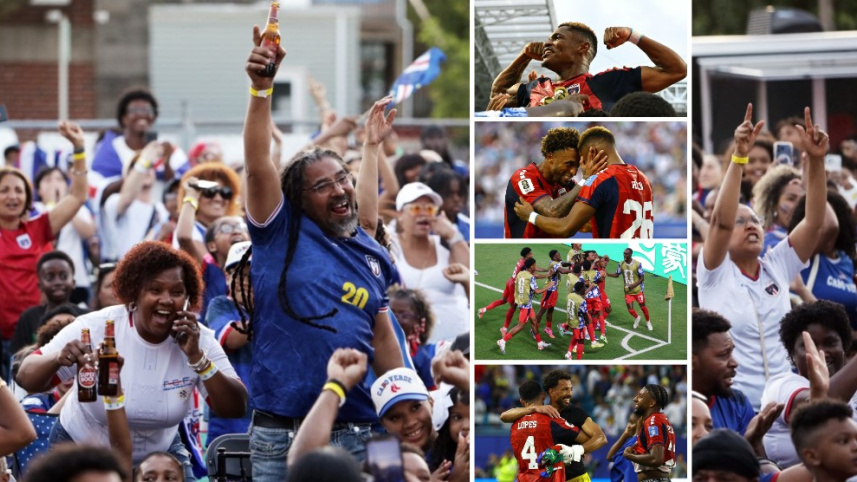
The most remarkable thing about Cape Verde's 2-2 draw with Uruguay was not that they scored twice against a nation that has won the World Cup. It was not that a country of barely 600,000 people stood toe-to-toe with one of football's traditional powers. It was that they looked as though they expected to belong.
For many debutants, a World Cup appearance is a celebration in itself. For Cape Verde, it is becoming something more. Through draws against both Spain and Uruguay, two former world champions, the Blue Sharks are sending a message that echoes far beyond football: they did not travel to North America to fill a place in FIFA's expanded 48-team tournament. They came to show their identity.

That has been the message from coach Bubista after the performance against Uruguay.
"We're here to show our country to the entire world," he said after the match. "It's not just about how we play football. It's about everything, our culture, our music, our history, our supporters. We want people everywhere around the world to know Cape Verde for what we are, showing our people's identity."
The draw with Uruguay did not emerge from nowhere. Cape Verde arrived carrying the confidence earned from their opening match, where they frustrated Spain in a goalless draw that stunned many observers. Holding one former World Cup winner could have been dismissed as an isolated upset. Doing it again against another transformed the conversation entirely.
What changed after the draw against Spain was not Cape Verde's belief but the world's perception of them. Against Spain, they demonstrated discipline, organisation and resilience. Against Uruguay, they added ambition, personality and attacking courage. Together, those two performances have delivered a clear message: Cape Verde are not in this World Cup to experience it. They are here to compete in it.
Against Uruguay, there was no sign of a team intimidated by reputation or rankings. On paper, 51 places separated the two nations. One side carried the weight of World Cup titles, legendary players and generations of football history. The other was playing only its second-ever World Cup match.
Yet from the opening whistle, it was difficult to tell which team was supposed to be the underdog.
Marcelo Bielsa had packed Uruguay's midfield, perhaps expecting Cape Verde to adopt the cautious approach they showed against Spain. Instead, the newcomers attacked the game with confidence and imagination.
Garry Rodrigues twisted away from defenders with skill and swagger. Telmo Arcanjo drove forward from deep positions, forcing Uruguay into desperate challenges. Rodrigo Bentancur could only stop one run by bringing him down and accepting a yellow card.
Cape Verde's opening goal captured their mindset perfectly. Kevin Pina spotted an opportunity and unleashed an ambitious free kick from more than 30 metres out. The shot squeezed through the wall and beyond Fernando Muslera's desperate dive, sparking wild celebrations from players and supporters alike.
The goal was historic. The reaction was emotional. But what followed was even more revealing.
Rather than retreat into their shell, Cape Verde became even bolder. They attempted a corner aimed directly at goal. They tried an audacious effort from inside their own half when Muslera wandered off his line. This was a team playing without fear, determined to express itself on football's biggest stage.
Uruguay responded through Maxi Araujo and Agustin Canobbio, turning a deficit into a 2-1 lead. For many debutants, that would have been the end of the story.
For Cape Verde, it became another chapter.
Their defining moment arrived through substitute Helio Varela. When Mathias Olivera's loose back pass drifted into no man's land, Varela reacted first, calmly lifting the ball into an empty net with Muslera stranded. As Olivera collapsed in despair, Varela posed proudly, flexing his biceps before being swarmed by teammates, some unable to hold back tears.
It was a celebration that reflected much more than a goal.
Cape Verde's performance was built on more than technical quality. Every lost ball triggered a sprint back towards their own goal. Players threw themselves into challenges without hesitation. They defended with commitment and attacked with conviction.
Even after Uruguay's equaliser, they continued to threaten on the counterattack, exposing a midfield that had lost control of the contest. The men in red looked increasingly comfortable carrying the fight to one of South America's traditional powers.
When the final whistle arrived, the contrast between the two teams was impossible to ignore.
 For all latest news, follow The Daily Star's Google News channel.
 Uruguay's players walked down the tunnel with their heads lowered.
Cape Verde's players stayed on the pitch.
They applauded the fans. The fans applauded them back. There was a sense that something important had happened, even if the result was only a draw.
What makes this achievement even more impressive is that it did not appear overnight. Much of the coverage around Cape Verde has framed them as a romantic underdog story. They certainly fit the profile. They are the only African newcomers at this World Cup. They are the third-smallest nation by population ever to qualify for the tournament, after Iceland in 2018 and Curacao this year.
But reducing their rise to a fairy tale ignores years of steady progress.
Cape Verde qualified for their first Africa Cup of Nations in 2013 and reached the quarter-finals at the first attempt. They repeated that achievement at the 2023 tournament in Ivory Coast, where they were unfortunate to exit on penalties. They also came agonisingly close to reaching the 2014 World Cup before a points deduction for fielding an ineligible player denied them a playoff place.
Their qualification for 2026 was no accident either. They won seven of ten qualifying matches, lost only once and finished ahead of Cameroon, whose eight World Cup appearances remain an African record.
This is not a nation suddenly appearing on football's map.
It is a nation finally receiving global recognition for work that has been building for more than a decade.
Their rise has been stitched together from an archipelago and a diaspora. Generations of migration created Cape Verdean communities across Portugal, France and the Netherlands, providing a talent pool that has helped transform the national team. Players from those communities have blended with the spirit and identity of the islands to create a side capable of competing with far larger football nations.
Two decades ago, Cape Verde barely played international football, averaging only a handful of matches each year and sitting near the bottom of FIFA's rankings. Today they are drawing with Spain and Uruguay on the world's biggest stage.
Bubista understands the significance of that journey.
"This is something we owe to other smaller national teams," he said. "A country may be small, may struggle financially, but if they're resilient, if they can endure struggle, if they work in an organised manner, they can also stand shoulder to shoulder with other major teams."
Those words may resonate far beyond Cape Verde.
Because the Blue Sharks are not simply collecting points. They are challenging assumptions. They are proving that population size does not determine ambition, that financial limitations do not dictate potential, and that football's hierarchy is not as fixed as many believe.
With a final group match against Saudi Arabia still to come, Cape Verde now have a genuine opportunity to reach the knockout stage. Bubista has urged his players to stay grounded, but he also acknowledged that qualification is now a legitimate target after what they have achieved against Spain and Uruguay.
Whatever happens next, one thing has already been established. Cape Verde are here to belong.
Comments