


Huge loss but not fatal blow to IS
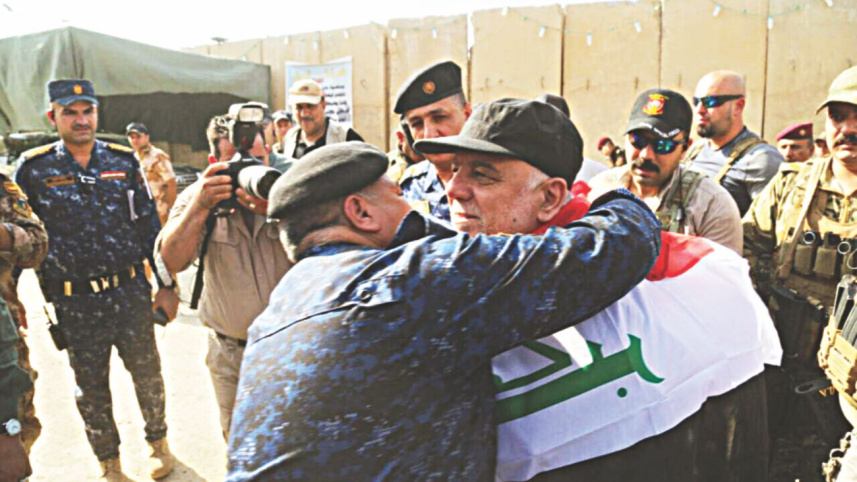
Mosul was the largest city in the "caliphate" proclaimed by the Islamic State group and its loss is a huge blow to the jihadists' statehood experiment -- but not a fatal one.
The northern Iraqi city was where IS leader Abu Bakr al-Baghdadi made his only known public appearance in July 2014, announcing himself to the world as "caliph" during a Friday sermon at a mosque in the Old City.

It took tens of thousands of Iraqi forces backed by Western warplanes and special forces nearly nine months to defeat the jihadists, who leave behind them a heavily damaged city and exhausted security forces.
With Mosul, a city that had a population of around two million three years ago, the "caliphate" loses one of the main hubs of its administration and IS one of the most potent symbols of its might.
The recapture of Mosul, hailed as a decisive step towards ending this unprecedented episode in the history of modern jihad, is the latest in a long string of setbacks for IS.
At its peak, the jihadist group controlled a territory roughly the size of South Korea or Jordan and with a population of more than 10 million. It has now lost more than half of the land and three quarters of the population.
And a major offensive on its other de facto capital, the Syrian city of Raqa, is gathering momentum.
The group has not conquered new areas around the core of its "caliphate" since 2015, has lost thousands of fighters and is less attractive to foreign jihadists than it once was.
The fall of Mosul further reduces the so-called caliphate's territorial contiguity, leaving more pockets of IS-held land completely isolated.
Yet analysts warn it is too early to declare final victory.
"We should not view the recapture of Mosul as the death knell for IS," said Patrick Martin, Iraq analyst at the Institute for the Study of War, adding the group "still holds significant urban terrain," notably in Syria.
Even in Iraq, where the jihadists lost more ground and only retain seven percent of the territory they once had, it can resurface gain, he warned.
Experts have said IS will switch to terrorism and insurgency instead of trying to openly control major areas.
The deadliest ever bomb attack in Baghdad, in which more than 320 people were killed last year, came after the jihadists lost their emblematic bastion of Fallujah.
The group also staged a major commando attack on the Kurdish-controlled city of Kirkuk days after the launch of the assault on Mosul.
With its dreams of statehood on hold, IS is expected to revert to those types of attack and do everything it can to deny the Iraqi government any claim it has been eliminated.
"It is very easy to see this coming, and Iraq will likely be plagued by insecurity for years to come," Witty said.
 For all latest news, follow The Daily Star's Google News channel.
Comments